Growing Guides
17 of the Best Flowering Houseplants for Low Light
Flowering plants have the ability to transform a space. A humdrum corner becomes a vibrant focal point with nothing more than a cheerful anthurium. A sad, windowless bathroom turns into a welcoming space with the addition of a hanging fuchsia. Before we go over all the excellent
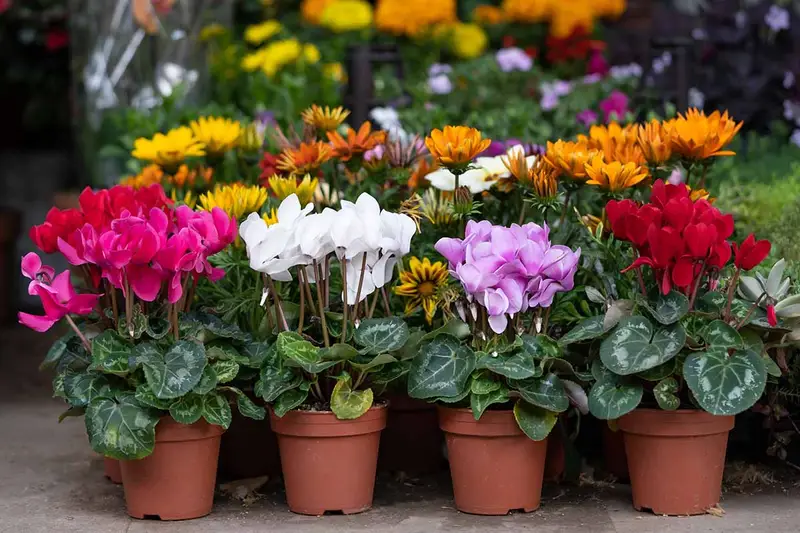
Flowering plants have the ability to transform a space. A humdrum corner becomes a vibrant focal point with nothing more than a cheerful anthurium.
A sad, windowless bathroom turns into a welcoming space with the addition of a hanging fuchsia.
Before we go over all the excellent flowering houseplants that can tolerate low light, we need to be clear about the conditions these plants need.
When we talk about low light, we don’t mean “no” light. All flowering houseplants need some indirect light.
We link to vendors to help you find relevant products. If you buy from one of our links, we may earn a commission.
The truth is that there are few houseplants, whether they flower or not, that truly thrive in low light.
Many will tolerate dim areas, but it’s not their preferred situation and it’s not ideal for promoting the healthiest growth.
You’ll often hear that some of the plants on this list will thrive in low light, and they might, but they won’t flower.
If you’re willing to move your plant into brighter exposure to encourage blooming, you can grow several houseplant species to enjoy their vibrant flowers.
But you aren’t going to find a houseplant that will flower vigorously in a dark corner of your basement, no matter what an enthusiastic salesperson might tell you.
Now that we’re on the same page, here are the 17 species we are going to discuss:
Low Light Flowering Houseplants
1. African Violet
2. Amaryllis
3. Anthurium
4. Begonia
5. Bromeliad
6. Calathea
7. Cyclamen
8. Fuchsia
9. Holiday Cactus
10. Hoya
11. Impatiens
12. Kalanchoe
13. Lipstick Plant
14. Orchid
15. Peace Lily
16. Poinsettia
17. Primrose
There are a lot of houseplants that bloom, but most of us don’t even know about it because they won’t flower indoors.
Take Monstera species, for example – these plants have blossoms that look like peace lily flowers – actually a spathe and spadix.
If you’re willing to provide supplemental light, the options are much more abundant than this list.
These days, grow lights don’t have to look obvious or ugly. You can put a grow bulb into a decorative fixture and set it near your plant.
And if you aren’t sure whether an area of your home has bright, medium, or low light, don’t feel like you’re alone. It’s really hard to tell the difference because our eyes are extremely adaptable.
We adjust to various lighting quickly, which makes it hard for us to tell whether a spot is truly bright or our eyes have just adjusted to the gloom.
Plus, we all have different definitions of bright, medium, and low.
A light meter will make things so much easier. We have a guide that rates some of the many light meters available to help you out.
Let’s talk about one of the most recognizable flowering houseplants first:
1. African Violet
African violets (Streptocarpus subg. Streptocarpella sect. Saintpaulia) are one of the few species that bloom indoors with traditional-looking flowers rather than funky inflorescences or itty-bitty blossoms.
The flowers are often violet, but blue, red, white, fuchsia, pink, salmon, and multicolored types are available as well.
They grow perfectly fine in low light, but if you want them to bloom, they need bright, indirect light for a few months out of the year.
Otherwise, you’ll have some pretty foliage but not much else.
Since they stay so small, African violets work really well on a desk or shelf under a grow lamp placed about eight inches away.
Learn more about growing African violets here.
2. Amaryllis
Amaryllis (Hippeastrum spp.) are some of the most instantly recognizable indoor flowering plants and they brighten up our homes during the holidays with their red, purple, pink, salmon, white, green, or cream blooms.
To force the plants to bloom indoors, they need direct sunlight for several hours per day – at least six is ideal.
But once they burst forth, feel free to move the plants into low light. The flowers won’t fade any more quickly than usual.
Picotee Amaryllis
I’m partial to the picotee coloration like you’ll find on this white and red variety from .
Or go for something a bit more traditional with ‘Carmen’ – sporting huge blossoms in bold red.
‘Carmen’ Amaryllis
It’s also available at .
And have a read of our guide to growing Amaryllis for more details.
3. Anthurium
Anthurium plants are easygoing and will grow in low light, but in these conditions the inflorescences might be lacking in color, or the plant may not bloom at all.
I have one in a woefully dark spot, and it does bloom, but it only produces a few flowers, and they’re muted in color. Instead of red, they’re mostly green with a faint red hue.
I don’t complain because I’m out of spots with perfect light, so it either does its best with what I can give it, or I’ll have to send it to the big garden in the sky.
But if you want yours to put on a big show, give it bright, indirect light, or supplement with grow lights, at least for a few months out of the year.
There are lots of color choices out there.
White Anthurium
If you want something clean and contemporary, consider this white option from Green Circle Garden Store, available at Walmart. It comes in a five-inch pink striped pot.
Red Anthurium
Or if you prefer the traditional red, it is available in four-inch containers at Wayfair.
You can learn more about how to grow anthuriums here.
4. Begonia
Honestly, I don’t even care if my begonias (Begonia spp.) blossom. Some of them have such exciting leaves that the flowers are merely supporting players.
I keep my polka dot begonia in pretty dismal light. I just don’t have enough bright spots, and it’s more tolerant of low light than many of my other houseplants.
When you want to encourage blooms, move the plant into morning sun for a few months, and you’ll be treated to a flowering performance.
There are even a few species and hybrids that will bloom in low light.
They’re such accommodating plants! Not all begonia species bloom, by the way, so check the one you’re considering to be sure it’s a flowering type.
For example, the Dragon Wing® hybrid will bloom in pretty much any spot you can find in your home.
Dragon Wing Begonia
The glossy green leaves look dramatic against the deep red blossoms. You can purchase 25 seeds or a live four-plant bundle at .
Learn more about how to grow begonias as houseplants here.
5. Bromeliad
The Bromeliaceae family encompasses a wide range of species, from pineapples (Ananas comosus) to air plants (Tillsandia spp.)
Here, we’re talking about the many species with long, straplike leaves and colorful bracts.
The flowers on bromeliads are insignificant, but the spikes that hold them which are leaf-like structures called bracts, are pretty impressive.
Most of them won’t bloom indoors, and especially not when they’re growing in low light.
So what is this plant doing on this list? The colorful bracts give you flower vibes even in dark exposure.
The bracts come in red, orange, yellow, green, cream, white, burgundy, or purple.
Pretty much all colors except blue. They add color and interest that won’t leave you missing the blossoms.
If you do want to bring on the blooms, it’s possible, regardless of the light you have them in.
The secret is to place the plant in a large, clear plastic bag and put an apple in there with it. Seal it shut and leave it like that for three days.
After three days, toss out that apple (or eat it) and take off the plastic. Between six weeks and three months later, depending on the species, the plant will bloom.
Just know that after the flower spike – which can last for months – fades, the plant will die. Don’t worry, you can propagate it by the pups it sends out.
Learn more about caring for bromeliads here.
6. Calathea
Depending on the species, prayer plants, aka calathea (Goeppertia spp.), bloom in pink, yellow, purple, or white. They rarely bloom indoors, though.
If you’re hoping to enjoy the blossoms, you’ll need to set them outside during the warm months.
Then, feel free to bring them indoors to a dim area for the cold months and enjoy those happy little flowers.
Some calathea plants have such ornate leaves, with stripes and spots in a range of colors, that the blossoms are just a bonus.
In other words, this is another plant that is more exciting for the foliage than the flowers.
Learn more about growing prayer plants here.
7. Cyclamen
Cyclamen (Cyclamen spp.) can be found in gardens around the globe, where they perk up shady areas.
That adaptation to low light translates to them being happy growing indoors. Not all species will grow well indoors and even fewer flower well in low light.
Look for C. graecum hybrids, which tend to do well in lower-light areas, as do C. persicum plants.
If you have a different species that isn’t performing as you’d like it to, move it to an east-facing window until you start to see buds forming.
Visit our guide to learn all about caring for cyclamen houseplants.
8. Fuchsia
Fuchsias (Fuchsia spp.) are famous for filling in shaded areas outdoors, but that beauty translates indoors, as well.
These plants will bloom in a dim area of your home, especially if you give them some morning light in the spring to get them started.
Tender fuchsia work best, the hardy ones take a bit more encouragement to bloom inside the home in my experience.
If you buy one at the store in the spring that is already in bloom, you can just move it to your desired spot. If it stops producing flowers, move it to brighter light or take it outside for a bit.
Learn more about how to grow fuchsia here.
9. Holiday Cactus
The various holiday cacti (Rhipsalidopsis and Schlumbergera spp.) grow best in bright, indirect light. But they need low light or even some darkness to force them to flower.
We go over all that in our guide to making your holiday cacti bloom.
Red Christmas Cactus
I adore these plants because they fill the home with color during the festive season and beyond, just when you need cheering up the most.
You can find a classic red Christmas cactus in a four-inch pot available from HomeyGarden via Walmart.
10. Hoya
Hoyas aren’t the first plants that come to mind when we imagine flowering plants, but some of them have incredible blossoms that are both visually striking and have a heavenly fragrance.
The plants themselves do fine in low to bright, indirect light, but they will only flower in bright, indirect light.
Once the blossoms come and go, you can move it back to a dim spot if you want. Then, you can enjoy the fascinating leaves for all their unique glory.
I’ve had good luck encouraging H. carnosa to bloom. You can grab ‘Krimson Queen’ in a four-inch grower’s pot at Home Depot.
11. Impatiens
Impatiens (Impatiens spp.) will blossom indoors, even in low light. The plants might grow rather leggy, but they’ll still give you flowers.
Better yet, if you give them some brighter light in a north- or east-facing window for part of the year, you can encourage bushy growth and more abundant blooming.
If you’ve never considered growing impatiens indoors, we have a guide to walk you through the process.
Sunscape ‘Magenta Bliss’ Impatiens
carries Sunscape ‘Magenta Bliss,’ which has purplish-fuchsia flowers.
12. Kalanchoe
Many Kalanchoe species will bloom indoors reliably even in low light, which is one of the reasons we love them so much.
The other reasons are that they’re low-maintenance, tough, and eye-catching.
Florist’s kalanchoe aka flaming Katy (K. blossfeldiana) is one species that will flower indoors. You’ll often see it during the holidays when grocery stores and florists sell them by the truck full.
Flaming Katy Kalanchoe
Walmart carries a three-pack of live plants in three-and-a-half-inch pots.
Once you bring your new plant or plants home, visit our guide to forcing kalanchoe to learn how to make those blossoms pop.
As with other plants in this guide, the plant will need brighter light for a bit before it will open up. Then you can move it into low light.
Learn more about growing kalanchoe here.
13. Lipstick Plant
Lipstick plant, also known as lipstick vine (Aeschynanthus spp.), is another one of those plants that does best outdoors during the warm months and then brought indoors during the cold weather if you want the biggest floral display.
They can grow indoors, but they need a lot of indirect light to develop the red blossoms.
That said, if you have an area with four to six hours of bright, indirect light, you can keep them indoors year-round.
Once the flowers form, you can move the plant to a low-light area for several months. Then, take it back to the brighter location to regenerate.
‘Mona Lisa’ Lipstick Plant
You can find A. radicans ‘Mona Lisa,’ with its deep red blossoms, in three-packs of starter plants available at Walmart.
Learn more about how to grow lipstick vines in our guide.
14. Orchid
Not all orchids flower well in low light. But Miltoniopsis, Paphiopedilum, and Phalaenopsis species and their hybrids will.
I have a Phalaenopsis moth orchid in a room that receives just a few hours of indirect light each day and it’s blooming beautifully.
The trick to encouraging reblooming after you bring an orchid home is to cut off the spike after the flowers have fallen and lower the temperature.
Our guide to encouraging orchids to rebloom has all the details.
Consult our guide to learn more about growing orchids.
15. Peace Lily
Whenever people ask me to recommend an easy-to-raise plant that tolerates low light, peace lily (Spathiphyllum spp.) is always top of the list. It’s truly as unfussy as can be.
Peace lilies will perform best if you give them a few months of bright, indirect light, like that you would find in an east-facing window or a south-facing window covered in sheer curtains to induce flowering.
Once they bloom, you’ll be greeted with white blossoms.
Peace Lily
The rest of the time, feel free to keep them in slightly lower light conditions.
Whether you want to start with a petite plant in a six-inch pot or a mature beauty in a three-gallon container, visit Trees.com.
Our peace lily growing guide provides cultivation instructions.
16. Poinsettia
Who hasn’t had a poinsettia (Euphorbia pulcherrima) decorating their home around the holidays?
They’re as much a part of holiday decor as Christmas trees and menoras. I mean, who doesn’t want a little life in their home during the holidays?
Poinsettia “flowers” are just the thing.
Technically, the colorful part of the plant that we appreciate so much are modified leaves called bracts.
If you look closely, at the end of the stems you’ll see the tiny yellow blossoms.
So when we talk about the flowers in this case, we mean the bracts.
This plant needs long, dark nights before it will develop the colorful bracts, but if you buy one in the winter, it will already be in bloom.
You can keep it a low-light area for months without any negative effects.
Poinsettia
Walmart carries three packs of live plants in festive green wrapping in one-and-a-half-quart containers.
You can learn more about how to grow poinsettias here.
17. Primrose
Primroses (Primula spp.) need quite a bit of sun to thrive indoors, but if you’re bringing them in from the great outdoors, they can sit in a low-light spot for several weeks or a month with no harm.
You’ll need to move them back outside or to a bright spot eventually, but for a while, you can enjoy the colorful flowers in a dim space.
I keep primroses on my patio during the warmer months and then move them indoors for the winter. I get to enjoy the color well into the holidays.
Mixed Color Danova Primroses
You can find packets of seeds in a mix of colors available at .
Learn more about growing primroses here.
Brighten Up Those Low Light Areas
Dark rooms and low-light areas can be hard to jazz up with plants, and especially houseplants that will bloom in that sort of exposure.
Remember that many of those on this list need some time in brighter light to induce flowering, but then you can move them to a dimmer area.
What kind of plant are you going to use to add some color to your space? Share with us in the comments section below.
Looking for some other great houseplants to bring nature and color to your space? We have a few guides that might help you on your journey. Check these out next:
- 17 of the Best Flowering Houseplants to Brighten Up Your Home
- 23 of the Best Medium-Light Houseplants
- 23 Colorful Houseplants to Warm Up Your Home This Winter
- Facebook2078
- X
Photos by Kristine Lofgren © Ask the Experts, LLC. ALL RIGHTS RESERVED. See our TOS for more details. Originally published November 28, 2023. Last updated November 11, 2026. Product photos via , , HomeyGarden, Trees.com, Walmart, and Wayfair. Uncredited photos: Shutterstock.