
How to grow catnip
Seed to Harvest Herb Guide How to grow catnip A practical guide to germinating catnip, establishing a vigorous perennial patch, pruning for fresh growth, managing spread, and harvesting fragrant stems. Sow seed very shallowlyPinch for branchingControl flowers and spread Shop catnip seed →Start the.
Seed to Harvest Herb Guide
How to grow catnip
A practical guide to germinating catnip, establishing a vigorous perennial patch, pruning for fresh growth, managing spread, and harvesting fragrant stems.
Sow seed very shallowlyPinch for branchingControl flowers and spread Shop catnip seed →Start the guide ↓ Life cyclePerennialHardy and self-seedingSow depthSurface–1/8 inchLight cover onlyLightFull sunPart shade toleratedSpacing18–24 inchesVigorous branching habitHarvestBefore full bloomLeaves and tender stemsBefore you begin
Good drainage and regular pruning turn catnip into a productive perennial.
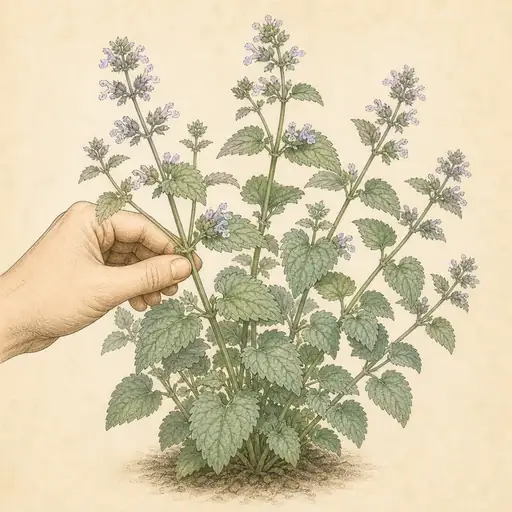
Common catnip (Nepeta cataria) forms fragrant gray-green foliage and lavender-white flowers that attract pollinators. Once established, it can spread by seed and may return from the crown for years.
Best first decisionPlace catnip where its spreading habit is useful or easy to contain. A large pot, raised bed edge, or dedicated herb patch simplifies volunteer control.Catnip at a glance
The path from tiny seed to recurring harvests
Select any milestone to jump directly to its full instructions.
01ChillOptional pretreatment02SowVery shallow03Thin18–24 inches04PinchBranching growth05FlowerPollinator bloom06HarvestTender stemsEstablishment
Give tiny seed light, patience, and careful moisture
Catnip seed is small and can germinate unevenly. Cold-moist pretreatment often improves consistency, especially with dormant seed lots.
01Prepare seed and soil
For more uniform sprouting, chill seed in a barely moist medium for about 4–6 weeks, then sow in clean mix or a fine garden seedbed.
- Use well-drained soil.
- Avoid heavy fertilizer.
- Choose sun or light shade.
Sow on or near the surface
Press seed into the surface or cover no more than 1/8 inch. Mist gently and keep consistently moist, not saturated.
Do not bury tiny seed deeplyExpect germination in roughly 10–21 days after suitable pretreatment and warmth. 03Harden and space plants
Transplant after hardening when seedlings are sturdy, or thin direct-sown plants to 18–24 inches apart.
- Keep the crown at soil level.
- Water thoroughly after planting.
- Protect young plants from pets.
Ongoing care
Pinch, drain, and contain vigorous growth
Catnip is forgiving once established, but deliberate pruning keeps foliage tender and prevents an uncontrolled seed crop.
WWater to establish
Keep young roots evenly moist; established plants tolerate some dryness but produce best with deep watering.
PPinch above nodes
Trim tips above a leaf pair to encourage branching and delay tall, open growth.
DKeep crowns dry
Use drainage and base watering to reduce crown trouble and leaf disease.
CControl seed
Shear after flowering before seed matures, or leave selected stems for pollinators and volunteers.
Growth checkpoints
Know when to thin, pinch, bloom, and cut back.
Branching habit and flower stage guide care better than dates alone.
10–21 daysFilings emerge
Tiny green shoots appear on the bright, evenly moist surface.
Several leaf pairsFirst pinch
Sturdy tips are cut above a node to create side branches.
Early bloomPeak leafy harvest
Fragrant foliage is full before most flower clusters open.
After bloomRenewal cutback
Shearing spent stems prompts tidier fresh growth and limits seed.
Text-only diagnostics
Diagnose catnip problems early
Match the symptom, then open the card for prevention and the next practical action.
GerminationFew or uneven seedlingsSeed remains dormant or sprouts in scattered patchesTry cold-moist pretreatment, sow extremely shallowly, maintain surface moisture, and avoid washing tiny seed into deep soil.
Leaf diseasePowdery mildew or leaf spotsWhite coating or expanding spots on crowded foliageImprove spacing, water at soil level, thin dense stems, and remove badly affected leaves.
PestAphids or spider mitesCurled tips, stippling, sticky residue, or fine webbingRinse leaf undersides, reduce drought stress, conserve beneficial insects, and remove heavily distorted tips.
HabitFloppy growth or unwanted spreadOpen stems lean outward or volunteers appear widelyPinch early, shear after bloom, avoid excess nitrogen, and remove seedlings before their roots become established.
Recurring harvest
Cut fragrant stems before full bloom
Leaves and tender stem tips have strong aroma before most flowers open, and correct cuts encourage regrowth.
- Choose: Harvest healthy, dry stems in the cool morning after dew disappears.
- Cut: Snip just above a lower leaf pair, taking no more than about one-third at once.
- Dry: Bundle loosely or use low, gentle heat; store fully dry leaves airtight away from light.
Urban Farmer’s current catnip offerings
Choose conventional or certified organic seed
Both offerings grow the classic hardy perennial Nepeta cataria with fragrant gray-green foliage and lavender-white flowers.
Classic perennial herbCommon CatnipA vigorous, well-drained-garden plant that self-sows readily once established.Shop Common Catnip →Certified organic seedCommon Organic CatnipThe familiar fragrant catnip supplied as certified organic seed.Shop Organic Catnip →Questions herb gardeners ask
Catnip growing FAQ
Quick answers for germination, spacing, containers, pruning, harvest, and spread control.
Is catnip an annual or perennial?Common catnip is a hardy perennial in many climates and also self-sows readily.
Does catnip seed need cold stratification?It can germinate without treatment, but 4–6 weeks of cold-moist pretreatment often improves speed and uniformity.
How deep should catnip seed be planted?Press seed onto the surface or cover no more than about 1/8 inch because the seed is tiny.
How long does catnip take to germinate?After suitable pretreatment, seed often sprouts in roughly 10–21 days under consistent moisture and light.
How far apart should catnip plants be?Space plants approximately 18–24 inches apart to allow branching and airflow.
Can catnip grow in a container?Yes. A large pot with drainage is useful for containing roots, volunteers, and pet attention.
Does catnip need full sun?Full sun encourages dense growth and flowers, though light afternoon shade is helpful in very hot climates.
When should catnip be pinched?Begin after several leaf pairs form, cutting tips just above a node to encourage side branches.
When should catnip be harvested?Harvest leaves and tender stems when aromatic and before most flowers fully open.
Will catnip spread?Yes. It can self-sow and expand from an established crown; shear flowers before seed matures to limit spread.
Should catnip be cut back?Shearing spent flowering stems encourages tidy regrowth and can provide another leafy flush.
How should harvested catnip be dried?Dry clean stems in airflow or with low gentle heat, then strip leaves and store completely dry in an airtight container.
Ready to plant?
Grow fragrant perennial catnip.
Choose conventional or organic seed for a pollinator-friendly patch with recurring aromatic harvests.
Shop catnip seed →


Fragen und Diskussion