
Do You Have To Tie Up Cabbage Heads?
Cabbage plants grow firm, round heads surrounded by large, loose outer foliage. Tying up the outer leaves is not a required step in the growing process. As long as plants are healthy, they should produce a head regardless of whether they are tied or not. That being said, binding the loose outer.
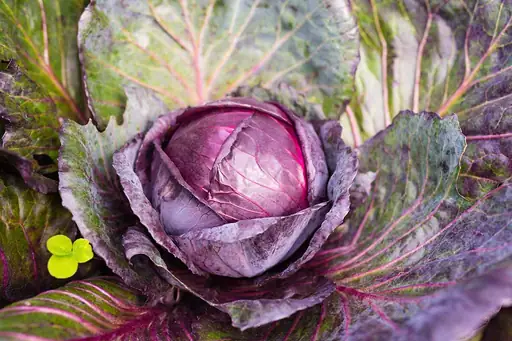
Cabbage plants grow firm, round heads surrounded by large, loose outer foliage.
Tying up the outer leaves is not a required step in the growing process. As long as plants are healthy, they should produce a head regardless of whether they are tied or not.
That being said, binding the loose outer foliage can help to protect plants from strong sun and pests, and may result in tighter heads as well.
Photo by Heather Buckner.Read on to learn more about why and how to tie up cabbages that you’re growing in the garden.
What You’ll Learn
- Is Tying Worth It?
- How to Tie Up Cabbages
- An Easy Garden Experiment
Is Tying Worth It?
There is some debate among gardeners as to whether tying up the outer leaves is worth the extra effort. Head formation is not dependent on binding the loose outer leaves.
Photo by Heather Buckner.If you find your plants are not forming heads, there are usually other causes, such as exposure to extreme temperatures, inadequate moisture, or a nutrient imbalance. Tying them tight won’t solve these problems.
Learn more about why cabbages may fail to form heads in this guide.
Nonetheless, there are a few reasons why this practice could still be beneficial.
First, it can help to keep pests such as slugs and snails out of your plants.
Using twine to secure the outer foliage can create a physical barrier that restricts pests’ access to the inner leaves. This can be a useful natural way to reduce pest problems.
Protecting the inner leaves with the outer ones can also shield them from the sun, keeping them from becoming discolored or damaged in intense sunlight.
It can also help to save space in the garden. Large outer leaves spread out wide, and take up a lot of space.
Binding them with garden twine or string can provide more room between plants, which could be especially useful if you are gardening in a small space.
Photo by Heather Buckner.Some varieties, such as napa cultivars, are often tied to produce tighter heads with softer, whiter foliage, a process referred to as “blanching.”
The idea is to protect the inner leaves from light exposure, keeping them from turning yellow or green and losing flavor.
There is no true consensus on whether this actually makes a difference or not in terms of the health of the plant, tightness of the heads, or flavor development.
Many gardeners swear by this process, while others say it isn’t necessary.
What should you do? Try tying a few plants and decide for yourself!
How To Tie Up Cabbages
If you decide to try this method, do so just before maturity when the head is about softball size, and has started to firm up.
Photo by Heather Buckner.While holding the inner leaves together, wrap the outer ones upward so they form a ball around the head.
With the leaf tips held together, wrap soft garden twine around them a couple of inches below the tips, taking care to tighten the string enough that they are held in place, but not so much that they tear.
Photo by Heather Buckner.Tie a loose knot that can be untied easily when you are ready to remove the twine for harvest.
An Easy Garden Experiment
Though binding up the foliage isn’t essential, it can be helpful in certain situations. But don’t just take my word for it.
This quick and easy process makes for an excellent garden experiment. Try tying up a few cabbages this season, and decide what you think!
Have you tried this method before, and did you find it helpful? Any questions? Tell us about your experience in the comments section below!
And for more helpful information to grow your best cabbage crop yet, read these guides next:
- How to Plant and Grow Cabbage: A Fall and Spring Staple Crop
- How to Identify and Control Common Cabbage Pests
- Try These Fixes if Cabbage Heads Split
- How to Grow Winter Cabbage for a Late-Season Harvest
- Facebook6
- X850
Fragen und Diskussion