
How and When to Water Tulip Bulbs
Tulips, Tulipa spp., are flowering bulbs in the lily family that are synonymous with spring in USDA Hardiness Zones 3 to 7. They prefer full sun locations with average, well-draining soil and reward with showy blooms in various colors, shapes, and sizes. Our tulip-growing guide and in-depth.
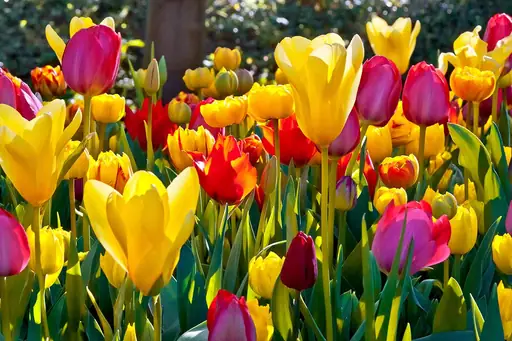
Tulips, Tulipa spp., are flowering bulbs in the lily family that are synonymous with spring in USDA Hardiness Zones 3 to 7.
They prefer full sun locations with average, well-draining soil and reward with showy blooms in various colors, shapes, and sizes.
Our tulip-growing guide and in-depth discussion of the 15 tulip divisions provide all you need to know to introduce and care for these exceptional flowers in your outdoor living space.
This article zeroes in on one aspect of tulip care: watering.
Here’s what we’ll cover:
What You’ll Learn
Tulip Bulb Planting Protocol
Jumpstarting Spring Growth
Supplementing the Rain
Withholding During Dormancy
This is easy. Let’s get started!
Tulip Bulb Planting Protocol
Sow bulbs in the fall while they are dormant because they need a winter chilling period to stimulate spring blooming.
They require a planting depth two to three times as deep as their height. If sown too deeply, they may fail to bloom; if too shallow, they may heave out of the ground during winter freeze and thaw cycles.
Once in the garden or pot, apply a well-balanced, slow-release fertilizer, like a 10-10-10 NPK, for perennial varieties that readily naturalize. For those cultivated as annuals, you may skip this step.
Finally, thoroughly wet the growing medium. As mentioned above, well-draining soil is essential, or they may rot long before spring.
Unless there is a drought, it is unlikely that you will ever need to soak the soil again.
Jumpstarting Spring Growth
The next occasion for adding moisture is when the leaves sprout in the spring.
Moisten the ground or potting medium if it isn’t already wet from rain.
Use a hose or watering can and aim it at the soil, not the new shoots. Prolonged foliar wetness, especially in partially shaded locations, may promote the development of fungal conditions and is best avoided.
Warming temperatures and moisture trigger foliar growth followed by budding and blooming.
Supplementing the Rain
If the forecast regularly calls for rain, you will likely not have to water again during the growing season.
If it doesn’t rain for a week or so, moisten the soil so it doesn’t dry out. Remember to avoid direct contact with the flowers and leaves.
When in doubt, it’s better to err on the side of too little rather than too much water. As mentioned, bulbs are prone to rotting. Soggy earth and yellow leaves are telltale signs of oversaturation.
Conversely, if you are away and come home to find there’s been a drought, thoroughly saturate the soil.
Potted plants are more likely to suffer as containers dry out faster than the ground. Signs of stress include wilting and brown leaf tips.
Withholding During Dormancy
As blooming finishes, deadhead entire spent flower stems before the petals lose all their color. Leave the remaining foliage in place to feed the bulbs for next year’s display.
Continue to provide supplemental water in the absence of rain until all of the foliage is brown and withered. At this point, dormancy begins and moisture is no longer required.
Moisture Management Is a Must
Knowing how and when to water tulips is essential to successful cultivation.
Let’s recap our discussion:
Provide a location that drains well. After planting, thoroughly wet the growing medium.
Every spring, moisten the earth when new shoots appear. Avoid watering shoots, leaves, and foliage throughout the growing season, especially if you grow in partial shade.
If it doesn’t rain during the week, moisten the soil.
Thoroughly saturate the garden or pot in the event of a drought.
When the foliage withers and dormancy begins, discontinue supplemental watering.
When incorporating bulbs into an existing landscape, consider the cultural requirements of the plants already in place. If they are likely to require supplemental water during the summer, you may find that your bulbs rot.
Instead, opt for locations with established shrubbery, other moisture-sensitive bulb flowers, or native perennials to minimize the risk.
Do you have any watering suggestions? Please share them in the comments section below.
If you found this article informative and want more tips you can use to grow the best tulips, we recommend the following:
- 9 Reasons Why Tulip Leaves May Turn Yellow Prematurely
- 9 Tips to Get Tulips to Rebloom
- How to Protect Your Tulips from Deer
- X




Fragen und Diskussion