

Diese Seite wird in ihrer Originalsprache angezeigt. Eine Übersetzung ist noch nicht verfügbar.
Die Seedsun-Auswahl
Camellia salicifolia
Artikelnummer: CAME-SALI-01G
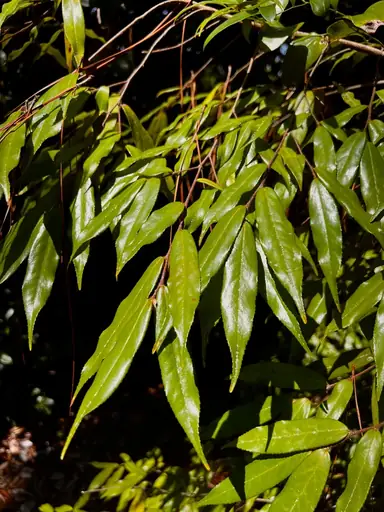
Most camellias are bought for the flower. This one is bought for the leaf, and anyone who has met the plant in person understands why within about four seconds. Camellia salicifolia carries long, thin, lance-shaped leaves that hang rather than sit, closer to a willow or a bamboo than to the stiff.
Fordern Sie ein individuelles Angebot an
Preise, Packungsgrößen und Verfügbarkeit werden in Ihrem persönlichen Angebot bestätigt. Mit dem Absenden einer Anfrage wird noch keine Bestellung aufgegeben.
Erkundigen Sie sich nach Eignung, Aussaat- und Anbaubedingungen.
Bitte prüfen Sie die Lieferoptionen und die benötigten Dokumente in Ihrem Angebot.
Über diese Sorte
Most camellias are bought for the flower. This one is bought for the leaf, and anyone who has met the plant in person understands why within about four seconds. Camellia salicifolia carries long, thin, lance-shaped leaves that hang rather than sit, closer to a willow or a bamboo than to the stiff glossy ovals of a japonica, so the whole shrub moves in a breeze and reads soft where the rest of the genus reads architectural. New growth comes out coppery and silky, covered in fine hairs, and the young branchlets are villous enough to feel like felt between the fingers. Some growers call the species the willow-leaf camellia and some the Hong Kong camellia; both names point at something true.
The wild plant grows under the canopy of evergreen broadleaf forest in Guangdong, Guangxi, Fujian, Taiwan, and Hong Kong, at moderate elevations between roughly a thousand and twenty-six hundred feet. That is a shade plant's pedigree, and the shrub behaves accordingly in the garden: happiest in high filtered light beneath tall pines or oaks, tolerant of quite deep shade, and unhappy in the full southern sun that a sasanqua will shrug off. Flowers come in autumn and early winter, white, five or six obovate petals, only an inch or so across, and lightly fragrant. Beside a big formal japonica bloom they are almost nothing. Beside the foliage they are exactly the right amount.
Species camellias like this one matter more than their modest flowers suggest, because breeders keep going back to them. Narrow foliage, fine hairs, scent, and small-flowered grace are traits that the great formal hybrids largely traded away, and C. salicifolia has been used in crosses aiming to bring fragrance and a lighter habit back into the group. The genus honors Georg Josef Kamel, the Moravian Jesuit and pharmacist who worked in the Philippines and sent careful plant descriptions back to Europe, and whom Linnaeus commemorated in a genus Kamel himself never worked on. Salicifolia is plain description: willow-leaved, from Salix.
Site the shrub in a woodland bed where the hanging foliage can be seen against something darker and stiller, and where a hand can reach the new growth in spring, because the felted young shoots are half the pleasure of growing the plant. Eight to fifteen feet in time, open and graceful rather than dense; resist shearing, which destroys the very habit worth having. Acid, humus-rich, well-drained soil, even moisture, and shelter from cold dry wind. One honest caution: this is a subtropical species, hardy in roughly zones 8 to 10 and less cold-tolerant than the japonicas most Southern gardeners know, so give a protected corner in 8a and be prepared to lose the tips in a hard winter. Very few American nurseries have ever offered the plant, which is reason enough to try.
Es gibt noch mehr zu entdecken



Fragen und Diskussion