

Diese Seite wird in ihrer Originalsprache angezeigt. Eine Übersetzung ist noch nicht verfügbar.
Die Seedsun-Auswahl
Clematis morefieldii
Artikelnummer: CLEM-MORE-01G
Clematis morefieldii, Morefield's leather flower, is one of the rarest of the native clematis, a delicate climbing vine known in the wild from only a small pocket of limestone country around Huntsville, Alabama, and just into Tennessee. Like the other leather flowers, this species trades broad,.
Fordern Sie ein individuelles Angebot an
Preise, Packungsgrößen und Verfügbarkeit werden in Ihrem persönlichen Angebot bestätigt. Mit dem Absenden einer Anfrage wird noch keine Bestellung aufgegeben.
Erkundigen Sie sich nach Eignung, Aussaat- und Anbaubedingungen.
Bitte prüfen Sie die Lieferoptionen und die benötigten Dokumente in Ihrem Angebot.
Über diese Sorte
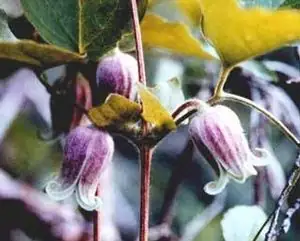
Clematis morefieldii, Morefield's leather flower, is one of the rarest of the native clematis, a delicate climbing vine known in the wild from only a small pocket of limestone country around Huntsville, Alabama, and just into Tennessee. Like the other leather flowers, this species trades broad, flat blooms for small, nodding, urn-shaped flowers, here a soft, downy pink, their sepal tips curling back at the rim. The stems and leaves carry a fine coat of whitish hairs, giving the whole plant a soft, silvered look.
This is a federally listed endangered species, discovered only in 1982 and named for the young botanist James Morefield who found it. Because wild populations are so few, Morefield's leather flower is protected, and its sale and movement are regulated; nursery-propagated plants like these help take the pressure off the wild colonies while sharing a genuine botanical treasure. Growing one is a small act of conservation as much as gardening.
For all the rarity, the plant proves adaptable in the garden. Native to well-drained limestone soils, Morefield's leather flower takes to ordinary garden ground with good drainage and a sunny or lightly shaded spot, climbing modestly by twining leaf-stalks and dying back to the ground each winter to return in spring. Pinkish, nodding flowers open through late spring and summer, followed by the silky, feathered seed heads typical of the clematis clan.
Give Clematis morefieldii a small trellis, an arbor, or a low fence, ideally on the neutral-to-alkaline soils this vine favors, where the downy pink bells can be seen at close range. A choice vine for the native, pollinator, or collector's garden, this is a plant with a real story to tell, both a rarity and a conservation success in cultivation. Few clematis carry so much meaning on so delicate a frame.
Es gibt noch mehr zu entdecken



Fragen und Diskussion