

Diese Seite wird in ihrer Originalsprache angezeigt. Eine Übersetzung ist noch nicht verfügbar.
Die Seedsun-Auswahl
Decumaria barbara
Artikelnummer: DECU-BARB-01G
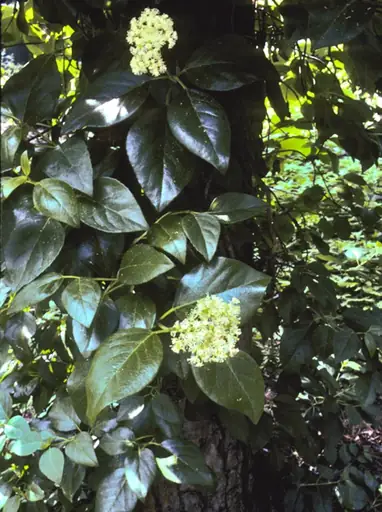
Decumaria barbara, the native woodvamp or wild climbing hydrangea, is a self-clinging woody vine of the southeastern United States, grown for glossy foliage and flat, creamy-white flower clusters that echo those of the true hydrangeas in early summer. In the wild the vine belongs to wet bottomland.
Fordern Sie ein individuelles Angebot an
Preise, Packungsgrößen und Verfügbarkeit werden in Ihrem persönlichen Angebot bestätigt. Mit dem Absenden einer Anfrage wird noch keine Bestellung aufgegeben.
Erkundigen Sie sich nach Eignung, Aussaat- und Anbaubedingungen.
Bitte prüfen Sie die Lieferoptionen und die benötigten Dokumente in Ihrem Angebot.
Über diese Sorte
Decumaria barbara, the native woodvamp or wild climbing hydrangea, is a self-clinging woody vine of the southeastern United States, grown for glossy foliage and flat, creamy-white flower clusters that echo those of the true hydrangeas in early summer. In the wild the vine belongs to wet bottomland forests and swamp margins, and also climbs in the rich, moist coves of the southern Appalachians, hauling itself up tree trunks on hairy aerial rootlets, the holdfasts that let the plant grip bark, brick, or stone without any support at all.
The botany holds a couple of quiet surprises. Woodvamp sits in the hydrangea family, and modern taxonomists have gone so far as to fold the plant into Hydrangea itself, so the family resemblance in those lacecap flower heads is no accident. The genus name comes from the Latin for ten, a reference to flower parts often set in tens, and the whole small genus contains only two species: this southeastern American climber and a single counterpart, Decumaria sinensis, in central China, one of those elegant plant disjunctions that link the woodlands of the American Southeast to those of East Asia across the width of the globe.
In flower the vine is understated and lovely, carrying flat, rounded clusters of small, fragrant, creamy-white blooms in early summer, followed by small urn-shaped seed capsules, with the glossy, dark green foliage turning soft yellow before dropping in fall. Woodvamp climbs more flatly and behaves more politely than most self-clinging vines, which makes the plant a welcome native alternative to the imported climbing hydrangea.
Give woodvamp a vertical surface to grip: a shaded masonry wall, a sturdy fence, a stone pillar, or the trunk of a mature tree, where the bloom stays low enough to enjoy rather than vanishing into a high canopy. The holdfasts do the work, so no ties or trellis are needed. Handsome against brick or stone in a courtyard, woodvamp suits native plant gardens, shaded courtyards, and woodland edges, underplanted at the base with ferns, hostas, and other shade lovers, and asks for full sun to semi-shade in moist, well-drained soil.
Es gibt noch mehr zu entdecken



Fragen und Diskussion