

Diese Seite wird in ihrer Originalsprache angezeigt. Eine Übersetzung ist noch nicht verfügbar.
Die Seedsun-Auswahl
Dianella tasmanica variegata
Artikelnummer: DIAN-TASM-VARI-01G
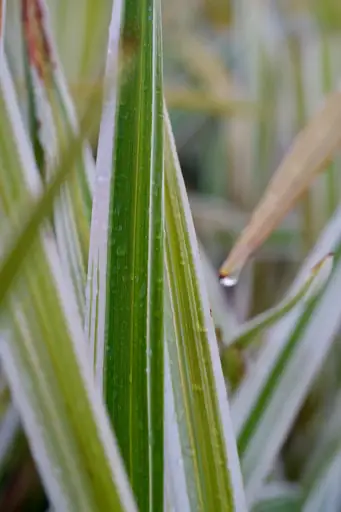
Dianella tasmanica 'Variegata' is a strappy evergreen perennial grown above all for foliage: arching, sword-shaped leaves boldly striped in white and green that stay dense and upright through the season and lend crisp, year-round structure to a bed. In spring and early summer, airy panicles of.
Fordern Sie ein individuelles Angebot an
Preise, Packungsgrößen und Verfügbarkeit werden in Ihrem persönlichen Angebot bestätigt. Mit dem Absenden einer Anfrage wird noch keine Bestellung aufgegeben.
Erkundigen Sie sich nach Eignung, Aussaat- und Anbaubedingungen.
Bitte prüfen Sie die Lieferoptionen und die benötigten Dokumente in Ihrem Angebot.
Über diese Sorte
Dianella tasmanica 'Variegata' is a strappy evergreen perennial grown above all for foliage: arching, sword-shaped leaves boldly striped in white and green that stay dense and upright through the season and lend crisp, year-round structure to a bed. In spring and early summer, airy panicles of small, star-shaped, blue to violet flowers rise on wiry stems above the leaves, followed by glossy, deep blue berries that gleam against the pale striping, an unusual and long-lasting ornamental touch that gives the plant a second season of interest.
The species is Australian, native to the cool forests and clearings of the southeast, including Tasmania, which supplies both the epithet and one of the common names, Tasman flax lily. The genus name is a small tribute to Diana, the Roman goddess of the woodlands, with a diminutive ending, so Dianella reads as little Diana. Flax lily nods to the strong, fibrous leaves rather than to any true kinship with flax, and the plant sits, botanically, near the day lilies in the asphodel family.
Those tough leaves carry a long human history in Australia. Aboriginal people split and twisted the fibrous foliage into strong string and cord and wove the strap-like leaves into baskets and mats, and used the deep blue berries as a source of dye to color the leaves of other weaving plants. In the wild the glossy berries feed birds, which carry and scatter the seed. The variegated selection trades some of that vigor for a brighter presence in the garden, the white striping catching light in a way the plain green species does not.
In the garden, use the variegated flax lily for cool, upright structure in a border, a mixed container, a mass planting, or the front of a shaded bed, where the white-striped blades brighten dark corners and contrast with broad-leaved companions. Full sun to partial shade suits the plant, with part shade keeping the variegation brightest in hot climates, and well-drained soil is really the only firm requirement. The blue berries stretch the display well past bloom, and the flax lily reads well beside heuchera, hosta, ferns, and dark-leaved shrubs, or as a low, evergreen edging in mild-winter gardens.
Es gibt noch mehr zu entdecken



Fragen und Diskussion