

Diese Seite wird in ihrer Originalsprache angezeigt. Eine Übersetzung ist noch nicht verfügbar.
Die Seedsun-Auswahl
Erythrina herbacea (Coral Bean)
Artikelnummer: ERYT-HERB-01G
A relic of the old Southern wilds, Erythrina herbacea, the coral bean, is a plant that commands attention, graceful yet defiant, wild yet refined. A legume native across the coastal Southeast, the coral bean shifts habit with the winter: in frost-free zones the plant grows as a woody shrub,.
Fordern Sie ein individuelles Angebot an
Preise, Packungsgrößen und Verfügbarkeit werden in Ihrem persönlichen Angebot bestätigt. Mit dem Absenden einer Anfrage wird noch keine Bestellung aufgegeben.
Erkundigen Sie sich nach Eignung, Aussaat- und Anbaubedingungen.
Bitte prüfen Sie die Lieferoptionen und die benötigten Dokumente in Ihrem Angebot.
Über diese Sorte
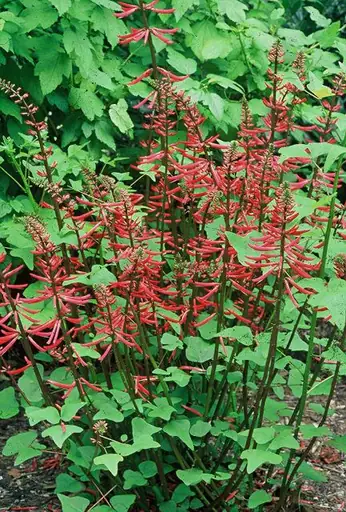
A relic of the old Southern wilds, Erythrina herbacea, the coral bean, is a plant that commands attention, graceful yet defiant, wild yet refined. A legume native across the coastal Southeast, the coral bean shifts habit with the winter: in frost-free zones the plant grows as a woody shrub, branching boldly above the ground, while farther north the top dies down with the first hard freeze, only to rise again from a thick, gnarled rootstock when the heat returns, an emblem of Southern resilience.
Come spring, slender spires of scarlet, tubular flowers shoot skyward, brilliant beacons for ruby-throated hummingbirds returning north and a striking sight in any native or cottage garden. As summer deepens, the flowers give way to strings of glossy, bright red seeds cradled in split black pods, ornamental and eye-catching. Handsome as the seeds are, they are also distinctly poisonous, holding alkaloids that act on the nerves much as curare does, so the coral bean carries an old reputation as much for danger as for beauty.
For overwintering in colder climates, roughly zone 7 and below, cut the stems back after frost, heap coarse sand about ten inches over the base, and blanket the crown with pine straw. Come spring, peel back the layers and wait for those blood-red spires to return like old friends. Where winters are mild, no such fuss is needed, and the plant simply carries on as a shrub.
Coral bean thrives in rich, well-drained soil with generous summer water, reveling in full sun and heat, and asks little once established. Set the plant at the back of a sunny native border, in a pollinator or cottage garden, or anywhere the spring hummingbird show can be enjoyed, keeping the toxic seeds in mind around children and pets. Native to the southeastern United States and hardy in USDA zones 7 through 10, the coral bean is as much a part of the Southern landscape as the mockingbird and the longleaf pine.
Es gibt noch mehr zu entdecken



Fragen und Diskussion