

Diese Seite wird in ihrer Originalsprache angezeigt. Eine Übersetzung ist noch nicht verfügbar.
Die Seedsun-Auswahl
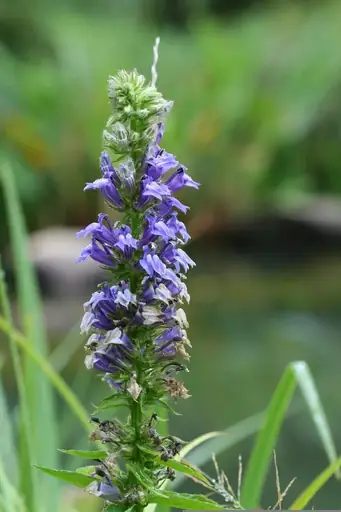
Great Blue Lobelia - Lobelia siphilitica
Artikelnummer: 8860
Great Blue Lobelia forms a flower spike covered in deep blue flowers from late summer to early fall. Easily grown in rich, medium to wet soils in full sun to part shade. The Great Blue Lobelia (Lobelia siphilitica) needs constant moisture, and will even tolerate brief flooding. However, Soils.
Fordern Sie ein individuelles Angebot an
Preise, Packungsgrößen und Verfügbarkeit werden in Ihrem persönlichen Angebot bestätigt. Mit dem Absenden einer Anfrage wird noch keine Bestellung aufgegeben.
Erkundigen Sie sich nach Eignung, Aussaat- und Anbaubedingungen.
Bitte prüfen Sie die Lieferoptionen und die benötigten Dokumente in Ihrem Angebot.
Über diese Sorte
Great Blue Lobelia forms a flower spike covered in deep blue flowers from late summer to early fall. Easily grown in rich, medium to wet soils in full sun to part shade. The Great Blue Lobelia (Lobelia siphilitica) needs constant moisture, and will even tolerate brief flooding. However, Soils should never be allowed to dry out since it occurs naturally in wetlands. Great Blue Lobelia grows best in full sun or light shade in hotter climates.Effective in moist areas of woodland/shade gardens, wet meadows or along streams or ponds. Water gardens. Rain garden. Also adds late summer bloom and height to borders as long as soils are kept uniformly moist. Great Blue Lobelia is a nectar plant for the Checkered White! Considered a magnet for hummingbirds and butterflies alike, Great Blue Lobelia is also attractive to beneficial insects and is deer and rabbit resistant!
Vital details:
Size: 3-5’ x 9-18”
Light: Full sun (6+ hrs/day), partial shade (4-6 hrs/day)
Water: Fertile, moist soil
Hardiness: 2-9
Pollinator value: Checkered White, hummingbirds and butterflies, beneficial insects.
Notable features: blue flowers, attracts hummingbirds, attracts butterflies.
Plant name: Great Blue Lobelia (Lobelia siphilitica)
Es gibt noch mehr zu entdecken



Fragen und Diskussion