

Diese Seite wird in ihrer Originalsprache angezeigt. Eine Übersetzung ist noch nicht verfügbar.
Die Seedsun-Auswahl
Indigofera heterantha
Artikelnummer: INDI-HETE-01G
Indigofera heterantha, the Himalayan indigo, is a graceful deciduous shrub from the mountains of the western Himalaya, a nitrogen-fixing legume grown for a long summer-into-fall run of rosy-purple pea flowers over ferny foliage. Michael Dirr, in his Manual of Woody Landscape Plants, notes that the.
Fordern Sie ein individuelles Angebot an
Preise, Packungsgrößen und Verfügbarkeit werden in Ihrem persönlichen Angebot bestätigt. Mit dem Absenden einer Anfrage wird noch keine Bestellung aufgegeben.
Erkundigen Sie sich nach Eignung, Aussaat- und Anbaubedingungen.
Bitte prüfen Sie die Lieferoptionen und die benötigten Dokumente in Ihrem Angebot.
Über diese Sorte
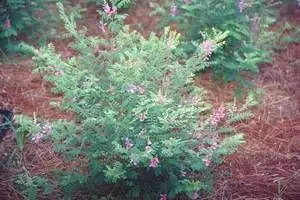
Indigofera heterantha, the Himalayan indigo, is a graceful deciduous shrub from the mountains of the western Himalaya, a nitrogen-fixing legume grown for a long summer-into-fall run of rosy-purple pea flowers over ferny foliage. Michael Dirr, in his Manual of Woody Landscape Plants, notes that the species has performed admirably in his Georgia trials, and the plant has earned a quiet following among Southern gardeners for toughness and length of bloom.
The genus name Indigofera means indigo-bearing, after the blue dye that a few tropical relatives, chiefly Indigofera tinctoria, once supplied to half the world. In the 1740s that dye became the great cash crop of colonial South Carolina, developed by Eliza Lucas Pinckney around Charleston and made with skill drawn largely from enslaved West Africans. The Himalayan indigo is an ornamental cousin, grown for flowers rather than dye, but the lineage lends the plant a certain depth.
From early summer through fall, five-inch racemes of rosy-purple, pea-shaped flowers rise from the leaf axils, carried on arching stems clothed in fine, many-leafleted compound foliage. The overall effect is airy and unforced, a soft haze of color rather than a solid mass. The shrub reaches four to eight feet where winters are mild, dying back and resprouting in colder gardens, and flowers on the current season's growth.
Give Himalayan indigo sun or a little afternoon shade and well-drained soil, and cut the plant back in late winter to keep it dense and floriferous. As a legume it asks for no rich feeding and tolerates lean ground and drought once established. Use in a mixed border, a pollinator planting, or against a warm wall in cooler regions, where bees work the long season of rosy bloom; pair with ornamental grasses and late perennials that echo the airy texture.
Es gibt noch mehr zu entdecken



Fragen und Diskussion