

Diese Seite wird in ihrer Originalsprache angezeigt. Eine Übersetzung ist noch nicht verfügbar.
Die Seedsun-Auswahl
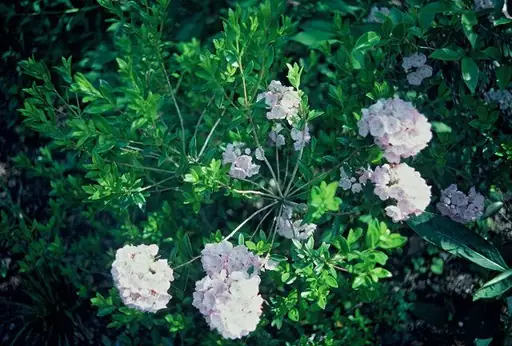
Kalmia latifolia x hirsuta
Artikelnummer: KALM-LATI-X-HIRS-01G
This seemingly unlikely hybrid crosses the familiar mountain laurel (Kalmia latifolia) with the diminutive, far less known sandhill laurel (Kalmia hirsuta) of the Deep South, two species that could hardly look more different. The cross was probably first made by the late, great Alabama nurseryman.
Fordern Sie ein individuelles Angebot an
Preise, Packungsgrößen und Verfügbarkeit werden in Ihrem persönlichen Angebot bestätigt. Mit dem Absenden einer Anfrage wird noch keine Bestellung aufgegeben.
Erkundigen Sie sich nach Eignung, Aussaat- und Anbaubedingungen.
Bitte prüfen Sie die Lieferoptionen und die benötigten Dokumente in Ihrem Angebot.
Über diese Sorte
This seemingly unlikely hybrid crosses the familiar mountain laurel (Kalmia latifolia) with the diminutive, far less known sandhill laurel (Kalmia hirsuta) of the Deep South, two species that could hardly look more different. The cross was probably first made by the late, great Alabama nurseryman Tom Dodd, Jr., and further investigated by the Connecticut Kalmia expert Dr. Richard Jaynes, whose lifetime of work did more than anyone's to bring the genus into gardens.
The genus Kalmia was named by Linnaeus for his student Pehr Kalm, the naturalist who explored eastern North America in the 1740s. This hybrid sits neatly between the parents in both size and hardiness, staying a compact three to four feet high and wide, and bears the typical pink flower clusters of a mountain laurel. Each cup-shaped bloom carries the family's signature mechanism, ten stamens held under spring tension in pockets of the corolla, ready to snap forward and dust a visiting bee with pollen. The sandhill laurel parent lends heat tolerance and a smaller frame, making this an intriguing laurel for gardeners in the warmer Southeast.
Mountain laurels carry a long human history under the common name spoonwood, from the hard, close-grained wood that Indigenous peoples of the East carved into spoons and small utensils. That heritage comes with a firm caution. Every green part of a Kalmia, along with the pollen and any honey made from the flowers, contains grayanotoxins and is poisonous to livestock, wildlife, and people. This hybrid is grown as an ornamental and pollinator plant, never a medicinal or edible one, and the foliage is best kept away from grazing animals and curious mouths.
In the garden, this compact laurel is an attractive and unusual choice for a spot with well-drained acid soil, semi-shade, and dependable moisture. The modest size suits a woodland border, a foundation planting, or a collector's corner among rhododendrons, blueberries, inkberry, and native ferns. Plant high rather than deep, mulch with pine straw to keep the roots cool and sour, and let the toxic evergreen foliage serve as quiet deer resistance through the year.
Es gibt noch mehr zu entdecken



Fragen und Diskussion