

Diese Seite wird in ihrer Originalsprache angezeigt. Eine Übersetzung ist noch nicht verfügbar.
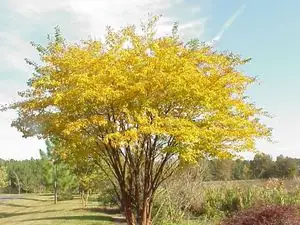
Die Seedsun-Auswahl
Lagerstroemia fauriei
Artikelnummer: LAGE-FAUR-01G
Among crape myrtles, Lagerstroemia fauriei is the aristocrat grown as much for bark as for bloom. A small, multi-stemmed, deciduous tree from Yakushima Island in southern Japan, first brought to botanical attention in the 1950s, the species reaches a graceful twenty-five to thirty-five feet with a.
Fordern Sie ein individuelles Angebot an
Preise, Packungsgrößen und Verfügbarkeit werden in Ihrem persönlichen Angebot bestätigt. Mit dem Absenden einer Anfrage wird noch keine Bestellung aufgegeben.
Erkundigen Sie sich nach Eignung, Aussaat- und Anbaubedingungen.
Bitte prüfen Sie die Lieferoptionen und die benötigten Dokumente in Ihrem Angebot.
Über diese Sorte
Among crape myrtles, Lagerstroemia fauriei is the aristocrat grown as much for bark as for bloom. A small, multi-stemmed, deciduous tree from Yakushima Island in southern Japan, first brought to botanical attention in the 1950s, the species reaches a graceful twenty-five to thirty-five feet with a rounded, vase-shaped crown. The summer flowers are white, carried in airy terminal panicles that are smaller and more delicate than the heavy trusses of the familiar Lagerstroemia indica.
The real glory arrives on the trunks. As the tree matures, the smooth bark exfoliates in thin flakes to reveal a glowing patchwork of cinnamon, copper, and mahogany, a feature that only deepens with age and turns the winter garden into a quiet spectacle. Set where low sun can catch the trunks, a well-grown specimen earns a place for the bark alone, flowers or no flowers.
Beyond beauty, Lagerstroemia fauriei carries real horticultural importance. Prized for strong resistance to the powdery mildew that plagues older crape myrtles, the species became a cornerstone of Dr. Donald Egolf's breeding program at the U.S. National Arboretum, where crosses with Lagerstroemia indica produced the celebrated National Arboretum hybrids, among them the enduringly popular 'Natchez'. may well have been the first nursery to offer Lagerstroemia fauriei to the American gardening public.
In the garden, give this crape myrtle an open, sunny site with well-drained soil and room for the multiple trunks to spread and show, as a lawn specimen, a patio tree, or an anchor at the corner of a bed. The white summer flowers, the disease resistance, and above all the copper bark reward a spot where the tree can be seen from every side and enjoyed through all four seasons. Underplant lightly, if at all, so nothing hides the trunks.
Es gibt noch mehr zu entdecken



Fragen und Diskussion