

Diese Seite wird in ihrer Originalsprache angezeigt. Eine Übersetzung ist noch nicht verfügbar.
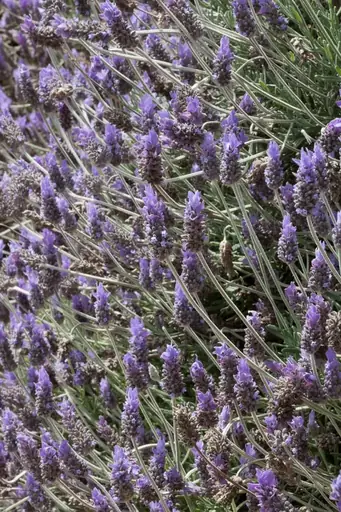
Die Seedsun-Auswahl
Lavandula dentata
Artikelnummer: LAVA-DENT-01G
There are plants that offer fragrance, and then there are plants that conjure memory. Lavandula dentata, with silvery, sawtoothed leaves and near ever-blooming lavender plumes, belongs firmly to the second kind, a bearer of the sort of scent that lingers in a sun-warmed linen chest or in the folds.
Fordern Sie ein individuelles Angebot an
Preise, Packungsgrößen und Verfügbarkeit werden in Ihrem persönlichen Angebot bestätigt. Mit dem Absenden einer Anfrage wird noch keine Bestellung aufgegeben.
Erkundigen Sie sich nach Eignung, Aussaat- und Anbaubedingungen.
Bitte prüfen Sie die Lieferoptionen und die benötigten Dokumente in Ihrem Angebot.
Über diese Sorte
There are plants that offer fragrance, and then there are plants that conjure memory. Lavandula dentata, with silvery, sawtoothed leaves and near ever-blooming lavender plumes, belongs firmly to the second kind, a bearer of the sort of scent that lingers in a sun-warmed linen chest or in the folds of a well-worn book left on a porch rail.
The botanical name tells the plant's story twice over. Lavandula descends from the Latin lavare, to wash, a nod to the Romans who scented their baths and laundry with lavender flowers, while dentata means toothed and points straight to the leaves, each grey-green blade edged with tidy scallops as though pinking shears had been drawn along the margin. A member of the mint family, Lamiaceae, French lavender is native to the sun-baked Mediterranean and reaches out to the Canary Islands, Madeira, and the Arabian Peninsula, everywhere favoring the same lean, stony, sun-struck ground.
Known to old-world gardeners as French or fringed lavender, this hardy evergreen herb would have been right at home in the physic gardens of Carolina planters and the cottage borders of Provence. Lavender has always been a working plant as much as an ornamental one, strewn on floors, tucked among linens to keep them sweet, distilled for the calming oil that folk tradition reached for against headaches, sleeplessness, and frayed nerves. The perfume of the fringed lavender is less cloying than that of the English kinds, cleaner and greener and touched with resin, and speaks of Mediterranean hillsides, dry winds, and the whispered liturgy of bees.
This is a plant for the contemplative soul, for the keeper of heirlooms, the reader of landscape, the one who knows that not all beauty is meant to dazzle. Some beauty is meant to endure. Plant Lavandula dentata in lean soil with sun on the shoulders of the border, and the lavender will return the favor tenfold, even in the warmest Southern gardens where English lavenders faint.
In the garden French lavender earns a place where the English kinds sulk. Give the plant lean soil, sharp drainage, and full sun and the low, silvery shrub will bloom for much of the year in mild climates, sending up wands topped with violet flowers and a pair of showy bracts like little rabbit ears. Set a low hedge of the lavender along a gravel path, mass the silvery shrub on a hot bank, tuck a plant into a herb garden or a terracotta pot, and let the bees and butterflies do the rest. Pair the grey foliage with the gold of santolina, the blue of rosemary, or the pink of dianthus for a dry, fragrant border that shrugs off heat and drought.
This is a lavender that asks for little and gives much: bloom, balm, and a brush with timelessness.
Es gibt noch mehr zu entdecken



Fragen und Diskussion