

Diese Seite wird in ihrer Originalsprache angezeigt. Eine Übersetzung ist noch nicht verfügbar.
Die Seedsun-Auswahl
Lobelia cardinalis
Artikelnummer: LOBE-CARD-01G
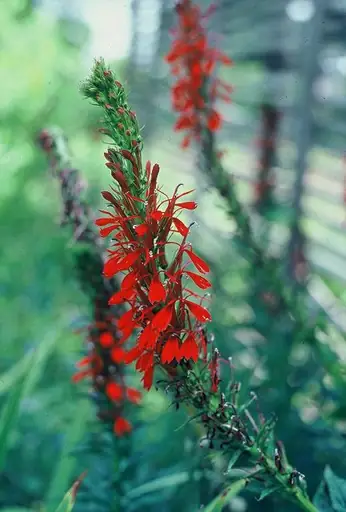
Few native perennials burn as bright as Lobelia cardinalis, the cardinal flower, whose late-summer spikes of pure, velvety scarlet stop traffic in any garden. The species ranges across much of North America along stream banks, wet meadows, and ditches, and takes the common name from the vivid red.
Fordern Sie ein individuelles Angebot an
Preise, Packungsgrößen und Verfügbarkeit werden in Ihrem persönlichen Angebot bestätigt. Mit dem Absenden einer Anfrage wird noch keine Bestellung aufgegeben.
Erkundigen Sie sich nach Eignung, Aussaat- und Anbaubedingungen.
Bitte prüfen Sie die Lieferoptionen und die benötigten Dokumente in Ihrem Angebot.
Über diese Sorte
Few native perennials burn as bright as Lobelia cardinalis, the cardinal flower, whose late-summer spikes of pure, velvety scarlet stop traffic in any garden. The species ranges across much of North America along stream banks, wet meadows, and ditches, and takes the common name from the vivid red of a cardinal's robes. From a low rosette of broad green leaves rises a stiff, unbranched stem hung with tubular flowers built, as luck would have it, precisely to the reach of a hummingbird's bill.
Cardinal flower belongs to the bellflower family, Campanulaceae, and the genus honors the sixteenth-century Flemish botanist Matthias de Lobel. Native American peoples put various lobelias to use in traditional medicine, chiefly for respiratory and nervous complaints, but the whole genus carries toxic alkaloids akin to nicotine, so cardinal flower is a plant to admire rather than eat, and one best sited out of reach of curious children and pets.
For all the drama, cardinal flower is easy where the roots stay damp. Give the plant steady moisture and a spot in sun to part shade, cooler and richer at the root than most perennials ask, and the reward is weeks of scarlet from midsummer into early fall. The one weakness is a tendency to be short-lived, so let a few seed heads ripen and self-sow, or lift and divide the basal rosettes every couple of years to keep a colony going.
Massed along a pond edge, a rain garden, or a wet ditch, the red spikes read from clear across the garden, and they consort beautifully with blue lobelia, scarlet bee balm, and the fresh green of ferns. The horticulturist Allan Armitage put the value plainly in his Herbaceous Perennial Plants, writing that the few dollars spent on plants produces dividends unparalleled in the New York Stock Exchange. For hummingbirds, and for gardeners, that is close to the truth.
Es gibt noch mehr zu entdecken



Fragen und Diskussion