

Diese Seite wird in ihrer Originalsprache angezeigt. Eine Übersetzung ist noch nicht verfügbar.
Die Seedsun-Auswahl
Lobelia siphilitica
Artikelnummer: LOBE-SIPH-01G
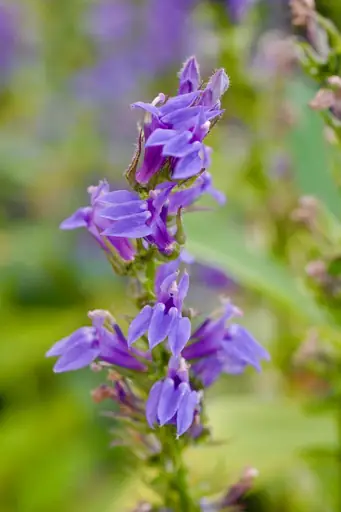
Where the cardinal flower runs to scarlet, Lobelia siphilitica answers in blue. The great blue lobelia sends up leafy spikes packed with inch-long, two-lipped flowers of clear, saturated blue in late summer and early fall, one of the truest blues in the native flora and a gift to the garden at a.
Fordern Sie ein individuelles Angebot an
Preise, Packungsgrößen und Verfügbarkeit werden in Ihrem persönlichen Angebot bestätigt. Mit dem Absenden einer Anfrage wird noch keine Bestellung aufgegeben.
Erkundigen Sie sich nach Eignung, Aussaat- und Anbaubedingungen.
Bitte prüfen Sie die Lieferoptionen und die benötigten Dokumente in Ihrem Angebot.
Über diese Sorte
Where the cardinal flower runs to scarlet, Lobelia siphilitica answers in blue. The great blue lobelia sends up leafy spikes packed with inch-long, two-lipped flowers of clear, saturated blue in late summer and early fall, one of the truest blues in the native flora and a gift to the garden at a tired time of year. The species grows wild across eastern and central North America in moist meadows, low woods, and along streamsides.
Like the cardinal flower, great blue lobelia belongs to the bellflower family, Campanulaceae, and the genus honors the Flemish botanist Matthias de Lobel. The startling epithet siphilitica preserves a piece of medical history: the botanist John Bartram, learning the practice from Native peoples to the north, described the ground root in his eighteenth-century Medicina Britannica as a cure for syphilis. That reputation carried the plant to Europe and into the botanical name, though the cure was later shown to be entirely ineffective, a cautionary tale now fossilized in Latin.
Native American peoples did use the plant more soundly for respiratory and muscular complaints, but great blue lobelia, like the whole genus, holds toxic alkaloids related to nicotine and is not safe to eat. Grow the plant for beauty and for wildlife rather than the medicine chest, and site the clump where children and pets will not be tempted. The compensation is generous: bees, butterflies, and hummingbirds all work the blue spikes for nectar through the season's end.
Great blue lobelia is easygoing wherever the soil stays moist, thriving in sun to part shade at a pond edge, in a rain garden, or along a shaded woodland border. The plant is naturally short-lived but self-sows gently in agreeable spots, and a simple division every few years keeps a colony vigorous. Pair the blue with the scarlet of cardinal flower, the gold of goldenrod, and the white of turtlehead for a late-season, pollinator-thronged planting that thrives in the damp ground where many perennials sulk. Deer and rabbits, put off by the bitter foliage, leave the plants alone.
Es gibt noch mehr zu entdecken



Fragen und Diskussion