

Diese Seite wird in ihrer Originalsprache angezeigt. Eine Übersetzung ist noch nicht verfügbar.
Die Seedsun-Auswahl
Lyonia lucida
Artikelnummer: LYON-LUCI-01G
Lyonia lucida, the fetterbush, is one of the quiet evergreen pleasures of the Southeastern wetlands, a shrub of upright, arching stems clothed in glossy, leathery leaves. Look closely and each smooth leaf shows a fine vein running just inside the margin, a neat identifying mark, and the species.
Fordern Sie ein individuelles Angebot an
Preise, Packungsgrößen und Verfügbarkeit werden in Ihrem persönlichen Angebot bestätigt. Mit dem Absenden einer Anfrage wird noch keine Bestellung aufgegeben.
Erkundigen Sie sich nach Eignung, Aussaat- und Anbaubedingungen.
Bitte prüfen Sie die Lieferoptionen und die benötigten Dokumente in Ihrem Angebot.
Über diese Sorte
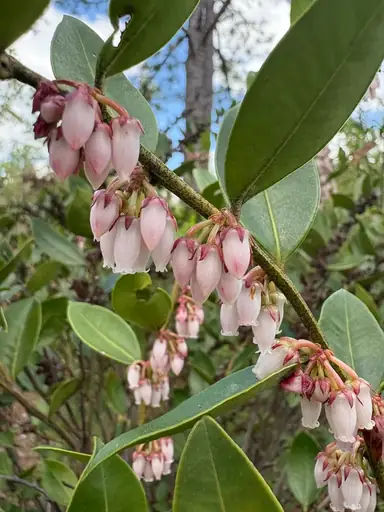
Lyonia lucida, the fetterbush, is one of the quiet evergreen pleasures of the Southeastern wetlands, a shrub of upright, arching stems clothed in glossy, leathery leaves. Look closely and each smooth leaf shows a fine vein running just inside the margin, a neat identifying mark, and the species name lucida, Latin for shining, salutes that polished surface. The common name comes from the dense, tangling thickets the shrub forms in the wild, said to fetter anyone trying to walk through.
Fetterbush belongs to the heath family, Ericaceae, alongside blueberries, azaleas, and mountain laurel, and the genus Lyonia honors John Lyon, the intrepid Scottish-American plant collector who botanized the southern Appalachians in the early nineteenth century. The species grows wild from Virginia south through Florida and west to Louisiana, in acidic pine flatwoods, bogs, and pocosins where the soil stays damp. As with other members of the heath family, the foliage carries grayanotoxins and is not for grazing, which is part of why deer leave the shrub alone.
In late winter and spring the leaf axils hang with clusters of small, waxy, bell-shaped flowers in shades of white to clear pink, nodding beneath the branches and mildly sweet, an early nectar source for bees. The bloom is understated but charming at close range, and the glossy evergreen foliage carries the shrub handsomely through the rest of the year, dense and tidy, with a coppery cast to the new growth.
Fetterbush is made for the moist, acidic, part-shaded situations where so many good things refuse to grow: a rain garden, a pond edge, a damp woodland border, or the understory beneath pines. Pair the shrub with azaleas, blueberries, and native hollies for an acid-loving, wildlife-friendly planting. Given consistent moisture and a pine-needle mulch, the plant is close to carefree; a hard cut in early spring thickens an open specimen and keeps the arching habit shapely.
Photos taken by Jonas Meyer near the Ohoopee River
Es gibt noch mehr zu entdecken



Fragen und Diskussion