

Diese Seite wird in ihrer Originalsprache angezeigt. Eine Übersetzung ist noch nicht verfügbar.
Die Seedsun-Auswahl
Magnolia virginiana var. australis
Artikelnummer: MAGN-VIRG-AUST-01G
Magnolia virginiana, the sweetbay magnolia, has long been a tree of distinction in the American landscape, ranging from the cool wetlands of Massachusetts to the Gulf Coast. Across that span the species wears two very different guises. In the northern states the sweetbay is a smaller, often shrubby.
Fordern Sie ein individuelles Angebot an
Preise, Packungsgrößen und Verfügbarkeit werden in Ihrem persönlichen Angebot bestätigt. Mit dem Absenden einer Anfrage wird noch keine Bestellung aufgegeben.
Erkundigen Sie sich nach Eignung, Aussaat- und Anbaubedingungen.
Bitte prüfen Sie die Lieferoptionen und die benötigten Dokumente in Ihrem Angebot.
Über diese Sorte
Magnolia virginiana, the sweetbay magnolia, has long been a tree of distinction in the American landscape, ranging from the cool wetlands of Massachusetts to the Gulf Coast. Across that span the species wears two very different guises. In the northern states the sweetbay is a smaller, often shrubby tree that drops its leaves in winter; in the Deep South the species reaches fullest expression as Magnolia virginiana var. australis, the evergreen southern sweetbay, a large and enduring tree of great grace.
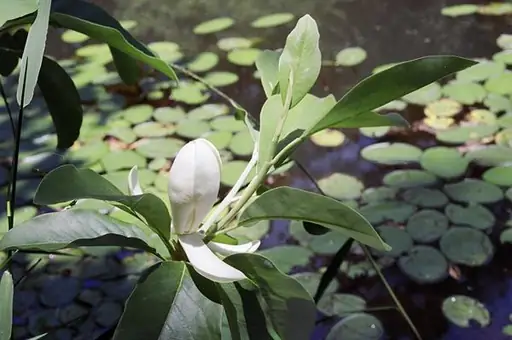
This southern form, native to the coastal plain from the Carolinas through Florida and west to Texas, is one of the most ornamental of the native magnolias. The lustrous, evergreen foliage gives the tree a presence unmatched by the northern kin, glossy dark green above and silvered beneath. In summer come fragrant, creamy-white flowers that open in slow succession, each carrying the clean lemon perfume that William Bartram praised as he wandered the southern woods, blooms of understated elegance, never gaudy and always refined.
The evergreen sweetbay is a tree of wetlands and bottomlands, at home along streams, swamps, and coastal hammocks, yet in gardens the tree proves wonderfully adaptable, flourishing wherever the soil stays moist, acidic, and reasonably drained. A tolerance for periodic flooding, paired with the evergreen beauty, makes the southern sweetbay invaluable where a garden needs both native resilience and year-round green.
Unlike the shrubby northern variety, var. australis can rise to true tree stature, sometimes past sixty feet, with a straight trunk and an airy crown. The tree lends itself to use as a shade tree, a specimen, or a native alternative to exotic evergreens, especially in southern landscapes where gardeners want plants with cultural and ecological integrity.
For the gardener who plants one, the southern sweetbay offers not only fragrance and beauty but a tie to the Deep South's natural heritage, a tree that has stood along swamps, river margins, and old homesteads for centuries and still marks the seasons with quiet constancy.
Es gibt noch mehr zu entdecken



Fragen und Diskussion