

Diese Seite wird in ihrer Originalsprache angezeigt. Eine Übersetzung ist noch nicht verfügbar.
Die Seedsun-Auswahl
Rhododendron calendulaceum
Artikelnummer: RHOD-CALE-01G
Flame azalea is the showiest of all the native azaleas, and the one that stops hikers in their tracks on the Appalachian balds each June. The large, funnel-shaped flowers open in a fiery range that runs from clear yellow through gold and apricot to blazing orange and scarlet, carried in loose.
Fordern Sie ein individuelles Angebot an
Preise, Packungsgrößen und Verfügbarkeit werden in Ihrem persönlichen Angebot bestätigt. Mit dem Absenden einer Anfrage wird noch keine Bestellung aufgegeben.
Erkundigen Sie sich nach Eignung, Aussaat- und Anbaubedingungen.
Bitte prüfen Sie die Lieferoptionen und die benötigten Dokumente in Ihrem Angebot.
Über diese Sorte
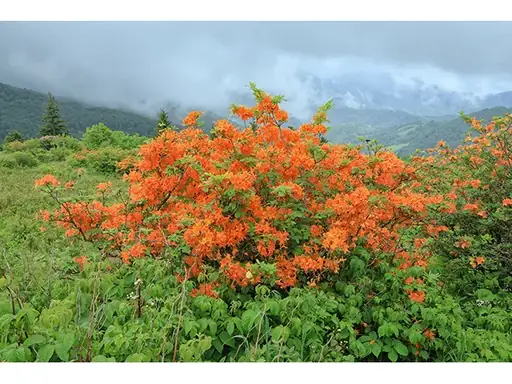
Flame azalea is the showiest of all the native azaleas, and the one that stops hikers in their tracks on the Appalachian balds each June. The large, funnel-shaped flowers open in a fiery range that runs from clear yellow through gold and apricot to blazing orange and scarlet, carried in loose trusses just as the new leaves expand. For all that color the flowers are, unusually, without scent, but nothing about a flame azalea in full bloom feels the lack.
The Latin calendulaceum means marigold-colored, for those orange and gold flowers, and the wide, weakly scented blooms have an unusual pollinator to match. Research on flame azalea found that the flowers are effectively pollinated by large butterflies, above all the eastern tiger swallowtail, which carries pollen on its wings from bloom to bloom, one of the very few plants anywhere known to be pollinated this way. Hummingbirds and bees visit too, but the swallowtail does the real work.
Flame azalea is a mountain plant, and honesty requires saying so plainly. Native to the higher elevations of the southern Appalachians, the species wants cool, moist, acidic, humus-rich but well-drained soil and resents summer heat, growing more slowly and never quite hitting its stride in the hot, humid Deep South, and is best from USDA zones 5 to 7. Give the plant part shade to sun with cool roots, a woodland edge or a north-facing slope, and the reward is that unmatched late-spring bloom followed by yellow, bronze, and red fall color.
One honest caution comes with the beauty: like all the azaleas and rhododendrons, every part of the plant carries grayanotoxins and is poisonous if eaten, and even honey made from the nectar can be toxic, so site the shrub away from where children or livestock might browse it. Grown well, flame azalea is a treasure for a woodland garden, a native or pollinator planting, or a shaded border, a loose, upright shrub of four to ten feet that earns its place with the most spectacular flowers of any azalea on the continent.
Photos courtesy of Alan Cressler
Es gibt noch mehr zu entdecken



Fragen und Diskussion