

Diese Seite wird in ihrer Originalsprache angezeigt. Eine Übersetzung ist noch nicht verfügbar.
Die Seedsun-Auswahl
Sabal x texensis
Artikelnummer: SABA-TEXE-01G
The trunked palmettos of Brazoria County, Texas have kept botanists arguing for the better part of a century, and this palm is the latest word in that argument. Along the San Bernard River and the wet riparian woods of the upper Texas coast stands a population of palmettos that build real trunks,.
Fordern Sie ein individuelles Angebot an
Preise, Packungsgrößen und Verfügbarkeit werden in Ihrem persönlichen Angebot bestätigt. Mit dem Absenden einer Anfrage wird noch keine Bestellung aufgegeben.
Erkundigen Sie sich nach Eignung, Aussaat- und Anbaubedingungen.
Bitte prüfen Sie die Lieferoptionen und die benötigten Dokumente in Ihrem Angebot.
Über diese Sorte
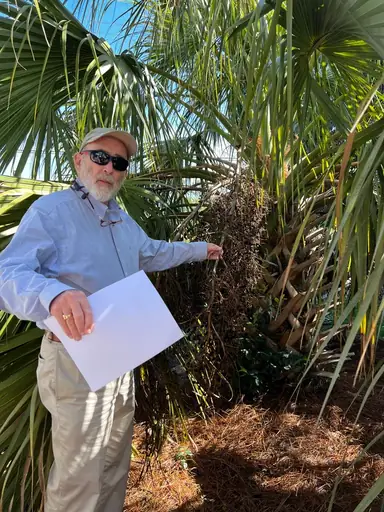
The trunked palmettos of Brazoria County, Texas have kept botanists arguing for the better part of a century, and this palm is the latest word in that argument. Along the San Bernard River and the wet riparian woods of the upper Texas coast stands a population of palmettos that build real trunks, sometimes fifteen feet of them, in country where Sabal minor is supposed to stay flat on the ground. For years the plant passed through the nursery trade as Sabal × texensis, the Brazoria Palmetto, and that is the name our seed came under. In 2011 Douglas Goldman and colleagues ran the DNA and published a new name, Sabal × brazoriensis, for what turned out to be an ancient natural hybrid between the Dwarf Palmetto and the Cabbage Palmetto, Sabal palmetto, rather than the Mexican Palmetto most people had guessed.
Whatever the label, the garden result is the same: a palm that looks like a Cabbage Palmetto in miniature, with a stout trunk, broad green costapalmate fans up to eight feet long, and fragrant creamy flowers on stalks that reach past the leaves in summer, followed by black fruit. The cold hardiness is the point. Plants have come through fifteen degrees below zero Fahrenheit in Arkansas, and the palm is widely reckoned the hardiest trunked Sabal in cultivation, rated to Zone 7b. In trials the seedlings have grown at twice the pace of Sabal minor, which for a palmetto is almost brisk.
Like the other palmettos, the Brazoria palm belongs to a group long woven into daily life along the Gulf, the fan leaves cut for thatch, hats, and baskets, and the fruit eaten by wildlife and people alike. In the garden give the palm a moist, sunny to lightly shaded spot and room for the fans to arch, and plant with the patience a palm deserves. Pair with Louisiana iris, bald cypress, and other lovers of damp ground, or stand the palm alone on a lawn where the trunk can be read against sky. A hardy trunked palmetto for gardeners well north of the Gulf, and a conversation piece with a long paper trail.
Es gibt noch mehr zu entdecken



Fragen und Diskussion