
Why Do Spider Plants Fade or Lose Their Variegation?
Spider plants are special, in part, because they’re so easy to care for. Plus, those strappy, often variegated leaves are pretty distinct. No one is going to mistake your spider plant (Chlorophytum comosum) for a Monstera. And those spiderettes?! SO cute. As with many tough houseplants, when things.
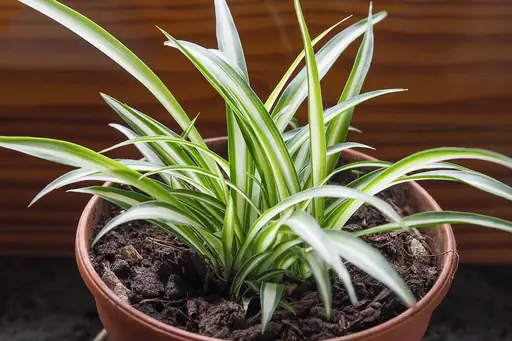
Spider plants are special, in part, because they’re so easy to care for.
Plus, those strappy, often variegated leaves are pretty distinct. No one is going to mistake your spider plant (Chlorophytum comosum) for a Monstera. And those spiderettes?! SO cute.
As with many tough houseplants, when things go wrong, your plant tells you right away with changes in the leaves.
And once those leaves start to change… they suddenly look a lot less appealing.
Spider plants can turn brown or yellow. Or they might start to fade and turn pale, or lose color. Variegated types might lose their distinct contrast.
In this guide, we’ll talk about fading leaves, those that lose color or variegation and look somewhat sickly, but they aren’t turning yellow or brown.
We’ll help you figure out the causes and resolve the problem so your houseplant can look healthy once again.
Why Spider Plants Fade or Lose Variegation
- Lack of Nutrients
- Not Enough Sun
- Not Enough Water
- Overwatering
- Too Much Light
Part of the challenge here is that a C. comosum might revert back to its non-variegated form any time when it’s extremely stressed.
Those white and yellow parts of the leaves aren’t efficient at performing photosynthesis, and a struggling plant with more green parts is better able to survive.
Variegated spider plants came about after breeding specimens with attractive mutations in their leaves. But those original all-green genes are still in there.
You can learn more about spider plants and how to care for them in our comprehensive guide.
Let’s take a look at the common causes for reversion or paleness in these popular houseplants!
1. Lack of Nutrients
A lack of nutrients is less often a problem than the other things on this list.
That’s because spider plants aren’t heavy feeders, meaning they don’t need a lot of food. At the very most, you should be feeding once every two weeks with a mild houseplant fertilizer.
Dr. Earth Pump & Grow
Dr. Earth’s Pump & Grow is mild enough that you don’t have to worry about burning your C. comosum.
2. Not Enough Sun
When a spider plant is located in a space that receives too little sun, the leaves start to turn all green and somewhat pale.
Remember the tendency of C. comosum to revert to green when it’s stressed?
That’s what’s going on here. It isn’t receiving enough sun so it’s turning some of that white or yellow growth green to become more efficient at photosynthesis.
These plants want bright, indirect sunlight. Direct light is going to be too much for them, and a dark corner isn’t any good either.
Something right in between with medium light is perfect. A location near a south-, west-, or east-facing window with a sheer curtain placed over it is the perfect spot.
3. Not Enough Water
Give that spider plant a drink! A C. comosum that doesn’t get enough water isn’t going to instantly lose its stripes, but over time, repeated drought can cause the leaves to lose their distinct coloring.
Spider plants do particularly well when you bottom-water them, but if you opt to water from the top, do so only once the top inch of soil has dried out.
Any more than that, and you’re asking for trouble.
4. Overwatering
An overwatered C. comosum will quickly turn pale.
The variegation, if present, will remain, but the green parts of the foliage will become quite pale, and the entire leaf might almost appear translucent.
Stick your finger in the soil and feel for moisture. If it feels wet, you’ve overwatered.
The soil should feel like a well-wrung-out sponge after being watered. And the top inch should always be allowed to dry out between watering.
5. Too Much Light
Too much light can bleach out the leaves.
Specimens growing in too much sun will start to fade and look pale green rather than having distinct green and white or yellow parts. The tips of the leaves will often turn brown and dry, as well.
Remember, bright, indirect light is your goal!
Don’t Let Your Spider Plant Fade Out
When a C. comosum starts to fade or turn all green, it’s easy to panic and figure that your houseplant is on its way out.
But once you determine the cause, it’s usually pretty easy to sort everything out and return it to its former glory.
Which issue are you experiencing with your houseplant? Is it losing variegation? Or just fading to a paler hue? Share what you’re doing to fix it with us in the comments below.
Want to increase your spider plant knowledge even more? Give these guides a read next:
- 7 Tips to Get Rid of Fungus Gnats on Spider Plants
- Propagating Spider Plant Babies: 3 Methods to Root Spiderettes
- How to Revive a Wilting Spider Plant
- Facebook16
- X




Preguntas y debate