

Esta página se muestra en su idioma original. La traducción aún no está disponible.
La selección de Seedsun
Ardisia crenata
SKU: ARDI-CREN-01G
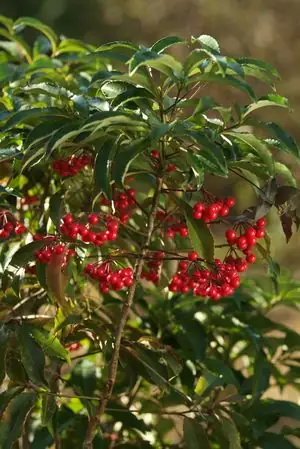
A small shrub built like a miniature tree, Ardisia crenata rises on one clean stem to two or four feet, occasionally six, and carries a single tier of glossy dark green leaves at the top like a parasol. The leaf margins are thick and scalloped, waved just enough to catch the light along the edge..
Solicita un presupuesto personalizado
Los precios, tamaños de los paquetes y disponibilidad se confirman en su presupuesto personalizado. Enviar una consulta no implica realizar un pedido pagado.
Pregunte sobre la idoneidad, la siembra y los requisitos de cultivo.
Confirme las opciones de entrega y los documentos necesarios en su presupuesto.
Acerca de esta variedad
A small shrub built like a miniature tree, Ardisia crenata rises on one clean stem to two or four feet, occasionally six, and carries a single tier of glossy dark green leaves at the top like a parasol. The leaf margins are thick and scalloped, waved just enough to catch the light along the edge. Small white to pale pink stars hang in nodding clusters in late spring, lightly scented, and are followed by the reason anyone actually grows the shrub: tight bunches of round, lacquer-red berries that hold from autumn straight through to the next flowering.
Crenata means scalloped, for those wavy leaf edges, and the edges reward a close look for a second reason. A line of small swellings runs along every margin, and inside those nodules lives a bacterium, Candidatus Burkholderia crenata, which the shrub cannot live without and which lives nowhere else. The bacterium manufactures FR900359, a cyclic depsipeptide first isolated from this species in the 1980s and now one of the most valued tools in pharmacology, a selective inhibitor of Gq proteins used in laboratories worldwide. Very few garden plants arrive with a resident chemist.
In Chinese medicine the dried root is zhu sha gen, cinnabar root, named for the color of the fruit. The tradition uses the root to clear heat and to break blood stasis, to dispel wind and damp, and above all for the throat; among the Miao people of southwestern China the root is regarded first as a throat remedy, and Zhuang practitioners work with several relatives in the genus for related complaints. The chemistry underneath includes triterpenoid saponins alongside the celebrated depsipeptide, and those same compounds make the plant genuinely toxic to grazing livestock.
In the garden this is an outstanding container subject and a striking evergreen for shaded southern beds, where the berries carry December and the habit stays architectural without any pruning at all. Give part to full shade, moist well-drained soil with plenty of organic matter, and shelter from hard freeze. Now the necessary caution, which is not a small one: coral ardisia has naturalized aggressively across the Gulf South, was declared invasive in Florida in 1995, and was elevated to noxious weed status there in 2014. Birds carry the seed into hardwood hammocks, where dense stands crowd out the native understory. Grow this one in a pot, or in a garden well outside the Gulf Coastal Plain, and check your state regulations before ordering.
Hay mucho más por descubrir



Preguntas y debate