

Esta página se muestra en su idioma original. La traducción aún no está disponible.
La selección de Seedsun
Camellia longicarpa
SKU: CAME-LONG-01G
Most American gardeners know two camellias, the winter-blooming Camellia japonica and the autumn-blooming Camellia sasanqua, each in a hundred named forms. Camellia longicarpa belongs to a different and far less familiar company: the small-flowered wild camellias of section Theopsis, scarcely grown.
Solicita un presupuesto personalizado
Los precios, tamaños de los paquetes y disponibilidad se confirman en su presupuesto personalizado. Enviar una consulta no implica realizar un pedido pagado.
Pregunte sobre la idoneidad, la siembra y los requisitos de cultivo.
Confirme las opciones de entrega y los documentos necesarios en su presupuesto.
Acerca de esta variedad
Most American gardeners know two camellias, the winter-blooming Camellia japonica and the autumn-blooming Camellia sasanqua, each in a hundred named forms. Camellia longicarpa belongs to a different and far less familiar company: the small-flowered wild camellias of section Theopsis, scarcely grown on this side of the Pacific. remains one of the few nurseries offering these lesser-known species to gardeners who want the wild plant rather than the show cultivar.
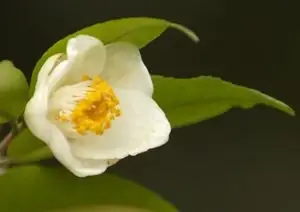
Native to the ravine forests of Sichuan and western Hunan, where the plant grows as an understory shrub or small tree between roughly five hundred and seventeen hundred meters, this camellia carries slender, long-tipped leaves and small, waxy, cup-shaped white flowers, faintly fragrant, opening from late summer into autumn when almost no other camellia is in bloom. The name longicarpa means long-fruited, a nod to the unusually elongated seed capsule that sets the species apart from the rounder-fruited members of the group. Taxonomy here is unsettled; some botanists now treat Camellia longicarpa as a synonym of Camellia synaptica, and both names lead to the same slender white-flowered plant.
The genus honors Georg Josef Kamel, the Moravian Jesuit and pharmacist who botanized in the Philippines and whom Linnaeus chose to commemorate, though Kamel never laid eyes on a camellia. Like the rest of the clan, this species asks for the classic camellia site: dappled shade, shelter from harsh sun and drying wind, and an acidic, humus-rich soil kept moist but never waterlogged. The forest-ravine origin is the whole instruction, a plant of cool, leafy, half-lit places.
There is no tea and no seed oil to claim here; despite the famous economic cousins in the genus, Camellia longicarpa is purely an ornamental for the collector and the shade garden. The reward is quieter and rarer than a japonica in full flush: fine, airy foliage on a graceful small tree, and a scatter of scented white cups in the shortening days of late summer, a camellia that flowers when the others have long since finished. For the gardener who already grows the common two and wants the wild original, this is a plant to seek out and a species to help keep in cultivation.
Hay mucho más por descubrir



Preguntas y debate