

Esta página se muestra en su idioma original. La traducción aún no está disponible.
La selección de Seedsun
Eriobotrya japonica
SKU: ERIO-JAPO-01G
The loquat, Eriobotrya japonica, is a handsome broadleaved evergreen of the rose family, kin to apples, pears, and hawthorns, grown for the bold foliage and the early, unusual fruit. Native to the warm-temperate hills of central China and cultivated in Japan for more than a thousand years, the.
Solicita un presupuesto personalizado
Los precios, tamaños de los paquetes y disponibilidad se confirman en su presupuesto personalizado. Enviar una consulta no implica realizar un pedido pagado.
Pregunte sobre la idoneidad, la siembra y los requisitos de cultivo.
Confirme las opciones de entrega y los documentos necesarios en su presupuesto.
Acerca de esta variedad
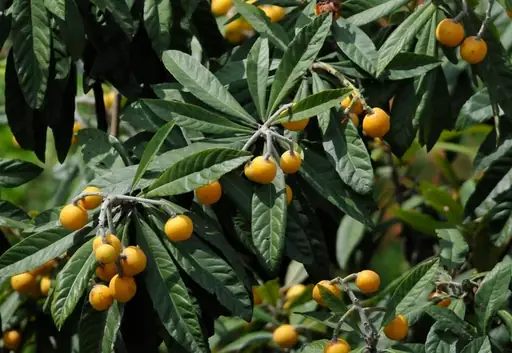
The loquat, Eriobotrya japonica, is a handsome broadleaved evergreen of the rose family, kin to apples, pears, and hawthorns, grown for the bold foliage and the early, unusual fruit. Native to the warm-temperate hills of central China and cultivated in Japan for more than a thousand years, the loquat has traveled with settlers throughout the mild-winter world, from the Mediterranean to the American South, where old dooryard trees are a familiar sight. The large, leathery leaves, deeply veined and toothed along the edges, give the tree a lush, almost tropical presence year round.
The loquat keeps an upside-down calendar. Where most fruit trees bloom in spring, the loquat opens clusters of small, fragrant, cream-white flowers in late fall and early winter, filling cold air with a soft, sweet scent and feeding bees when little else is in flower. From those winter blooms come the fruits: small, oval, yellow to orange, with sweet-tart, honeyed flesh around a few large brown seeds, ripening in spring, months ahead of any other tree fruit. Whether a given year sets a heavy crop depends entirely on winter cold, since a hard freeze at or after flowering will take the blossoms and the fruit with them.
In the landscape the loquat pulls double duty as ornament and orchard. Left to grow, the tree makes a rounded, densely leafy small tree or large shrub, fifteen feet or more, excellent as an evergreen screen, a patio shade tree, or a bold-textured specimen against a wall. The fruit is best fresh off the branch but also makes fine jelly, jam, and preserves, and the trees carry a heavy crop where winters are kind. Give the loquat room, since the broad canopy and big leaves want space to look their best.
Loquats are easy in the right climate. Hardy in USDA zones 7 through 10, the tree wants full sun to part shade and fertile, well-drained soil, tolerates a range of ground so long as drainage is good, and shrugs off heat once established, though young trees and open flowers need protection from hard frost. Beyond the kitchen, loquat leaves have a long life in traditional Chinese and Japanese medicine, where they are known as pipa ye and brewed against coughs and chest complaints, an old use that modern research on the leaf's triterpenes continues to explore. Few small trees give so much: evergreen structure, winter fragrance, spring fruit, and a deep well of history.
Hay mucho más por descubrir



Preguntas y debate