

Esta página se muestra en su idioma original. La traducción aún no está disponible.
La selección de Seedsun
Euonymus americanus
SKU: EUON-AMER-01G
In the quiet understory of the Eastern woodlands grows a shrub of subtle grace and striking autumn drama: Euonymus americanus, the American strawberry bush, known just as fondly by the folk name hearts-a-bustin'. This native, deciduous to semi-evergreen shrub sends up slender, distinctly green,.
Solicita un presupuesto personalizado
Los precios, tamaños de los paquetes y disponibilidad se confirman en su presupuesto personalizado. Enviar una consulta no implica realizar un pedido pagado.
Pregunte sobre la idoneidad, la siembra y los requisitos de cultivo.
Confirme las opciones de entrega y los documentos necesarios en su presupuesto.
Acerca de esta variedad
In the quiet understory of the Eastern woodlands grows a shrub of subtle grace and striking autumn drama: Euonymus americanus, the American strawberry bush, known just as fondly by the folk name hearts-a-bustin'. This native, deciduous to semi-evergreen shrub sends up slender, distinctly green, angular stems clad in opposite, lance-shaped leaves to about three inches long. Through spring and summer the plant keeps to the shade of oak, hickory, and pine, quietly content in fertile, moist, well-drained soil.
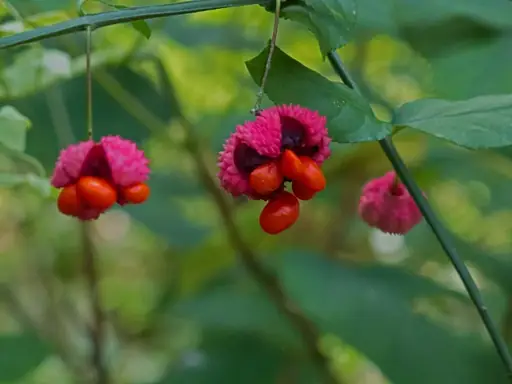
Autumn is when this woodland native earns a place in memory and garden alike. The warty, scarlet seed capsules split open like little five-pointed stars, revealing bright orange-red seeds that dangle like jewels in the low October light. Those fiery bursts of scarlet and ember-orange give rise to the evocative country name hearts-a-bustin', a phrase that carries generations of Southern woodland lore. The small greenish, five-petaled spring flowers that precede them are easy to miss, but the fall fruit is unforgettable.
Beloved by naturalists and native-plant gardeners, the American strawberry bush is a true native of eastern North America and a quiet workhorse for wildlife. Birds, including wild turkeys and songbirds, take the seeds and scatter the plant to new corners of the woods, while deer browse the foliage and the loose thickets shelter small creatures. A note of caution for people: like others in the genus, the fruit and seeds are considered toxic if eaten, so the show is one for the eyes, not the table.
Plant this heirloom of the Southern woodland where a light touch of native character is wanted: in a shade or woodland garden, along a naturalized border, or in the dappled edge of taller trees. The understated summer foliage and green winter stems give way to that show-stopping autumn spectacle, a reminder that even the humblest forest shrub can carry real beauty and old tradition into the modern garden. Photos courtesy of Stephanie Brundage and Carolyn Fannon.
Hay mucho más por descubrir



Preguntas y debate