

Esta página se muestra en su idioma original. La traducción aún no está disponible.
La selección de Seedsun
Hypericum stans
SKU: HYPE-STAN-01G
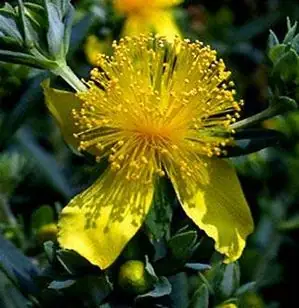
Hypericum stans is the four-petaled member of the family, a small, upright shrub to about three feet with broad, clasping, blue-green leaves and shreddy, peeling bark. Through summer the stems carry bright yellow flowers an inch across, and where most St. John's Worts open five petals, these show.
Solicita un presupuesto personalizado
Los precios, tamaños de los paquetes y disponibilidad se confirman en su presupuesto personalizado. Enviar una consulta no implica realizar un pedido pagado.
Pregunte sobre la idoneidad, la siembra y los requisitos de cultivo.
Confirme las opciones de entrega y los documentos necesarios en su presupuesto.
Acerca de esta variedad
Hypericum stans is the four-petaled member of the family, a small, upright shrub to about three feet with broad, clasping, blue-green leaves and shreddy, peeling bark. Through summer the stems carry bright yellow flowers an inch across, and where most St. John's Worts open five petals, these show four, set in a neat cross above a pair of large leafy sepals.
The names hold a small tangle worth untangling. Botanists now treat the plant under the older name Hypericum crux-andreae, and both this species and a smaller cousin once sat in the separate genus Ascyrum. Crux-andreae means the cross of Saint Andrew, for the way the four petals fall into an X, yet tradition hands that saint's name to the low relative Hypericum hypericoides and calls this taller, showier plant St. Peter's-wort instead. Over both sits the genus name Hypericum, from the Greek hyper and eikon, above and image, from the Midsummer habit of hanging the yellow flowers above doorways and icons at the feast of Saint John.
St. Peter's-wort ranges widely through the eastern and southern United States, most at home in the sandy soils of the Coastal Plain and reaching into the Piedmont and the Cumberland Plateau. The shrub turns up most often in open, damp ground, the margins of pine flatwoods and wet savannas, though the plant also takes to drier woods, and across that range the leaves stay evergreen in the warm South and drop in the colder north.
Seldom offered but easy and adaptable, St. Peter's-wort makes a tidy small shrub for a sunny to lightly shaded spot in native and pollinator plantings, a meadow edge, or a low massing in sandy, seasonally damp ground. The four-petaled summer flowers draw bees, the blue-green foliage and shreddy bark read well up close, and the modest size suits the front of a border. Pair the shrub with little bluestem, blazing star, and other sandy-ground natives.
Hay mucho más por descubrir



Preguntas y debate