

Esta página se muestra en su idioma original. La traducción aún no está disponible.
La selección de Seedsun
Indigofera heterantha
SKU: INDI-HETE-01G
Indigofera heterantha, the Himalayan indigo, is a graceful deciduous shrub from the mountains of the western Himalaya, a nitrogen-fixing legume grown for a long summer-into-fall run of rosy-purple pea flowers over ferny foliage. Michael Dirr, in his Manual of Woody Landscape Plants, notes that the.
Solicita un presupuesto personalizado
Los precios, tamaños de los paquetes y disponibilidad se confirman en su presupuesto personalizado. Enviar una consulta no implica realizar un pedido pagado.
Pregunte sobre la idoneidad, la siembra y los requisitos de cultivo.
Confirme las opciones de entrega y los documentos necesarios en su presupuesto.
Acerca de esta variedad
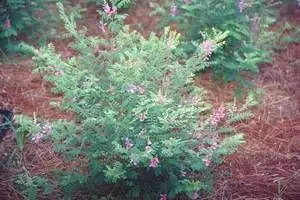
Indigofera heterantha, the Himalayan indigo, is a graceful deciduous shrub from the mountains of the western Himalaya, a nitrogen-fixing legume grown for a long summer-into-fall run of rosy-purple pea flowers over ferny foliage. Michael Dirr, in his Manual of Woody Landscape Plants, notes that the species has performed admirably in his Georgia trials, and the plant has earned a quiet following among Southern gardeners for toughness and length of bloom.
The genus name Indigofera means indigo-bearing, after the blue dye that a few tropical relatives, chiefly Indigofera tinctoria, once supplied to half the world. In the 1740s that dye became the great cash crop of colonial South Carolina, developed by Eliza Lucas Pinckney around Charleston and made with skill drawn largely from enslaved West Africans. The Himalayan indigo is an ornamental cousin, grown for flowers rather than dye, but the lineage lends the plant a certain depth.
From early summer through fall, five-inch racemes of rosy-purple, pea-shaped flowers rise from the leaf axils, carried on arching stems clothed in fine, many-leafleted compound foliage. The overall effect is airy and unforced, a soft haze of color rather than a solid mass. The shrub reaches four to eight feet where winters are mild, dying back and resprouting in colder gardens, and flowers on the current season's growth.
Give Himalayan indigo sun or a little afternoon shade and well-drained soil, and cut the plant back in late winter to keep it dense and floriferous. As a legume it asks for no rich feeding and tolerates lean ground and drought once established. Use in a mixed border, a pollinator planting, or against a warm wall in cooler regions, where bees work the long season of rosy bloom; pair with ornamental grasses and late perennials that echo the airy texture.
Hay mucho más por descubrir



Preguntas y debate