

Esta página se muestra en su idioma original. La traducción aún no está disponible.
La selección de Seedsun
Rhus typhina
SKU: RHUS-TYPH-01G
Staghorn sumac is a bold native shrub or small tree of eastern Canada and the northeastern and north-central United States, ranging south through the Appalachians to north Georgia and the northwestern corner of South Carolina, and growing fifteen to twenty-five feet on stout, forking stems clothed.
Solicita un presupuesto personalizado
Los precios, tamaños de los paquetes y disponibilidad se confirman en su presupuesto personalizado. Enviar una consulta no implica realizar un pedido pagado.
Pregunte sobre la idoneidad, la siembra y los requisitos de cultivo.
Confirme las opciones de entrega y los documentos necesarios en su presupuesto.
Acerca de esta variedad
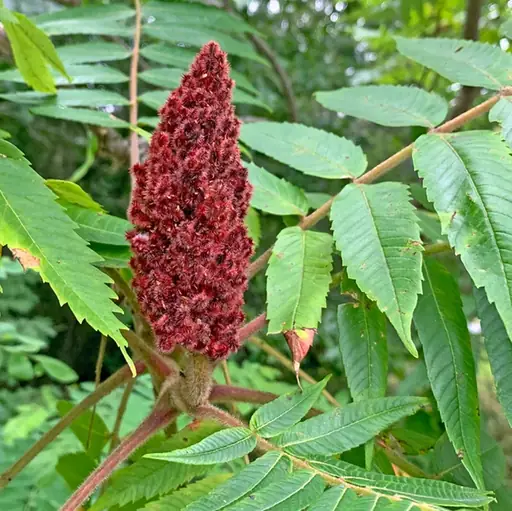
Staghorn sumac is a bold native shrub or small tree of eastern Canada and the northeastern and north-central United States, ranging south through the Appalachians to north Georgia and the northwestern corner of South Carolina, and growing fifteen to twenty-five feet on stout, forking stems clothed in fine velvety hairs, the texture and antler-like branching that give the plant the name. The big, pinnate leaves are bright green through summer and turn a spectacular blend of yellow, orange, and red in fall, one of the great autumn shrubs of the eastern flora.
Greenish-yellow flowers open from May into July, feeding bees and other pollinators, and female plants follow with the dense, upright, cone-shaped clusters of fuzzy crimson fruit that stand through winter, blazing against the snow and feeding birds when little else remains. The plant grows fast and suckers into broad colonies, so a single shrub soon becomes a picturesque thicket where there is room to let the plant run.
Few native plants have fed and healed so many. The tart fruit, sour chiefly with malic acid, steeps in cool water into the classic red, lemonade-like drink often called sumac-ade, and Indigenous peoples across the range drew on the astringent bark, roots, leaves, and berries for traditional remedies, from gargles for sore throats to astringent washes. The berries, roots, and inner bark also yielded red, black, yellow, and orange dyes.
Give staghorn sumac a large, sunny, well-drained site with room to spread: a hot bank, a wild border, a naturalized edge, or a mass planting for erosion control, where the suckering colony and the tropical foliage are welcome. For a tidier effect, plant where mowing can hold the spread, or grow the finer cutleaf forms in smaller gardens. Pair with grasses and other tough sun-lovers, set a female plant for the fruit, and let the flaming fall color and crimson winter cones carry the season. Deer tend to pass the plant by.
Additional photos courtesy of C.L. Fornari.
Hay mucho más por descubrir



Preguntas y debate