

Esta página se muestra en su idioma original. La traducción aún no está disponible.
La selección de Seedsun
Sinoadina racemosa
SKU: SINO-RACE-01G
Here is a tree almost nobody in American horticulture has grown, and the reason is not that the plant is difficult. Sinoadina racemosa is simply obscure: a deciduous member of the madder family ranging from northern Myanmar and Thailand through southern China, Taiwan, the Ryukyu Islands, and into.
Solicita un presupuesto personalizado
Los precios, tamaños de los paquetes y disponibilidad se confirman en su presupuesto personalizado. Enviar una consulta no implica realizar un pedido pagado.
Pregunte sobre la idoneidad, la siembra y los requisitos de cultivo.
Confirme las opciones de entrega y los documentos necesarios en su presupuesto.
Acerca de esta variedad
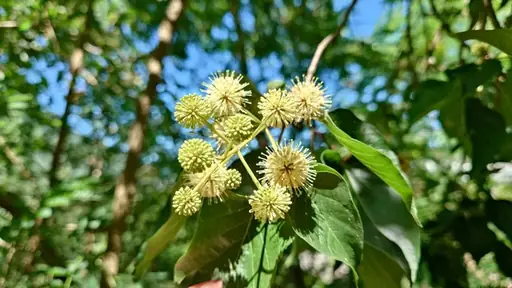
Here is a tree almost nobody in American horticulture has grown, and the reason is not that the plant is difficult. Sinoadina racemosa is simply obscure: a deciduous member of the madder family ranging from northern Myanmar and Thailand through southern China, Taiwan, the Ryukyu Islands, and into Japan, running fifteen to forty feet tall with grey trunk bark and smooth young branches. In summer the tree carries small flowers packed tight into spherical heads, the heads themselves gathered into open terminal panicles, which is exactly what the epithet racemosa is pointing at.
Anyone who grows a buttonbush will recognise that flower head immediately, and the resemblance is real family resemblance rather than coincidence. Rubiaceae is the coffee and gardenia family, and within it this tree sits in the same tribe as our own Cephalanthus occidentalis, the buttonbush of Southern pond margins with the little sputnik flowers. The connection reaches further than that: Pinckneya bracteata, the fever tree of Georgia and Carolina bays, is another Rubiaceae cousin, and we collected cuttings of both plants in the same week. Growing them within sight of one another is a good way to see how far one plant family can travel and still keep the same habits.
The naming has been unsettled for two centuries. Siebold and Zuccarini described the plant from Japanese material in the nineteenth century; the species then spent decades filed under Adina or Nauclea before Ridsdale erected Sinoadina for the tree in 1978, and some authorities still fold the genus straight back into Adina. Adina comes from the Greek adinos, crowded, for those tight-packed heads, and Sino- is simply the Chinese half of the range. You may see either name on a label; both point at the same tree.
An honest note, and we would rather lead with it than bury it. The horticultural literature on this species is close to nonexistent, so what follows is our best reading rather than settled fact. Our cuttings came from a plant growing in the UGA Trial Garden in Athens, Georgia, which is practical evidence of hardiness in the middle of zone 8a and encouraging for the piedmont generally; we would call the tree zone 7b to 9 provisionally and revise as we learn. Site in full sun to light shade in decent, evenly moist, well-drained ground, give room for a small shade tree, and treat the whole exercise as a collaboration. Growing an obscure tree well is how the record gets written in the first place, and there are very few American gardens where you can go and look at a mature one.
Hay mucho más por descubrir



Preguntas y debate