
37 of the Best Cold Hardy Clematis Varieties
Are you pining for elegant vines with sumptuous flowers, lively colors, and a carefree habit, but live in a region with short summers? Look no further than the reliable charm of clematis (Clematis spp.). If you have long, cold winters and want to make the most of a short growing season, these.
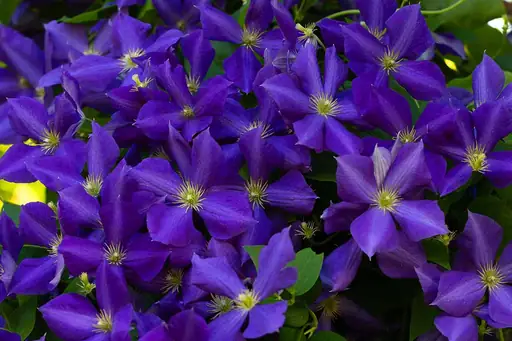
Are you pining for elegant vines with sumptuous flowers, lively colors, and a carefree habit, but live in a region with short summers?
Look no further than the reliable charm of clematis (Clematis spp.).
If you have long, cold winters and want to make the most of a short growing season, these vigorous climbers provide an easy way to add color and texture to your garden.
Growing clematis successfully in cold regions, such as USDA Hardiness Zones 3 to 4, starts with picking the right plant – not all can handle sub-zero temperatures.
Fortunately, there are several clematis species and cultivars that are hardy enough to survive – and thrive – in these areas.
So, if your short summers and long, cold winters make growing perennial vines a challenge, read on for our list of clematis top picks for Zones 3 and 4 – the best cold-hardy varieties for tough winters!
What You’ll Learn
1. Bees’ Jubilee
2. Bernadine
3. Bluebird
4. Blue Ravine
5. Capitaine Thuilleaux
6. Cezanne
7. Comtesse de Bouchaud
8. Constance
9. Duchess of Albany
10. Duchess of Edinburgh
11. Edda
12. Ernest Markham
13. Etoile Violette
14. Filigree
15. Fireworks
16. Gravetye Beauty
17. Henryi
18. Hyde Hall
19. Ivan Olsson
20. Jackmanii
21. Jacqueline Du Pre
22. Kermesina
23. Maidwell Hall
24. Margo Koster
25. Moonlight
26. Multi Blue
27. Nelly Moser
28. Olympia
29. Pamela Jackman
30. Purpurea Plena Elegans
31. Rebecca
32. Rosy O’Grady
33. Rouge Cardinal
34. Sarah Elizabeth
35. Stand By Me
36. Viola
37. White Swan
Although most clematis varieties are unsuitable for the rigors of Zone 3 and Zone 4 winters, luckily there are cold hardy species and cultivars to be found in all three clematis groups.
Before we start, we will just cover the difference between the pruning groups briefly:
Group 1
Group 1 provides a good selection of clematis suited to temperatures down to Zone 3.
A subdivision known as the Atragene group features small-flowered, early blooming varieties that are extremely hardy, undemanding, and among the easiest to grow.
As an added bonus, you don’t have to prune them, which makes for light cleanup at the end of winter!
The Atragene group includes the species Clematis alpina, C. koreana, and C. macropetala and their hybrids.
Native to mountainous regions, these plants produce small to medium, nodding flowers in bell or lantern shapes that come in shades of blue, mauve, pink, purple, red, white, and yellow.
Many develop handsome, swirling seed heads in shades of blond and silver that add cheerful, late season interest.
Group 2
Group 2 clematis varieties bloom vigorously in spring, and often provide a second, lighter flush of flowers throughout the summer.
The two sets of flowers grow on old and new wood respectively.
These need a light pruning in early spring to clean up dead wood and remove any untidy stems, and another light to medium pruning in summer to remove spent flower heads and encourage bud set on the new growth.
They can underperform somewhat in very cold zones because they need warm temperatures early in the year for two sets of flowers to form.
In colder regions, these clematis varieties often produce only one full flush of flowers starting in early summer.
Flowers face up or outward and are available in two-tone bicolor cultivars and single colors of blue, mauve, pink, purple, red, white, and yellow.
Group 3
Group 3 clematis are the latest to bloom, and produce a single flush of flowers with a long season – from early or midsummer to early autumn.
The easiest to prune, Group 3 vines need a single, hard pruning in late winter.
Stems are cut back to one to two feet, so stem damage from cold temperatures is never a problem, and flowers form exclusively on new growth.
Group 3 includes many of the showiest clematis varieties, with extra-large flowers that come in an array of dazzling colors.
A selection of options with smaller flowers are available in this group as well.
1. Bees’ Jubilee
A showy Group 2 clematis cultivar, ‘Bees’ Jubilee’ boasts stunning two-tone flowers of creamy pink with a deep cherry stripe, and creamy yellow filaments topped with rosy anthers.
The large blooms measure six to eight inches across and are followed by silky seed heads.
Fast growing, its mature height is six to 13 feet, and it blooms in late spring and again in late summer.
Abundantly free flowering, it’s an impressive scrambler to use as a ground cover or to add vertical interest on arbors, trellises, and climbing through small trees or shrubs.
Hardy in Zones 4 to 11.
2. Bernadine
Beautiful Bernadine™ (C. ‘Evipo061’) is a compact, floriferous Group 3 clematis with enormous, frosty mauve flowers highlighted with magenta anthers.
The vines flower continuously all summer long.
Bernadine
The bushy vines grow to four feet tall and are ideal for adding long-lasting color climbing on small trellises, spilling from containers, or scrambling on the ground.
Hardy in Zones 4 to 10.
3. Bluebird
‘Bluebird’ delights with a heavy display of nodding, single or semi-double flowers in lavender-blue with cream-to-lime-green stamens.
This clematis cultivar flowers heavily in spring, with the occasional second flush in midsummer followed by wispy, silver seed heads.
A vigorous grower with a mature height of eight to 10 feet, this Group 1 cultivar excels in extreme cold temperatures. It is hardy Zones 2 to 9.
This is a good choice for light shade gardens.
4. Blue Ravine
‘Blue Ravine’ produces full, cornflower to lilac blooms, with violet center bars and rosy pink anthers.
The large six- to eight-inch flowers of this Group 2 cultivar have a delightful fragrance. They bloom in late spring through early summer, and again in late summer.
‘Blue Ravine’
‘Blue Ravine’ grows up to eight feet tall with a 24-inch spread, and a twining habit makes it useful as an accent plant in a container, on a trellis, or anywhere it can grow up and through shrubs and hedges.
‘Blue Ravine’ plants can be purchased at .
5. Capitaine Thuilleaux
‘Capitaine Thuilleaux’ has showy, two-tone flowers of pale pink with rich, strawberry center bars and wavy petal edges.
Dark magenta-tipped stamens add a distinctive focal point to the seven-inch, lightly scented blooms.
A compact clematis, maximum growth at maturity is six to nine feet.
This Group 2 cultivar is very floriferous in mid-spring, with a lighter flush in midsummer, and a pleasing display of seed heads in late summer.
‘Capitaine Thuilleaux’ is an ideal choice for containers and cottage or courtyard gardens, and it also grows well in partial shade. Hardy in Zones 4 to 11.
6. Cezanne
A masterpiece in mauve, Cezanne™ (C. ‘Evipo023’) features large, showy lavender blooms with creamy chartreuse anthers and a light floral scent, giving an extravagant display in late spring to early summer with a lighter rebloom in late summer.
Cezanne
This compact Group 2 cultivar grows four to five feet long and is ideal for small spaces, borders, city or courtyard gardens, and containers or patio planters. Hardy in Zones 4 to 9.
7. Comtesse de Bouchaud
‘Comtesse de Bouchaud’ features masses of pretty four- to six-inch flowers of shell pink to light mauve.
Flowers have butter yellow stamens, and recurve petals give a soft, rounded appearance.
A long bloom time puts on a gorgeous display starting in early summer.
Hardy in Zones 4 to 9, this Group 3 clematis grows six to 10 feet and performs well in containers, as a climber or ground cover, or in small spaces like courtyard gardens.
8. Constance
‘Constance’ is wonderfully free-flowering and drips with nodding, bell-shaped blooms from mid- to late spring.
Dusty pink flowers have semi-double petals that reveal buttery yellow stamens.
After flowering, showy silver seed heads add a charming touch well into fall.
Hardy in Zones 3 to 9, ‘Constance’ is a Group 1 clematis cultivar that grows six to eight feet tall, and makes a spectacular display against an arbor, trellis, or wall.
9. Duchess of Albany
The ‘Duchess of Albany’ has charming, tulip-shaped buds in coral pink.
The small, two- to three-inch flowers recurve as they mature, revealing deep pink bands on the inner petals and buttery stamens.
Mature growth is typically up to eight to 12 feet with abundant, steady coverage from midsummer to autumn.
A great choice for a ground cover, climbing on trellises and pergolas, or spilling from containers. Hardy in Zones 4 to 8.
10. Duchess of Edinburgh
‘Duchess of Edinburgh’ is known for its luminous, fully-double flowers of white to blush pink with creamy yellow anthers.
The four- to six-inch flowers form a striking rosette and bloom in late spring, then again in late summer.
‘Duchess of Edinburgh’ grows six to eight feet tall and is moderately vigorous in growth.
This Group 2 clematis cultivar makes an attractive display in containers, and on arbors, fences, or any vertical support. Hardy in Zones 4 to 11.
11. Edda
Featuring gorgeous, velvety flowers of royal purple with magenta bars and anthers, Edda™ (C. ‘Evipo074’) adds a touch of dark drama for the entire summer, with the colors staying strong even in hot sunshine.
Edda
The compact Group 3 vines have a manageable size of three to four feet tall but make a big impact in city or courtyard gardens, small spaces, containers, and patios. Hardy in Zones 4 to 9.
12. Ernest Markham
‘Ernest Markham’ makes a memorable impression with stunning magenta or red flowers, cream filaments, and buttery yellow anthers.
Wonderfully free flowering, the generous four- to six-inch flowers bloom from midsummer to early fall.
‘Ernest Markham’
Growing 10 to 12 feet tall, this Group 3 clematis cultivar makes a handsome climbing specimen for city, cottage, or courtyard gardens. Hardy in Zones 4 to 11.
You can find ‘Ernest Markham’ plants available at .
13. Etoile Violette
‘Etoile Violette’ is a long-time Group 3 favorite for its clusters of deep purple, recurved flowers with blond stamens.
The four-inch blooms put on a sensational display from mid- to late summer.
Hardy in Zones 4 to 11, this vigorous climber quickly reaches 10 to 15 feet in height.
It’s a rewarding choice to train on arbors, fences, or walls, or it may be grown as a ground cover.
14. Filigree
Delicate and ornamental, Filigree™ (C. ‘Evipo029’) is a miniature Group 2 cultivar that offers an abundance of full, silvery mauve flowers with celery and pink anthers in late spring and early summer, with a lighter secondary flush in late summer.
Filigree
These petite vines grow only one to two feet long but make a big splash in borders and small spaces or as a tumbler in hanging baskets, patio planters, and window boxes.
Hardy in Zones 4 to 9.
15. Fireworks
With a profusion of eye-catching, bi-colored flowers, ‘Fireworks’ is a showstopper.
The ruffled lilac petals have vivid cerise central bars and white filaments topped with magenta anthers.
The showy flowers of this Group 2 clematis cultivar grow seven to eight inches in diameter, and bloom in late spring with a lighter flowering in late summer.
Growth is semi-woody, and plants reach eight to 12 feet in height with a spread of three to six feet.
‘Fireworks’ adds dramatic color to upright structures, or twining its way through shrubs and small trees. Hardy in Zones 4 to 8.
16. Gravetye Beauty
‘Gravetye Beauty’ is known for its distinctive, narrow petals in rich ruby red that open into a delicate starburst.
Inner petals are crimson with pale pink edges, cream filaments, and mulberry anthers.
Hardy in Zones 4 to 8, flowers measure two to three inches with a mature plant height of eight to 12 feet.
A profuse bloomer from mid- to late summer, it’s well suited to container growing, as a ground cover or spiller, scrambling through deciduous trees and shrubs.
This Group 3 clematis cultivar is ideal for training up arches, fences, and walls.
17. Henryi
Profusely free-flowering, ‘Henryi’ has ivory, rounded flowers with pale mauve edges.
Lime green central bars fade as blooms mature, and purple anthers add a delicate contrast.
The single or semi-double blooms measure six to eight inches across and appear in early summer, with occasional secondary flowers.
‘Henryi’
A vigorous grower up to 10 to 12 feet tall, this Group 2 cultivar makes a lovely specimen espaliered on arbors, trellises, and pergolas.
Hardy in Zones 4 to 11.
You can find bare root plants available at .
18. Hyde Hall
Chic and elegant, Hyde Hall™ (C. ‘Evipo009’) sports large, double flowers in creamy white with chocolate tipped anthers that bloom profusely in late spring and early summer, with a light rebloom of single flowers throughout summer.
Hyde Hall
A handsome choice as a climber on a trellis, in containers, or sprawling in raised beds as a ground cover, the Group 2 vines grow six to eight feet long. Hardy in Zones 4 to 9.
19. Ivan Olsson
‘Ivan Olsson’ features stately flowers in pale mauve and white, with pink filaments and purple anthers.
Flowering in late spring with occasional blossoms throughout the summer, the full flowers grow up to five to six inches.
Hardy in Zones 4 to 9, this Group 2 cultivar grows seven to nine feet tall and is ideal in containers, on vertical supports, or as a ground cover or spiller.
20. Jackmanii
A classic climbing vine, ‘Jackmanii’ features midsized blooms of rich, deep purple with creamy yellow anthers on vines that bloom prolifically from early to late summer.
‘Jackmanii’
Reaching seven to 10 feet long, the Group 3 vines make a sumptuous display climbing on arbors, pergolas, and trellises or draping over fences and retaining walls. Hardy in Zones 4 to 9.
Bare root plants are available at .
21. Jacqueline Du Pre
‘Jacqueline du Pre’ blooms in late spring with small pink to mauve skirted flowers edged in pale pink, with dark veining and a white stamen.
Leaves are bright green and elegant, and silvery seed heads form in summer, adding late season texture to the garden.
A medium Group 1 climber, mature growth reaches is six to eight feet tall and it is well-suited to arches, containers, fences, and pergolas. Hardy in Zones 3 to 9.
22. Kermesina
‘Kermesina’ features two-inch, rich magenta flowers with white bases and recurved tips, which give a rounded appearance.
Petals can have a light center bar, and blond filaments have deep wine-colored anthers.
This vigorous climber reaches eight to 12 feet and puts on a steady show from midsummer to early autumn.
This clematis is deal for climbing up an obelisk or trellis and clambering through shrubs and trees. Hardy in Zones 4 to 8.
23. Maidwell Hall
‘Maidwell Hall’ is renowned for its profuse display of frilly, semi-double flowers in lavender-blue with chartreuse stamens.
This Group 1 cultivar continues to flower lightly throughout the summer, and decorative seed heads adorn vines in late summer.
Compact growth is six to eight feet tall and it is ideal for growing up and over fences, rock piles, or stumps, and scrambling through small shrubs and trees. Hardy in Zones 3 to 9.
24. Margo Koster
‘Margo Koster’ is very popular for its long season of irregular, coral pink flowers with paler center bars and buttery yellow stamens.
The three-inch flowers are small but plentiful, and bloom from late spring to fall.
Hardy in Zones 3 to 9, it grows 10 to 12 feet high and is well suited for vertical growth in cottage or courtyard gardens, or sprawling as a ground cover.
25. Moonlight
‘Moonlight’ features full, symmetrical, cream-colored flowers that fade to pearly white with pale yellow stamens.
The highly fragrant, single flowers measure five to seven inches. They bloom in late spring and again in late summer.
Hardy in Zones 4 to 9, this Group 2 clematis grows eight to 10 feet and prefers a partial sun or dappled shade location.
This is a sweet choice for patio containers or for climbing up trellises close to windows or paths where the scent can be enjoyed.
26. Multi Blue
‘Multi Blue’ features an abundance of dramatic double flowers in shades of deep blue to purple with pale center bars.
Silvery blue staminodes form a striking pincushion on the recurve petals, and they bloom in late spring.
A compact Group 2 variety, mature plants reach six to eight feet tall and flowers measure up to five inches across.
‘Multi Blue’
‘Multi Blue’ appreciates some light afternoon shade in locations with hot summers and is ideal for containers, small gardens, or climbing on a vertical support. Hardy in Zones 4 to 11.
27. Nelly Moser
‘Nelly Moser’ is famous for its profuse display of bicolor, starburst flowers measuring six to eight inches across.
Petals have white or pale pink ruffled edges with cerise center bars, and creamy filaments are topped with rosy anthers. Ornamental wooly seed heads form in summer.
Expect blooms in late spring, with a lighter flush in midsummer.
This Group 2 clematis grows eight to 10 feet and makes a gorgeous specimen plant climbing on arbors, trellises, or lamp posts. Hardy in Zones 4 to 9.
28. Olympia
A beautiful choice that’s sure to please the garden gods, Olympia™ (C. ‘Evipo099’) offers large, single to double lavender flowers with creamy white anthers that bloom from May through to September, with the heaviest flush in late spring and early summer.
Olympia
Growing three to five feet tall, the sumptuous Group 2 vines are impressive in containers, small spaces, and city or courtyard gardens, or as a meandering ground cover.
Hardy in Zones 4 to 9.
29. Pamela Jackman
A vigorous Group 1 climber, ‘Pamela Jackman’ forms masses of bell-shaped, deep blue to purple flowers with striking white stamens in mid- to late spring.
Lime green leaves add a handsome contrast, and ornamental silvery seed heads form in summer.
Hardy in USDA Hardiness Zones 4 to 9, this pretty cultivar grows nine to 12 feet and looks sumptuous sprawling over arbors, fences, and pergolas.
30. Purpurea Plena Elegans
‘Purpurea Plena Elegans’ has distinctive, fluffy double flowers of dusty pink with pale pink, pom-pom staminodes.
The elegant flowers measure two to three inches with a long bloom season from midsummer to fall.
Growing 10 to 13 feet tall, the sumptuous display is well suited for climbing, containers, or as a ground cover. Hardy in Zones 4 to 11.
31. Rebecca
A summer sizzler with fiery scarlet blooms adorned with pink-tipped, creamy yellow anthers, ‘Rebecca’ blooms abundantly in late spring and early summer with a lighter, second bloom in late summer.
‘Rebecca’
The Group 2 vines grow six to eight feet long and make an impressive seasonal screen when massed as a climber on trellises or as an eye-catching focal point scrambling along arbors, fences, pergolas, and walls.
Hardy in Zones 4 to 9.
32. Rosy O’Grady
‘Rosy O’Grady’ features narrow petals of rose pink with dark veining and wavy edges, and a skirt of light pink staminodes encircle the pale yellow stamens.
Bloom time is in late spring, and showy seed heads follow in summer.
At maturity it reaches nine to 12 feet tall, with a twining and trailing growth habit that adds easy appeal to arbors and containers, or as a ground cover plant.
This Group 1 cultivar is hardy in Zones 3 to 9.
33. Rouge Cardinal
‘Rouge Cardinal’ features large, showy flowers of cardinal red with gold filaments and mahogany anthers.
Recurved petal tips give a rounded appearance to the four- to six-inch blooms.
Hardy in Zones 3 to 8, this semi-woody Group 3 climber grows up to 10 feet and produces a copious display of flowers from early summer to fall.
‘Rouge Cardinal’
Spectacular in containers, as a spiller, on vertical supports, or growing through small deciduous trees and shrubs.
34. Sarah Elizabeth
Free flowering in a compact size, Sarah Elizabeth™ (C. ‘Evipo098’) sports an abundance of star-shaped, candy pink flowers with vibrant magenta anthers.
Growing four to five feet tall, these Group 3 vines flower steadily from late spring to early autumn.
Sarah Elizabeth
Sarah Elizabeth makes a colorful choice for climbing arbors, trellises, and fences or spilling from containers and patio planters.
Hardy in Zones 4 to 9.
35. Stand By Me
A bush style, non-vining cultivar, ‘Stand By Me’ produces masses of nodding, bell-shaped flowers of lavender blue in late spring and early summer.
‘Stand By Me’
Plants grow three to four feet tall and don’t require trellising, but make an impressive addition to beds, borders, containers, and patio planters. This Group 3 plant is hardy in Zones 3 to 7.
36. Viola
‘Viola’ features large, violet petals that open to reveal royal purple, velvety blooms.
Greenish-white filaments with yellow anthers add striking contrast to the four- to six-inch flowers that bloom from midsummer to fall.
Fast growing, this Group 3 variety reaches 10 to 12 feet tall and is hardy in Zones 4 to 9. Train on vertical supports to add late summer color amongst other climbers, like roses.
37. White Swan
‘White Swan’ puts on a reliable display of dainty, bell-shaped flowers from late spring to early summer.
Semi-double petals of pure white and with buttery yellow stamens stand out against the foliage, and wooly seed heads add late season interest.
Hardy in Zones 3 to 9, this versatile Group 1 climber reaches 10 to 12 feet tall and can be grown in containers, as a ground cover, or scrambling up any vertical support.
The Big Chill
Now that you know about the perfect varieties of clematis for Zone 3 and Zone 4, will you plant some of these cold hardy specimens in your garden?
Beautiful, tough, and easy to care for, they’re the perfect solution for gardens that struggle with perennials in sub-zero temperatures!
If you folks have any questions or your own favorites to recommend for frigid winters, drop us a note in the comments below.
And be sure to read our other clematis guides to get the most from these remarkable, reliable vines. Add these to your reading list next:
- How to Grow and Care for Clematis
- How to Grow Clematis in Containers
- Guide to Clematis Winter Care: Protect Your Vines from Freezing and Frost
- Facebook404
- X




Questions et discussion