
How to Grow and Care for Creeping Juniper
Juniperus horizontalis Do you know the old saying about how good things come in small packages? Creeping junipers rarely stretch above a foot or so tall, but they make an outsized impact. These evergreens come in some unusual colors like yellow and silver, and they can spread up to 10 feet wide,.
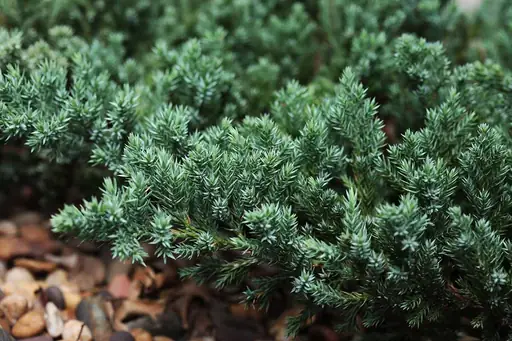
Juniperus horizontalis
Do you know the old saying about how good things come in small packages? Creeping junipers rarely stretch above a foot or so tall, but they make an outsized impact.
These evergreens come in some unusual colors like yellow and silver, and they can spread up to 10 feet wide, which means you get a ton of coverage with one easy-going specimen.
That’s a lot to recommend them and we haven’t even started talking about maintenance yet. Or, rather, the lack of it. Creeping junipers truly are “set it and forget it” plants.
To help you understand everything there is to know about this classic option for the garden, here’s what we’re going to chat about:
What You’ll Learn
Quick Look
How to Grow
Cultivars to Select
Maintenance
Propagation
Pests and Disease
Juniperus horizontalis hails from cold, dry areas spanning the US from New England to Alaska and throughout Canada.
Its compact, creeping growth habit reveals the way it adapted to grow in windy, high-altitude spots like stony outcroppings, rugged cliffs, and rocky slopes.
You might also find it in prairies or on sand dunes.
This is no delicate flower. Er, shrub. It’s a tough plant that evolved to survive in environments where other species can’t.
That makes it perfect for those of us who want something low-growing and fuss-free.
It grows to about two feet tall and 10 feet wide, depending on the cultivar, with opposite scale-like leaves that start out as needle-like when the leaves are young.
Quick Look
Common name(s): Creeping juniper
Plant type: Woody shrub
Hardiness (USDA Zone): 3-9
Native to: North America
Bloom time / season: Evergreen with persistent berries
Exposure: Full sun to part shade
Soil type: Sandy to clay, well-draining
Soil pH: 5.5-7.5, slightly acidic to neutral
Time to maturity: 5-10 years, depending on cultivar
Mature size: Up to 2 feet tall by 10 feet wide
Best uses: Bonsai, containers, ground cover, specimen
Taxonomy
Order: Pinales
Family: Cupressaceae
Genus: Juniperus
Species: Horizontalis
Foliage can range from true green to blue or even purple, and species plants produce gray-blue to dark blue cones in the wild, which we refer to commonly as juniper berries.
But the plants you’ll find at nurseries will not typically produce these.
If growing edible fruits is your goal, this isn’t the best option, not only because these plants tend to be smaller than other species of juniper, but it can be harder to find fruiting varieties.
J. horizontalis plants are dioecious, meaning the male and female parts are produced on separate plants, and in order to produce berries, you need both.
Fortunately, there are so many junipers out there that you rarely need to worry about pollination, particularly since different species can pollinate each other.
This type of juniper is tolerant of salt and pollution, and it is largely ignored by deer and rabbits – perfect if you’re struggling to find something that will thrive in a challenging spot in your garden.
Even if you aren’t battling adverse conditions, creeping juniper is still a fantastic option simply because it’s good-looking and offers year-round color and interest.
There are dozens of cultivars of this North American native available today, and all of them feature the characteristic prostrate form described by the Latin epithet horizontalis.
They can vary in size and color from one to the next, but you aren’t going to find a columnar or pyramidal creeping juniper. That’s probably not a surprise.
If you enjoy the art of bonsai, creeping juniper is a good option for creating weeping forms.
Otherwise, these make an excellent ground cover or specimen for xeriscaping or rock gardens.
How to Grow
These plants prefer dry, well-drained, sandy soil with lots and lots of sun.
The fastest way to kill most junipers is to plant them somewhere with heavy, poor draining, moist soil. Save those spots for hostas and irises.
J. horizontalis can tolerate heavy soil, though. It just can’t stay constantly wet. It never hurts to work in some well-rotted compost to improve sandy or clay earth.
A few hours of shade are no big deal, but these plants tend to be healthier in full sun. Choose a spot with full sun, if possible.
Photo by Kristine Lofgren.There’s no need to fertilize – woohoo! Your job is just to make sure the shrub receives some moisture whenever the top two inches of soil dry out.
Stick your finger into the soil down to the second knuckle or use a moisture meter.
You can also grow creeping juniper in containers quite easily. Use standard potting soil and choose a container at least one size larger than the pot that it came in.
You’ll need to upgrade the pot size once every few years if you want to encourage it to grow to its full size. If you want to keep it smaller, don’t bother sizing up.
Junipers in pots don’t need to be fed, but you should change the soil every two years, whether you repot in a larger container or not.
Cultivars to Select
There are plenty of creeping juniper options out there and new ones are always coming onto the market.
Many cultivars are fairly similar, varying slightly in color and size, which is excellent because this allows you to find exactly what you want.
Here are a few good options:
Blue Forest
At just a foot tall once mature, ‘Blue Forest’ is better suited as a forest for fairies and elves than humans.
But if you hunker down at ground level to check this low-growing cultivar out, you can see where the name comes from.
Not only does the foliage have a distinct blue hue, but the branches grow upright with a conical shape, giving the impression of a tiny little forest of junipers.
Blue Rug
‘Wiltonii,’ also known as blue rug juniper, makes the perfect carpet for practically any spot in the garden.
At just a foot tall and stretching to six feet wide, it forms a dense rug that blocks out weeds and prevents erosion, all while providing year-round interest.
It will weep gracefully over rocks, walls, or pots. Or you can let it crawl over a challenging area where other plants struggle to gain footing.
Blue Rug
Hughes
With a classic, creeping form and lovely silvery-blue foliage, ‘Hughes’ is an excellent choice for rocky slopes and arid spots.
It’s a tough ground cover that won’t let any weeds poke their way through.
‘Hughes’
Lime Glow
‘Lime Glow’ is a low-growing, vase-shaped shrub that brings intense color to your yard with its chartreuse foliage.
In the winter, the show continues as the leaves transition to copper, purple, and orange.
While it will obviously make a charming ground cover, the long, arching branches make it particularly nice for gracefully tumbling over the edge of pots or extending down a rock wall.
‘Lime Glow’
It can spread up to three feet wide but never grows more than a foot tall, and usually stays shorter than that.
Mother Lode
Eureka! We’ve struck the ‘Mother Lode’ with this brilliant, gold-colored juniper.
Yes, the yellow-orange foliage is fabulous, but it’s not just the color that matters when you’re hunting for the goods.
Photo via AlamyIt’s the quantity that counts, and this plant can spread up to 10 feet wide but stays a manageable five or so inches tall.
In the fall, the foliage turns purple and orange, adding interest to the winter landscape.
Maintenance
Don’t worry about pruning your junipers.
Photo by Kristine Lofgren.Just take off any dead or diseased branches when you see them, and let the shrub take on a natural shape.
Propagation
Because of its shape, with its long, slender branches, creeping junipers propagate well from cuttings. You can also purchase many different cultivars for transplanting.
Don’t bother with trying to start these plants from seed. It takes years and tons of knowledge, and even then you’ll probably struggle with low germination rates.
From Cuttings
J. horizontalis is popular as a bonsai option.
Most practitioners start new projects using cuttings, because it’s reliable and you can be certain that clones will reproduce the characteristics that you want.
The best wood is young but firm, so new growth that has had the summer to mature is ideal. In the fall, look for wood that is pliable and still has a green hue to it.
Photo by Kristine Lofgren.Gently tear a six-inch length of stem off, pulling in the opposite direction from the growth.
If you took a bunch of excess bark off when you pulled, trim most of it away, leaving a heel of less than half an inch. Remove the leaves from the bottom half.
Photo by Kristine Lofgren.Dip the cut end in a rooting hormone.
Stick the cutting into a six-inch container filled with potting soil so it’s covered by half.
Firm the soil around the cutting and water so the soil feels moist, like a well-wrung-out sponge. Place it in bright, indirect light.
Allow the surface of the soil to dry out in between watering.
By spring, your cutting should have roots and new growth forming.
You can give the plant a gentle tug to see if those roots have taken hold. If it resists, you can be confident that all is good below the soil.
Once the last frost has passed, harden off the cuttings before transplanting into the garden.
Transplanting
Creeping juniper transplants require little prep compared to some other species like, say, roses.
Just dig a hole about as wide and as deep as the pot that the plant came in. Remove the juniper from its container and gently loosen the roots.
Photo by Kristine Lofgren.Plop it into the hole, fill in around it with soil, and offer up some water.
If your soil is any type ranging from sandy to clay, you don’t need to do anything to prepare the area.
But if it’s heavy clay and drains poorly, there’s really not much you can do besides find a different species to grow there.
May I suggest creeping Jenny (Lysimachia nummularia) or sweetflag (Acorus calamus)?
Pests and Disease
All junipers are known for being downright tough.
The annoying bugs and pathogens that make a meal out of so many plants seem to ignore junipers. And even if they are attacked by something, they tend to survive better.
Pests
You have to love a plant that is pretty much untroubled by pests. Still, no plant is totally immune to pesky visitors.
While it’s unlikely that you’ll ever have to worry about infestations, you should be aware of the few to watch for.
Scale
Juniper scale (Carulaspis juniperi) is extremely similar to mites in that an infestation signals a larger problem in your garden.
The symptoms also look the same, though they don’t produce fine webbing.
If you look closely at the stems, you can actually see these bugs. They look like little lumps and bumps all over the stems. If you scrape them, they’ll come off.
Spray the plant with horticultural oil thoroughly in late fall, again in mid-winter, and once more in early spring. This smothers the adults and developing juveniles.
Horticultural oil is a nice product to keep around because it can serve many purposes in the garden.
Monterey Horticultural Oil
Learn more about scale and how to eradicate them here.
Spider Mites
Spruce spider mites (Oligonychus ununguis) love to gnaw on junipers and spruces.
These teeny-tiny spider relatives use their even tinier mouthparts to penetrate the bark and suck the sap from inside.
Look for yellow spots on the foliage and browning, dying leaves. You might also see super fine webbing all over the plant.
Control is simple. Just blast the stems and leaves with a strong spray of water once every few days and trim off any dead bits. Keep at it for a few weeks, especially in the spring and fall.
Don’t use pesticides to control these pests. You might stop them in the short term, but chances are they’ll return with a vengeance.
Learn more about spider mites here.
Disease
All junipers are susceptible to cedar apple rust, but J. horizontalis much less so. Instead, be on the lookout for blight.
Blight
Caused by the fungus Cercospora sequoiae var. juniperi, you’ll know your plants have it when the inside, lower leaves turn brown.
These are the older leaves and they’re typically the first to be impacted by this disease. Over time, it spreads to the upper, outer leaves.
When you see these symptoms, prune the infected branches off. That should be enough to take care of the problem.
But if not, copper fungicide can finish the job.
Bonide Copper Fungicide
Look Down for Carefree Beauty
Not everything has to be towering and substantial to make a statement in the garden. Creeping junipers can make a huge impact without ever reaching above your knees.
They’re so simple to care for, though, that it’s easy to forget that they’re even there. You don’t need to prune, don’t need to worry about feeding, and watering is an easy proposition.
How do you intend to use your new creeping friend? Be sure to share with us in the comments.
If you’re just beginning your juniper journey and you can’t get enough info about these enchanting evergreens, check out some of our other guides:
- How to Grow and Care for Juniper Shrubs
- How and When to Prune a Juniper Shrub
- Tips for Growing Skyrocket Junipers
- Juniper Herbal Uses: Put This Natural Powerhouse to Work for You
- X




Questions et discussion