
How to Grow and Care for Tea Plants (Camellia Sinensis)
Camellia sinensis That black tea you sip in the afternoon? It probably came from a camellia. So did your favorite green, oolong, white, or Darjeeling variety. We often think of camellias as the ornamental shrubs with showy flowers. But one species, Camellia sinensis, has been cultivated for.
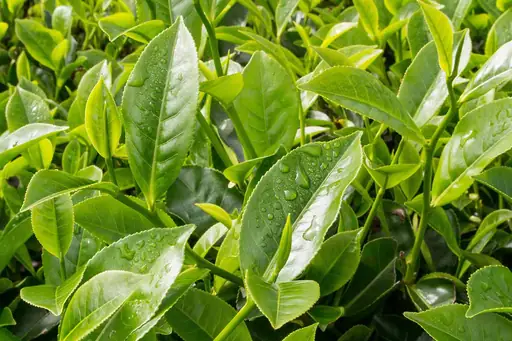
Camellia sinensis
That black tea you sip in the afternoon? It probably came from a camellia. So did your favorite green, oolong, white, or Darjeeling variety.
We often think of camellias as the ornamental shrubs with showy flowers. But one species, Camellia sinensis, has been cultivated for centuries to make tea.
If you’re a true tea connoisseur, there’s nothing quite like harvesting your own fresh leaves. I can tell you from experience, homegrown tea is something special.
With hundreds of cultivars available, you have a variety of options to suit your space.
While the species plant thrives in USDA Hardiness Zones 7 to 9, there are cultivars that can grow well outside of this range.
In our guide to growing camellias, we discuss how to cultivate the ornamental types.
If you’re already picturing yourself sipping your first cup of homegrown tea, let’s dig into the details of how to grow C. sinensis. Here’s what you’ll find in this guide:
What You’ll Learn
Quick Look
How to Grow
Cultivars to Select
Maintenance
Propagation
Pests and Disease
Best Uses
Before we dive in, let me just clarify. While they are referred to as “tea” camellias, you can absolutely grow C. sinensis plants as ornamentals.
They are beautiful, low-maintenance shrubs that attract bees and butterflies with their delicate white and yellow blossoms in spring.
Conversely, ornamental camellias such as C. japonica, C. sasanqua, and their numerous hybrids, are also edible.
You can use their leaves, buds, and flowers to make tea or consume them directly. While they won’t produce tea with exactly the same flavor as C. sinensis, you might find the taste equally appealing.
Quick Look
Common name(s): Tea plant, tea camellia
Plant type: Evergreen shrub or small tree
Hardiness (USDA Zone): 6-9
Native to: China, India
Bloom time / season: Spring
Exposure: Full sun to part sun
Soil type: Loose, loamy, humus-rich, well-draining
Soil pH: 5.5-6.5, slightly acidic
Time to maturity: 10 years
Mature size: Up to 30 ft wide x up to 50 ft high (usually smaller)
Best uses: Edible, ornamental shrub
Taxonomy
Order: Ericales
Family: Theaceae
Genus: Camellia
Species: Sinensis
Tea camellias (formerly classified as Thea sinensis) are evergreen shrubs that can mature into small trees.
When cultivated for tea production, they are typically kept under five feet tall to facilitate harvesting, but they can grow much larger without regular pruning.
Some specimens have been known to reach 50 feet in height, though 10 feet is more common.
The species is native to China and India, but the plants are cultivated around the world. Japanese-bred cultivars are particularly popular for commercial cultivation.
There are two common varieties in production: C. sinensis var. assamica and C. sinensis var. sinensis.
C. taliensis might also be used to make tea, but it’s rare. It can be grown similarly to C. sinensis.
Tea dates back to approximately 2700 BC, making it one of humanity’s earliest beverages.
Originally used medicinally in China, it spread to Japan in the sixth century and eventually to the west, where it became economically significant and even influenced events like the American Revolution.
Today, tea isn’t just a drink. It’s a ritual that many cultures practice in different ways, from an afternoon break to a mindful way to experience a meal.
Today, China dominates global tea production, accounting for one-third of the six million tons grown annually.
India, Kenya, Sri Lanka, and several other countries also produce substantial quantities.
In the United States, small-scale cultivation exists primarily in South Carolina, Alabama, and Hawaii, with emerging farms in several other states exploring this growing market.
Given that it’s the second most widely consumed beverage on the globe, it’s no surprise that more and more home gardeners are interested in growing their own!
How to Grow
Although ornamental camellias and tea species are closely related, C. sinensis has slightly different requirements. In some ways, they’re actually easier to grow.
In their native habitat, these plants are accustomed to lots of moisture – around 50 to 60 inches of rain per year.
But most of us don’t live in a tea-producing climate, and these plants can still do well with the right care.
Light
Unlike many ornamental camellias, tea camellias tolerate full sun. In cooler climates, full sun is ideal.
Gardeners in warmer regions like Zones 8 and 9, should provide some afternoon shade to protect the plants from the harsh rays of the sun during the hottest part of the day.
Soil
C. sinensis prefers slightly acidic soil with a pH between 5.5 and 6.5. The soil should be loose, well-draining, and organically-rich.
A bit of sandy or rocky material is fine, and planting on a slope is ideal to help with drainage.
If your soil is heavy clay, alkaline, or overly sandy, consider growing your camellia in a container instead.
Water
Water whenever the top inch or two of soil dries out. The rest of the soil should be barely moist, like a well-wrung-out sponge.
That said, the plant is drought-tolerant and it’s fine if the soil dries out a bit more than that. Just do your best to keep it moist, especially during hot weather.
Temperature and Humidity
You’ll see the best growth when temperatures stay between 60 and 80°F.
These plants prefer moderate humidity but are adaptable to various conditions within their hardiness range.
Fertilizing
Feed monthly during spring and summer with an acid-loving plant fertilizer.
Fertilize once a month during the spring and summer with an acidic fertilizer mix. Down to Earth makes a good product with an NPK ratio of 4-3-6.
Down to Earth Acid Mix
It’s made with cottonseed meal, fish bone meal, rock phosphate, and kelp meal.
Container Growing
If you live outside of Zones 7 to 9 or your local conditions don’t suit this species, it’s totally fine to grow yours in a container and move it inside or into a greenhouse during the winter.
You can learn more about growing camellias in containers here.
Choose a deep container to accommodate the plant’s taproot. Ensure the pot has good drainage, and use a well-draining, acidic potting mix.
Cultivars to Select
The assamica variety, known as large leaf, likes warm weather. It’s also fairly tolerant of drought.
C. sinensis var. sinensis, on the other hand, is more cold-hardy, with smaller leaves. It’s the one that is most commonly used to make black and green teas.
Tea Plant
Dave’s Fave
‘Dave’s Fave’ is a var. sinensis cultivar with large blossoms and a pleasing rounded shape.
It stays fairly petite at eight feet tall and wide, and can tolerate Zone 6b with a little protection during the coldest periods.
‘Dave’s Fave’ comes from Camellia Forest owner David Parks, who bred the cultivar to produce round leaves on an extremely bushy plant.
Korea
‘Korea’ is a sinensis variety that grows in Zones 7 to 9. It’s one I recommend for container growing, because even when it’s mature, it only grows to about six feet tall and wide.
This cultivar comes from a plant found on Chiri Mountain in South Korea and is a vigorous grower.
Rosea
Rosea isn’t a cultivated variety, it’s actually a form of sinensis that was discovered in Japan in 1960. Instead of the classic white blossoms, this one has pale pink flowers – and lots of them.
New growth is dark burgundy and you can see hints of red throughout the plant. It makes for a striking ornamental that doubles as an edible.
It was brought to the US by Ted Stephens, owner of Nurseries Caroliniana, who planted it at the Clemson University Gardens in the 1960s.
He cultivated cuttings of the plant and introduced it into the market in the US in the early 1990s.
It’s a slow grower, hardy in Zones 6 to 9, and will only reach about eight feet tall and wide at maturity.
Silver Dust
Grown in Japan by botanist Dr. Masato Yokoi and brought to the US by Nurseries Caroliniana, this is a cold-hardy, petite sinensis option with leaves that don’t look like any other camellia I’ve ever seen.
The young foliage is almost completely white and as it slowly matures, the leaves transition to green with silver splotches and speckles of color.
Hardy in Zones 6 to 9, it stays small at only six feet tall and wide at most. Give it some afternoon shade, as full sun will burn the leaves.
Tea Breeze
Most of the tea produced in the US comes from South Carolina.
Even commercial giant Lipton operated in the state for decades until the plantations were eventually sold to Bigelow Tea Company, which operates the Charleston Tea Plantation today.
Tea produced in the US typically comes from ‘Tea Breeze,’ which is mild and less bitter than many black tea cultivars produced overseas.
This sinensis cultivar grows to the harvest-perfect height of about six feet tall and wide in Zones 6 to 9.
Maintenance
Young camellias sometimes grow with a slight lean. If yours needs support, go ahead and prop it up, but be sure not to tie it too tightly.
The stem needs room to grow, and a snug tie can cause damage.
There are two main approaches to pruning, depending on whether you’re growing your plant as an ornamental or for tea production.
For ornamental growth, prune just after the flowers fade. Trim for shape and remove any dead, damaged, or diseased wood.
To encourage fullness, prune branches back to just above a leaf node, about a third of the way down the stem.
Learn more about pruning ornamental camellias here.
For tea production, the goal is to maximize harvest and make picking easier. In winter, before new growth appears, prune the upper branches back to a manageable height, typically four to five feet. If you’re tall, go for six feet. If not, stop at four. The plant should suit your reach.
Keep in mind that pruning for harvest may reduce flower production, but that’s not the priority here.
Beyond shaping and managing size, the only pruning necessary is the removal of any dead, diseased, or deformed branches.
Research led by N.H.M. Rubel Mozumder at Chonnam National University in Korea, along with colleagues from the Korea Basic Science Institute, found that leaves from unpruned tea camellias produce a mellower flavor and higher levels of health-boosting antioxidants.
They published their findings in the Food Research International journal in case you want to give it a look.
Propagation
Tea camellias can be propagated in the same ways as ornamental varieties.
Taking cuttings is the most common method, but you can also germinate seeds, transplant volunteers, graft, layer, or air layer.
Photo by Kristine Lofgren.You’ll find detailed instructions for each technique in our guide to propagating camellias.
Keep in mind that these plants develop long taproots and don’t take well to being moved.
Choose your planting site carefully and plan to keep it permanent. When transplanting, avoid disturbing the root ball. Leave the surrounding soil intact to protect the taproot and plant it as-is.
Photo by Kristine Lofgren.If you do need to move your plant, check out our guide to transplanting camellias for more information.
Pests and Disease
Tea camellias contain caffeine, which helps deter herbivores. Deer and rabbits may sample them occasionally, especially in winter, but generally avoid these plants.
Pests
Pests are typically only an issue if the plant is stressed. That doesn’t mean that they won’t show up, just that their feeding won’t typically harm or kill a plant unless it’s already not doing well.
Here are some to keep an eye out for:
Aphids
These sap-sucking insects target soft spring growth. They can spread disease and cause distorted leaves.
Their honeydew attracts sooty mold, which blocks photosynthesis. Knock them off with a strong spray of water from the hose and encourage predators like lacewings.
Learn more about how to deal with aphids here.
Scale
Tea scale (Fiorinia theae) is no joke. These insects usually won’t kill your plant, but in large enough numbers, they can seriously stunt its growth, meaning no new foliage, twig dieback, and yellowing leaves.
Look for small, flat insects protected by a waxy shell. Prune heavily infested branches and scrape off individuals by hand. Apply horticultural oil in spring when crawlers emerge.
And read our guide to controlling scale insects for more information.
Spider Mites
Spider mites are tiny arachnids that use their sucking mouthparts to feed on a variety of different plants.
They leave webbing and cause leaves to turn silvery or bronze. Act fast and apply neem oil or a miticide, repeating the applications weekly for a month.
Our guide to spider mites has more.
Disease
Pretty much all the same diseases that affect ornamental camellias can damage tea varieties.
That includes:
- Dieback and canker, a nasty fungal disease mostly prevalent in hot, humid regions.
- Root rot, which is a result of oversaturated or poorly-draining soil.
- Leaf gall.
Check out our guide to common camellia diseases to learn more.
Best Uses
Cultivar, climate, harvest timing, and processing all influence the final flavor.
White tea, such as Darjeeling, is made using the first young leaves harvested in the spring.
The flavor is usually light, delicate, and floral. It’s the easiest type to prepare at home – just harvest the tender leaves and dry them in an oven at 200°F for about an hour, or until fully dry.
Green tea is made using the newer leaves at the end of the stems, harvested later in the season.
Pick them in summer, then let them air-dry for a few hours in a shaded area with good air circulation.
After that, spread them on trays and put them in the oven for about five minutes at 300°F to bring out the flavor and aroma.
Let the leaves cool, then rub them between your hands to break up the cell walls.
Finally, spread them back on the trays and bake them at 275°F for about 30 minutes or until they’re crispy and dry. Unlike black tea, you don’t want the leaves to oxidize and turn dark at all.
Black tea involves a longer oxidation process and results in a more robust flavor. Start by drying freshly harvested leaves until they lose about 30 percent of their moisture.
Then gently roll over them with a rolling pin, using no added pressure, to begin breaking down the cell walls and start oxidation.
Then, they are oxidized for varying amounts of time depending on the desired flavor. To oxidize, place the leaves in a warm, humid space at around 100°F with humidity over 80 percent.
A dehydrator works well, or use a warm room with a humidifier or bowl of water in the dehydrator.
Oxidation takes a few hours, depending on your setup. When the leaves turn dark brown, they’re ready to dry. Finish them in a dehydrator or oven at 220°F until crisp.
Try picking and drying the buds, flowers, and stems while you’re at it. You can dry these for steeping too.
Young, tender leaves can also be enjoyed fresh. Toss them into salads or wilt them like greens. The flowers are delicious in drinks or desserts.
It’s Time for Tea
The fresh leaves have a flavor unlike anything you’ll find on store shelves, and I’ve tried some of the best offerings from high-end tea retailers.
So what about you? Are you a tea connoisseur looking for a new way to enjoy your favorite beverage? Or a gardener in search of a plant that’s both beautiful and useful? Let us know in the comments section below!
And for more information about growing camellias in your garden, check out these guides next:
- 39 of the Best Companion Plants for Camellias
- 7 Reasons Why Your Camellia Isn’t Blooming
- How to Protect Camellias from Winter Cold Damage
- Facebook48
- X




Questions et discussion