

Cette page est affichée dans sa langue d'origine. La traduction n'est pas encore disponible.
La sélection Seedsun
Illicium henryi
UGS: ILLI-HENR-01G
The anise trees, genus Illicium, are aromatic broadleaf evergreens of the star-anise family, Schisandraceae, their name from the Latin illicium, an allurement, for the scent of the leaves. Illicium henryi, the Henry anise, is the Chinese member of the group, a handsome, dense, pyramidal to rounded.
Demandez un devis personnalisé
Les prix, les conditionnements et la disponibilité sont confirmés dans votre devis personnalisé. L'envoi d'une demande de renseignements ne constitue pas une commande.
Renseignez-vous sur l'adéquation, les conditions de semis et de culture.
Veuillez confirmer les options de livraison et les documents requis dans votre devis.
À propos de cette variété
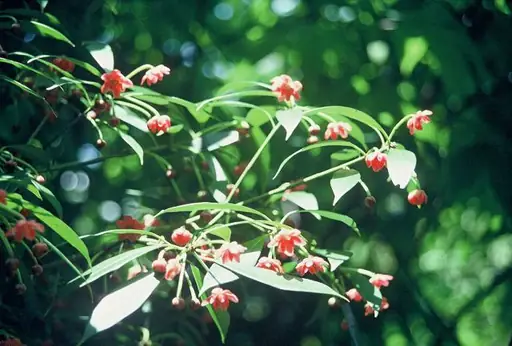
The anise trees, genus Illicium, are aromatic broadleaf evergreens of the star-anise family, Schisandraceae, their name from the Latin illicium, an allurement, for the scent of the leaves. Illicium henryi, the Henry anise, is the Chinese member of the group, a handsome, dense, pyramidal to rounded evergreen with waxy flowers in shades of coppery pink to deep carmine red and aromatic, glossy foliage. The plant honors Augustine Henry, the great Irish plant collector who botanized central China at the close of the nineteenth century.
Henry anise owes its place in American gardens largely to , who introduced the plant to the trade here after obtaining stock from the famous Hillier Nurseries in England. Much admired in the garden over the years, Henry anise has since become a little more widely grown, though the plant remains uncommon, a connoisseur's evergreen for the shade.
The flowers are the draw, up to twenty narrow tepals apiece in a rich pink to red, waxy and star-like, carried in spring against dark evergreen leaves. As with the other ornamental anises, the aromatic foliage is not the culinary star anise, and the plant is best enjoyed for looks and scent rather than any use in the kitchen. The same aromatic oils that scent the leaves keep browsing deer at bay.
Give Henry anise shade or semi-shade and good soil that stays moist but drains well, and the plant builds slowly into a clean, dense evergreen of eight to twelve feet. Use as a specimen, a shade screen, or a refined evergreen anchor in a woodland border, where the waxy spring flowers can be admired at close range. Camellias, ferns, hydrangeas, and other broadleaf evergreens make fitting company in the same cool, shaded ground.
Plus à découvrir



Questions et discussion