

Cette page est affichée dans sa langue d'origine. La traduction n'est pas encore disponible.
La sélection Seedsun
Lonicera sempervirens 'John Clayton'
UGS: LONI-SEMP-JOHN-CLAY-01G
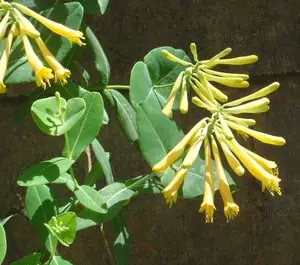
Coral honeysuckle in a suit of gold: Lonicera sempervirens 'John Clayton' trades the fire-engine red of the species for clear, warm yellow, borne in the same neat whorled clusters at the branch tips. This is a compact, well-mannered, repeat-blooming selection of one of the finest native vines of.
Demandez un devis personnalisé
Les prix, les conditionnements et la disponibilité sont confirmés dans votre devis personnalisé. L'envoi d'une demande de renseignements ne constitue pas une commande.
Renseignez-vous sur l'adéquation, les conditions de semis et de culture.
Veuillez confirmer les options de livraison et les documents requis dans votre devis.
À propos de cette variété
Coral honeysuckle in a suit of gold: Lonicera sempervirens 'John Clayton' trades the fire-engine red of the species for clear, warm yellow, borne in the same neat whorled clusters at the branch tips. This is a compact, well-mannered, repeat-blooming selection of one of the finest native vines of the eastern United States, flowering from late spring through summer and often again in fall.
The plant carries a real pedigree. 'John Clayton' was discovered growing on the grounds of the seventeenth-century Abingdon Church in Gloucester County, Virginia, and introduced by the Virginia Native Plant Society, who named the selection for the Reverend John Clayton, the colonial botanist of that same Gloucester County. Few garden plants come with quite so much Virginia history twined around them.
The honeysuckles belong to the family Caprifoliaceae, and the genus Lonicera honors Adam Lonitzer, a sixteenth-century German herbalist. One point is worth stating plainly: unlike the invasive Japanese honeysuckle that smothers Southern woodlands, the native coral honeysuckle is restrained and well-behaved, and the tubular flowers are a favorite of ruby-throated hummingbirds, followed by red berries that feed songbirds into winter.
Give 'John Clayton' full sun to part shade, ordinary well-drained soil, and something to twine on, whether a mailbox post, a lamppost, a trellis, or a small arbor, since the vine climbs by twining rather than clinging. Bloom comes on new growth, so a light trim after the main flush keeps the vine tidy and coaxes another round of flowers. Semi-evergreen in mild winters, compact enough for a small garden, and native to boot, this is about as easy and rewarding as a flowering vine gets.
Plus à découvrir



Questions et discussion