
35 of the Best Shade-Tolerant Roses
I have a confession to make: I adore roses, but I rarely give them exactly what they need to look their best. One of my most common offenses? Planting them in too much shade. I can’t help myself. I rarely have the perfect location available with eight hours of direct sun, and no nearby trees or.
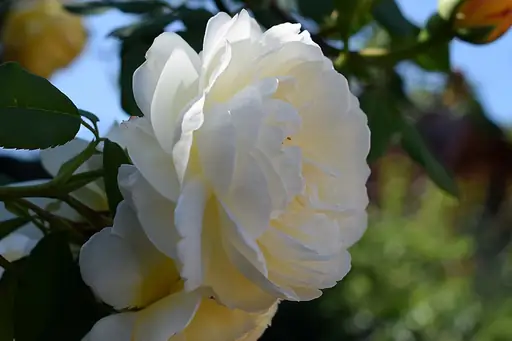
I have a confession to make: I adore roses, but I rarely give them exactly what they need to look their best.
One of my most common offenses? Planting them in too much shade.
I can’t help myself. I rarely have the perfect location available with eight hours of direct sun, and no nearby trees or buildings to block the light. But I want to enjoy my roses anyway!
Does this sound like you?
Right now, I have several bushes growing in way too much shade and, you know what? They’re doing great.
A few are a little leggy or growing towards the light rather than completely upright, but they flower as faithfully as ever.
If you’re similarly afflicted with less-than-ideal sunshine, you might be wondering if rose cultivation is even an option for you.
I’m here to tell you: Yep, it is. But you need to choose the right one.
We’ve got you covered. Here are 35 fantastic options that we’ll discuss:
35 of the Best Roses for Shade
- Alba Incarnata
- All a Twitter
- Carefree Delight
- Country Dancer
- Claire Austin
- Cinco de Mayo
- Earth Song
- Easy Does It
- Eden Climber
- Eustacia Vye
- Francis Meilland
- Frida Kahlo
- Golden Celebration
- Hansa
- Hawkeye Belle
- Hermina
- Iceberg
- Julia Child
- Kew Gardens
- Knock Out
- Koko Loko
- Lichfield Angel
- Mavourneen
- Miracle on the Hudson
- Mister Lincoln
- Molineux
- Paloma Blanca
- Portlandia
- Quietness
- Roald Dahl
- Rugosa
- Silver Shadows
- The Fairy
- Wanderin’ Winds
- Zephirine Drouhin
As I mentioned, roses in shadier areas will probably be leggier and they might grow a bit crooked as they reach for the sun. They’re also more prone to pests and diseases.
You’ll want to practice preventative measures like watering at the soil level in the morning rather than sprinkling the leaves, and make use of dormant oils in the winter.
Now, let’s take a look at these beautiful plants!
1. Alba Incarnata
Extraordinarily disease resistant, shade tolerant, and hardy in Zones 3b through 9b, this alba rose has it made in the shade.
‘Maiden’s Blush’ aka ‘Alba Incarnata’ has been around for centuries and continues to top best-of lists all over the place.
While it blooms just once in the late spring or early summer, the solitary show is a knockout.
The almost thornless semi-climber has pale blush pink, very full blossoms held singly or in small clusters and in such large numbers that you might be left wondering if there are any leaves under all that beauty.
2. All a Twitter
‘All a Twitter’ is newer to the market, but it has people talking.
The bushy plant grows to about two feet tall and just a hair more narrow. It’s covered in clusters of semi-double blossoms in a brilliant, fiery orange hue that appear in flushes throughout the summer and early fall.
‘All a Twitter’
This miniature rose is extremely disease resistant and works well in containers.
Want to set tongues wagging?
3. Carefree Delight
Meilland knew what they were doing when they named this shrub rose.
It’s both carefree, with extreme disease resistance and a self-cleaning habit, and delightful, with its clusters of single pink blossoms.
Sold as ‘Bingo’ in Europe, this rose will reach about two feet tall and three feet wide in shadier areas.
It will need winter protection in Zone 5 and can grow in climates as far south as Zone 10.
4. Country Dancer
If you’ve never heard of Griffith Buck roses, please read our guide to this respected and accomplished breeder.
For a quick overview of his breeding philosophy, Dr. Buck determined one of his creations was a winner if it could survive the cold winters of Iowa and withstand common pests and diseases without special care.
If a rose managed to make it from one year to the next without a need for pesticides and fungicides, it stayed in the breeding program.
Photo via Alamy.The roses that Dr. Buck planted on his property were gradually covered in shade by nearby trees as they matured.
Gaye Hammond of the Houston Rose Society visited the Buck home recently and found his rose garden still growing and blooming happily in that dappled sunlight.
‘Country Dancer’ was one of the hybrids planted in his garden.
As with all Griffith Buck roses, this plant stays fairly compact, growing just five feet tall and four feet wide in full sun, and about a foot shorter and more narrow in shadier conditions.
The semi-double, bright pink blossoms are intensely fragrant with a fruity, classic rose scent.
While roses might never be known for their foliage, the glossy, leathery, dark green leaves are attractive in their own right.
Grow this continually-blooming shrub in Zones 4b through 9b.
5. Claire Austin
David Austin Roses hit the jackpot in 1999 when they bred ‘Claire Austin’ from two unnamed seedlings.
A shrub rose with fully double white blossoms, the flowers will grow in flushes throughout the year, even in dappled sun.
A feast for more than just the eyes, the blossoms have a rich myrrh and vanilla fragrance encompassing a four-foot-tall plant.
Just a heads up, though: the flowers are prone to balling in wet conditions, so be sure to water at the soil level, and maybe avoid planting this cultivar if you live in an area with frequent heavy rain.
‘Claire Austin’ grows well in Zones 5b to 11b.
6. Cinco de Mayo
Every day is a celebration when you have ‘Cinco de Mayo’ in your garden.
It has incredibly unique double blossoms with a smoky lavender and rust-red hue. The plant blooms in flushes throughout the summer and fall, with a mild, apple-like fragrance.
While this floribunda can grow over five feet tall in full sun in Zones 6b to 9b, it will stay a bit smaller with less light.
7. Earth Song
The world seems to be humming with song, or at least with happy bees, when ‘Earth Song’ is in bloom.
A hybrid tea grandiflora isn’t the type of rose that most people would recommend for low-light areas, but this Griffith Buck rose doesn’t mind the dark one bit.
It’s heat tolerant, disease resistant, and hardy in Zones 4b to 9b.
The bushy shrub grows just as tall in sun or shade, topping out at about four feet.
8. Easy Does It
‘Easy Does It’ is the perfect option for the grower who wants to laze about with a mai tai rather than toiling in the garden.
The mango pink blossoms will return in flushes throughout the season, with or without your efforts. Plus, the disease-resistant shrub won’t fall prey to every pathogen that comes its way.
Plant this Harkness floribunda in Zones 5 to 10, where it will grow up to four feet tall.
9. Eden Climber
Elegant ‘Eden’ might be one of Meilland’s most beloved roses. It constantly draws comments wherever it is grown.
A large-flowered climber, its striking blossoms are beautifully cupped, fully double, and stand out with cream exteriors and deep pink centers.
The flowers won’t ball in the rain and appear continuously all season.
Suited for Zones 5b through 9b, it can climb up to 12 feet tall but will stay more petite in shadier spots.
10. Eustacia Vye
Bred by David Austin and named for the beautiful heroine in Thomas Hardy’s classic tale, “A Return of the Native,” this shrub rose has small clusters of huge, very full, fruit-scented blossoms in apricot pink hues.
The four-foot-tall shrub thrives in Zones 4 to 11, and it’s a disease-resistant option that doesn’t mind some time in the shade.
11. Francis Meilland
‘Francis Meilland’ is an undeniably beautiful hybrid tea rose bred by Meilland International, but it’s the scent that sets it apart.
Each very full, white and blush pink blossom has a heady citrus and fruit, old rose fragrance that transports you to a magical floral world. The flowers appear in flushes of small clusters or on solitary stems suitable for cutting.
Make sure to leave room for this plant, because it can reach up to seven feet tall and just a few feet wide. Though, of course, it won’t grow to be quite so tall in shadier spots.
It’s extremely disease resistant and suitable for Zones 6b through 9b.
12. Frida Kahlo
Hardy in Zones 5 to 9, disease-resistant, and extremely vigorous, ‘Frida Kahlo’ is as bold as her namesake, with vibrant reddish-orange blossoms streaked and spotted in flecks of buff tan.
The full flowers appear in flushes of small clusters or solitary flowers from summer through fall on a three-foot-tall and equally wide shrub.
‘Frida Kahlo’
13. Golden Celebration
The huge, very full, deep golden yellow, cupped blossoms with a heady sweet fragrance of this shrub are certainly worth celebrating.
This David Austin beauty blooms in flushes throughout the summer and into the fall on a four-foot-tall and equally wide plant.
Hardy in Zones 5b through 10b, it’s more susceptible to black spot than many of the others on this list, but it’s still certainly worth having around.
Just be sure to read up on how to control black spot on your roses, which is more prevalent on shaded plants.
14. Hansa
Rugosa roses are known for being tough. They don’t struggle with pests and diseases like some of the more delicate roses can. Their adaptable nature also applies to lighting conditions.
But not all rugosas are drop-dead gorgeous. Don’t get me wrong, I love them, but sometimes I want a showy rose. ‘Hansa’ fits the bill, marrying looks and toughness.
Even in shadier areas, you’ll be treated to the bold pinkish-purple double blossoms that smell heavenly of clove, and the flushes repeat a second time later in the summer.
The bright red hips in the fall give you (and the wildlife) another reason to love these plants.
‘Hansa’
It’s also hardy in Zones 3b to 7b. (Don’t tell anyone, but there’s one thriving in Zone 8b near where I live. Told you it was adaptable!)
Want one of your own? I can’t possibly blame you.
15. Hawkeye Belle
Another excellent offering from Griffith Buck, this rose is primarily white with blush petals at the center of each large, full blossom.
Photo via Alamy.The four-foot-tall and equally wide plant blooms repeatedly throughout the growing season.
While it’s disease resistant and shade tolerant, the blossoms tend to ball in wet weather, so maybe give this one a pass if you live in a wet region. Grow it in Zones 4b to 10b.
16. Hermina
I know, another Griffith Buck offering. But he bred a lot of tough, shade-tolerant roses, so what can I say?
It’s not just that ‘Hermina’ is able to survive in poor conditions, but it’s awfully pretty, too.
The double flowers are pink on the face and white on the reverse, and appear in flushes throughout the growing season in Zones 5b to 10b.
The shrub is about three feet tall and it’s another cultivar currently thriving in Buck’s shady garden.
17. Iceberg
‘Iceberg’ is a snow-white floribunda with large, double blossoms in small clusters that bloom in flushes from spring until fall.
It’s a vigorous grower, rapidly reaching up to five feet tall, and is disease resistant, drought tolerant, and will perform even in darker areas, so long as it’s planted in Zones 4b and up to Zone 10b.
18. Julia Child
Julia Child once said, “With enough butter, anything is good,” and she used over 700 pounds of the stuff while filming just four seasons of “Baking with Julia.”
So it’s fitting that the roses named for the marvelous cook are buttery yellow.
It’s extra fitting that ‘Julia Child’ is every bit as tough as its namesake. No word on how Child felt about licorice, but her rose has a strong anise scent.
Perfect for Zones 5b through 10a, this shrub reaches about three feet tall and is both heat tolerant and disease resistant.
‘Julia Child’
19. Kew Gardens
‘Kew Gardens’ can’t be beat if you want a classic, simple rose. A hybrid musk, it produces large clusters of small, single white flowers with yellow stamens on a five-foot-tall shrub.
If you’re imagining a sparse shrub with this one, you’ve got it all wrong.
The branches of this David Austin cultivar are covered completely in clusters of blossoms so it almost looks like a pure white hydrangea with huge flower heads.
This tough, vigorous plant is hardy in Zones 5 to 11.
20. Knock Out
Not all Knock Out roses can grow in partial sun and look as good as ever, but ‘Radcor’ does.
The four-foot-tall and equally wide shrub is covered constantly from spring until fall with single yellow, coral, and pink flowers.
‘Radcor’
Along with ‘Radcor,’ ‘Radrazz’ can also tolerate shade. Even without full sun, the three-foot-tall shrub will display cherry-red double flowers until the first hard frost in your area.
‘Radrazz’
21. Koko Loko
Just try and tell me this isn’t one of the coolest colored roses you’ve ever seen. Even if your tastes lean more toward the traditional, it’s such a unique hue.
Don’t worry, it’s fine.
This floribunda starts out with a chocolate hue before fading to lavender as the blossoms age. It’s that in-between stage of lavender-chocolate that really gets me.
The plant itself reaches about five feet tall and it blooms prolifically and consistently throughout the year.
Now for the bad news. It’s not as cold-tolerant as some varieties and does best in Zones 7 and up.
But if you can’t imagine not having this one in your garden, you could grow it in a container if you live somewhere colder and protect it during the winter. Just sayin’.
22. Lichfield Angel
When I moved into my new house, the first rose I planted in the ground was ‘Lichfield Angel.’
I swiftly discovered that what I assumed was a full sun spot was actually barely receiving a bit over four hours per day.
Fortunately for me, ‘Lichfield Angel’ is forgiving.
She keeps putting on her heavenly show with large, very full, cupped blossoms with scalloped petals in pale cream hues.
The flowers of this David Austin hybrid appear in flushes throughout the growing season in Zones 6 through 9 on a bush that grows about four feet tall and wide.
‘Lichfield Angel’
If all that sounds like heaven on Earth, make her yours by picking up a bare root plant at .
23. Mavourneen
Dr. Griffith Buck didn’t follow the common labeling conventions of naming roses after his family members and admired public figures. But that doesn’t mean he didn’t name any roses for his loved ones.
Mavourneen is anglicized Irish Gaelic for mo mhuirnín, which means “my beloved.” He named this ruby red rose for his wife, Ruby.
Of course, a rose is more than its name, and this mildly fragranced one has beautiful full blossoms that blanket the four-foot shrub in the early summer, with a second flush in the late summer.
If you look closely, you’ll find that the petals actually have a hint of white on the reverse, giving them a unique multidimensional look.
Cold hardy and shade tolerant, you can grow this shrub in Zones 4 to 9.
24. Miracle on the Hudson
Named for the stunning landing after a bird strike brought down US Airways Flight 1549 in 2009, this mildly fragrant, dark red rose has semi-double blossoms that smother the shrub from spring until fall in Zones 3 to 9.
In shadier or cooler areas, the flowers take on a darker hue and might even appear nearly black.
This vigorous rose needs regular pruning for the first few years to establish a nice shape, but after that, you can let it go.
Miracle on the Hudson
25. Mister Lincoln
‘Mister Lincoln’ is an ever-popular hybrid tea rose that has not only thrived commercially, it has also become the go-to for use as grafting rootstock because it’s so tough and adaptable.
It was used so often that you can regularly find roses planted in gardens that have reverted back to ‘Mister Lincoln.’ It just can’t be stopped.
This rose also pops back up in gardens that have been abandoned, and guess where it might appear… If you said in shady areas, you’d be right!
‘Mister Lincoln’
So what does it look like? It has classic red petals on full blossoms that appear in flushes on the four-foot-tall shrub.
It’s a pretty irresistible option if you want something tough and shade tolerant.
26. Molineux
This David Austin looks good enough to eat, with deep yellow and peachy pink, very full flowers.
Named for the stadium in England, which hosts Austin’s favorite Wolverhampton Wanderers Football Club, it has unusually pointed petals that give the blossoms a passing resemblance to a dahlia.
The three-foot-tall shrub is almost thornless and since the flowers are borne singly, it makes a killer cutting rose in Zones 6 to 10.
27. Paloma Blanca
‘Paloma Blanca’ is covered in clusters of large white flowers, like white doves nesting in the deep green, glossy leaves.
Photo via Alamy.But this plant isn’t just pleasing to the eyes. Take a deep breath and inhale the intoxicating floral fragrance.
It’s no petite plant, though. It can grow up to nearly seven feet tall and looks perfectly elegant climbing up a trellis or wall.
This grandiflora was bred by Dr. Griffith Buck and thrives in Zones 4b to 9b.
28. Portlandia
An apricot and pink stunner, ‘Portlandia’ wasn’t named for the television series, but you can definitely find it growing in the city where the show took place.
The flower has a fruity scent and very full flowers on a disease-resistant 10-foot-tall climber that blooms in large clusters continually from late spring until the frost.
29. Quietness
‘Quietness’ is a restrained pale pink, but it’s no shrinking violet. The large, very full flowers are heavily fragrant and appear in small clusters that bloom repeatedly all season long.
This disease-resistant Buck rose has an elegant spreading habit and reaches about four feet tall and five feet wide.
Though it’s not required, if you deadhead regularly, you’ll be treated to more blossoms. Pruning in the fall or winter will also improve the show in the following year.
30. Roald Dahl
With a pleasing peachy color and a raspberry scent, ‘Roald Dahl’ is a David Austin feast for the senses.
While the medium-sized flowers aren’t the largest on the market, the impact they make is outsized because of how full and frilly they are.
The flowers have open, flat petals on the exterior, while they’re packed tightly in whirls and swirls at the center. The buds are bright orange, adding yet another dimension of visual interest.
‘Roald Dahl’
Though it’s relatively new on the market, this cultivar has quickly become a popular choice because of its disease resistance and reliable performance in Zones 5 to 11, even when planted in a shadier area.
‘Roald Dahl’ is available at as a bare root specimen if you’d like to add it to your garden.
31. Rugosa
Rugosa roses (Rosa rugosa) are a species of tough, hardy, practically maintenance-free plants. While the flowers aren’t the largest or fullest, the plants will bloom even in deep shade.
This is one of the few roses that you could plant in a truly dark area and still expect to see flowers without having to worry about fungal issues.
There are several colors available, including the original pink and a snow white. Both thrive in every spot in the US except for the hottest locations in southern Florida and California, throughout Zones 3a to 10a.
They can even tolerate drought or salt. This is truly one tough cookie.
The shrubs, which spread up to 10 feet via suckers, are about four feet tall and feature bright orange-red hips that are absolutely massive.
‘Alba’
Pink Rugosa
32. Silver Shadows
An otherworldly Buck rose, ‘Silver Shadows’ has large, cupped, double blossoms with a heady citrus fragrance. But it’s the color that will blow your mind.
This plant has the most interesting silver, mauve, and purple hue that covers the five-foot-tall shrub all season long.
33. The Fairy
Not many polyanthas can lay claim to being suitable for shade, but ‘The Fairy’ is perfectly capable of working its magic in all kinds of light.
In fact, she can show her color even better in cooler areas, since the vibrant pink flowers may fade to nearly white in the heat.
Though she’s fairy-like and petite at just over two feet tall and wide, she isn’t delicate. ‘The Fairy’ is extremely disease resistant and grows in Zones 4b through 9b.
‘The Fairy’
34. Wanderin’ Winds
Another one of the roses found growing in dappled shade on Griffith Buck’s property, ‘Wanderin’ Winds’ is a classic pink, semi-double rose on a shrub that grows about four feet tall and three feet wide.
This cultivar isn’t widely available commercially, but it’s worth searching out if you want a classic-looking rose for dappled shade.
35. Zephirine Drouhin
When someone asks me to recommend a climber, the nearly thornless bourbon ‘Zephirine Drouhin’ is always top of the list.
The large, bright pink, double blossoms with long petals are borne right up against the canes on short stems.
While that means it isn’t ideal for cutting, it’s going to give you an in-your-face display because the roses are held facing out rather than drooping, as can be the case with some climbers.
It can grow rapidly up to 15 feet tall in Zones 5b through 10b and the heady damask scent will blow you away.
‘Zephirine Drouhin’
All this, and it will also thrive in shady conditions, with flowers from spring until fall.
I’m telling you, if you want a climbing rose, you want this old-fashioned beauty.
The Shade of It All
Don’t give up on your dreams just because you have less than ideal sun exposure, and don’t believe the hype that you’ll be sorry if you grow roses in some shade. It’s possible.
Very few roses will thrive in deep, dark shade. But some dappled light? Just four hours of light? Go for it.
Are any of the plants on this list calling your name? Did I miss one that you’ve found to be a reliable option? Share with us in the comments.
We have so much more goodness to share if you’re looking for more information about growing roses. Here are a few articles to start with:
- Growing Roses 101: Getting Started
- Everything You Need to Know About Buying Rose Bushes
- How and When to Prune Roses
- How to Plant Roses During the Fall
- Facebook240
- X




Domande e discussione