
How to Plant and Grow Cleome (Spider Flower)
Cleome hassleriana It’s an attractive plant with unique characteristics. It’s tall but not too tall, has unusual flowers without being showy about it, and requires very little (if any) care during the growing season. It will undoubtedly allow you to strike up a few conversations with your neighbors.
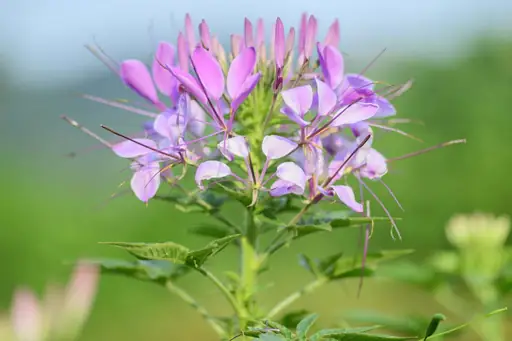
Cleome hassleriana
It’s an attractive plant with unique characteristics.
It’s tall but not too tall, has unusual flowers without being showy about it, and requires very little (if any) care during the growing season.
It will undoubtedly allow you to strike up a few conversations with your neighbors who aren’t familiar with it. And with white, pink, or pastel-purple flowers, it makes a decorative addition to almost any garden.
Without further ado, let’s get into what Cleome is all about, and what you can do with it in your landscape.
What You’ll Learn
- What Is Cleome?
- Cultivation and History
- How to Sow
- How to Grow
- Growing Tips
- Maintenance
- Cultivars to Select
- Managing Pests and Disease
- Best Uses
- Quick Reference Growing Guide
You won’t need much to get Cleome hassleriana started in your garden, except for the seeds or plants themselves and a sunny location for them to take off.
Let’s get right to it so you can get started right away.
What Is Cleome?
Cleome, sometimes called spider flower, spider plant (not to be confused with Chlorophytum comosum), or grandfather’s whiskers, will typically reach a height of up to five feet, though dwarf cultivars exist.
It is grown as an annual in most US growing zones, though it is perennial in USDA Hardiness Zones 10 and 11.
It’s a relatively unique plant because of how it flowers, and the length of time it will stay in bloom – from early summer up until first frost.
The flowers grow in open racemes, with loose, wispy clusters of small blooms at the end of each stem. The long stamens give it a “spidery” appearance.
Mature stems have a nasty thorn at the base of each of the green leaves. After blooming, the dried flower heads attract birds and provide texture in the fall garden.
Cleome can often be confused with a similar-looking plant known as clammy weed (Polanisia dodecandra).
The clearest way to tell the difference between the two is by their seed pods. Cleome has seed pods that stick straight out or hang down, while the seed pods are oriented upwards in clammy weed.
Clammy weed is a native to North America, while Cleome is native to South America.
Cleome will readily grow in conditions with lots of light and well-drained soil.
I’ve developed a habit of planting full sun flowers in part sun conditions to see how they respond, and have had plenty of good luck… except with C. hassleriana.
This plant really does thrive – and produces the most abundant blooms – with as much sun as you can throw at it.
While it will tolerate heavy soils, it is happiest in lighter soil conditions. The key ingredient here is that the soil should be organically rich.
Cleome requires a bare minimum of fertilization. You could get away with simply adding compost to the growing bed each year and being done with it.
I do not recommend using any fast-acting fertilizers as this can cause “leggy” growth.
It’s tolerant of drought conditions, more so than many other annuals. Heck, it doesn’t even need to be staked despite its impressive height, because it has a deep and strong taproot and sturdy stems.
As long as you’ve got the sunny conditions and well-drained soil required for it to flourish, C. hassleriana will be happy to do its thing with minimal effort on your part.
Cultivation and History
Originating from South America, C. hassleriana is usually grown as an annual, and it readily self-seeds.
Although it was first introduced to the US in the early 1800s, it didn’t reach its height of popularity until the Victorian era, when it became a common resident of greenhouses and cottage gardens.
As time moved on, Cleome lost its fame. But it has enjoyed a recent resurgence of popularity. It’s a plant I rarely saw in gardens and professional landscaping, until recently.
My personal history with C. hassleriana is a bit embarrassing.
It’s no secret that the leaves of the plant look startlingly similar to marijuana, and when I was directed by my foreman to cut back all herbaceous material for a fall cleanup, I was a little shocked to find a patch of Cleome in the garden.
Cleome leaves look awfully similar to marijuana leaves.The foreman saw my look of confusion, and made sure I knew this was simply an ornamental annual plant.
I know I’m not alone in having my neighbors look at my C. hassleriana that’s planted in the front yard with their eyebrows raised.
“Is that guy really growing that in his front yard? How brazen!” their faces scream.
How to Sow Spider Flowers
Getting C. hassleriana to germinate the first time is an easy task, allowing them to self-seed is even easier, and having those plants self-seed to produce yet more plants is easier still.
From Seed
The only conditions required for starting C. hassleriana from seed are the right amount of light and adequate soil conditions, as well as the correct timing – when you’re beyond any danger of frost.
Prepare your planting location by digging the soil to loosen it, mix in some compost if you wish, and rake it smooth.
Sow the seeds directly on the surface and cover with a light layer of soil, no more than quarter of an inch deep, as they need light to germinate.
Keep the soil moist but not wet. I’ll check the seeded area daily and give it a drink only if it’s starting to dry up.
Seeds germinate quickly, in about a week. Thin them out so you’ve got a few inches between each plant; six to eight inches works best to give the plants room to spread.
Alternatively, you can start the seeds indoors six weeks before the last frost date.
If you don’t have a sunny enough location for your seedlings to get started indoors, you might want to start your seeds inside eight weeks before the last frost date, or use a grow light.
These seeds require fluctuating temperatures in order to germinate, with daytime temperatures of 75-85°F and nighttime temperatures about 10 degrees lower.
Transplant the seedlings to your desired location when they are two to four inches tall and all danger of frost has passed.
Before planting, harden off your seedlings by placing them outdoors for an hour or so each day, gradually increasing the amount of time over the course of a week.
To plant out, dig a hole as deep and wide as the root balls and gently place the seedlings into the ground, spacing them six to eight inches apart. Tamp down the soil, and water in well.
On Self-Seeding
Cleome readily self-seeds. In some of the estate gardens where I planted it three years ago, new seedlings come up every year and eliminate the need to replant or reseed. It’s a nice freebie, as far as I’m concerned.
But if you’re growing your flowers in tight conditions or like to keep your garden as tidy as you can, I’d recommend removing the seed pods immediately after the flowers individually finish blooming.
I’ve never had Cleome get out of control on me, but in the right conditions, it’s possible. Alternatively, you can select sterile hybrid cultivars and eliminate any danger of self-seeding.
How to Grow Cleome
Regular readers know that my favorite plants are the ones that I don’t need to smother with attention, and Cleome is on my list. As mentioned, it requires a full sun location with organically rich, well-draining soil.
Outside of watering young plants regularly until they are established and removing seed heads if the gardener is so inclined, this plant has almost zero need for attention.
It doesn’t need to be staked, deadheads itself, and requires little, if any, fertilization.
Growing Tips
- Cleome tolerates drought, but is happiest with an occasional drink of water if the weather is dry for an extended period of time.
- Plants do not require staking at any point in their lifespan.
- Ensure plants are located in a spot where they’re going to get at least six hours of sunlight per day with good drainage.
- No specific fertilization requirements, except to avoid fast-acting fertilizers.
- Watch out for small but sharp thorns found along the stems on most varieties.
Maintenance
The only major maintenance required is yanking this plant out of the ground when it dies at the end of the season.
If you like a tidy garden, you can remove the plants in late fall or early winter.
You’ll see why the plant has the nickname “spider flower” on a winter day when the flowers are long gone, leaving only spindly growths that look a lot like an arachnid’s long legs.
Remember, Cleome can have some irritating thorns in a few spots along the stem, so be mindful of where you’re grabbing and put on gardening gloves for extra protection.
Cleome Cultivars to Select
There are a variety of different cultivars available, including the Queen™ series and the more compact Senorita® series.
It’s recommended that you cold stratify seeds from the Queen™ series before planting, for better germination rates. Here are a few of my favorites:
Cherry Queen
Bold and bright, ‘Cherry Queen’ blooms with six to eight-inch fragrant flowers atop three to four-foot-tall stems.
‘Cherry Queen’
This open-pollinated variety will happily self-seed and provide vivid color to your borders from early summer to first frost.
You can find seeds in a variety of packet sizes available from .
Mauve Queen
Another member of the Queen™ series, this cultivar produces six to eight-inch blooms in shades of deep pink to pastel purple.
‘Mauve Queen’
‘Mauve Queen’ will self-seed, and like other members of the Queen™ series, it’s best to cold stratify the seeds before planting.
Seeds are available at in a variety of packet sizes.
Queen Mixed Colors
If you can’t decide what color you like best, why not try this colorful mixture? This seed mix contains ‘Cherry Queen,’ ‘Mauve Queen,’ and ‘White Queen.’
Queen Mixed
Seeds require cold stratification before sowing.
Senorita Rosalita
Senorita® ‘Rosalita’ is a more compact cultivar, growing to a mature height of two to three feet. Delicate pink and white blossoms contrast with the dark green foliage.
‘Senorita® Rosalita’
The Senorita® series produces sterile flowers, so this cultivar will not self-seed. Its compact growth habit makes it suitable to grow in containers.
White Queen
Another top pick from the Queen™ series, ‘White Queen’ blooms – as the name suggests – with delicate white flowers.
‘White Queen’
Expect a mature height of three to four feet. This variety will self-seed readily.
Find seeds in a variety of packet sizes available at .
Managing Pests and Disease
C. hassleriana has almost no pest or disease issues, and is exceptionally hardy to the few that may cause problems.
Herbivores
I’ve never seen Cleome take any damage from herbivores. Maybe it’s the slightly pungent scent, the thorns on the stem, or some other deterrence Cleome possesses, but the risk of critters munching on this plant is very low.
Insects
Insect pests are almost a non-issue for C. hassleriana… almost.
Generally, Cleome is rarely bothered by any pests except for common generalists like aphids. I’ve never applied a treatment for insect issues and have likewise never lost a group of plants to insects.
Just in case you do discover any issues, keep these tips in mind.
Aphids
Aphids are regular visitors to most gardens. You’ll notice their presence either when you note masses of the pests, or their telltale honeydew – a sticky, shiny substance left behind by the bugs on the leaves of the plant.
Bonide™ Insecticidal Soap
You can read more about ridding the garden of aphids here.
Whiteflies
An insecticidal soap like the one mentioned above will do the trick to get rid of an infestation.
Find tips on combating whiteflies here.
Spider Mites
Spider mites on the spider flower? How poetic!
I’ve never had an issue with spider mites on Cleome in the garden, but if your plants are growing in an area with poor air circulation, they could become a problem.
You’ll notice this issue when you see the telltale spiderweb-like webbing around the plants, and yellowing leaves.
Once again, an application of the aforementioned insecticidal soap will save the day.
Read more about spider mite control here.
Cabbage Moths
A treatment of the biofungicde Bacillus thuringiensis should do the trick to get rid of these pests.
Disease
As long as your plants have good air circulation available, they shouldn’t have any issues at all with diseases.
In the event that they do, a standard fungal treatment will alleviate most issues. I have to stress again that treating these plants for pests or disease is generally not necessary for the benefit of the plants themselves.
The only exception might be if an individual C. hassleriana plant is heavily infested with pests or disease and, as a host, poses a threat to other plants in the garden.
In that case, treatment can be beneficial to the overall health of your garden.
Powdery Mildew
I rarely encounter powdery mildew on Cleome, but it can happen, and the recommended treatment is the same as for any other plant afflicted with it.
Bonide™ Copper Fungicide
Rust
The only potentially serious disease your Cleome could suffer from is rust.
If your plant is afflicted by rust – a fungal issue that leaves telltale rust-colored spots on the leaves and foliage – unfortunately there is no treatment available.
Remove and destroy all affected plants to prevent further spread in the garden.
Best Uses for Spider Flowers
Plant your C. hassleriana in the borders of your garden for the best effect.
I worked on a property that had a tiered boxwood border with short 18-inch boxwoods, behind which was low-growing Sarcococca (about eight inches tall), and massive boxwood behind that, which was at least five feet tall.
It would have been a boring planting, except for the seasonal flowers that we also planted in the Sarcococca bed:
White tulips for blooms in the springtime, and Cleome for added interest throughout the entire summer season.
These flowers offered a perfect accent that tied the entire planting together – without stealing the show.
If you have room for it, a mass planting of Cleome is something else. You can let the plants freely go to seed each year, and they’ll pop right back up the following spring.
Quick Reference Growing Guide
| Plant Type: | Flowering annual (Zones 2-11), perennial in Zones 10-11 | Flower / Foliage Color: | Pink, purple, white/green |
| Native to: | South America | Tolerance: | Drought |
| Hardiness (USDA Zone): | 2-11 | Soil Type: | Organically-rich |
| Bloom Time / Season: | Summer | Soil pH: | 6.0-7.0 (ideal), tolerates most pH |
| Exposure: | Full sun | Soil Drainage: | Well-draining |
| Spacing: | 6 inches | Attracts: | Bees, butterflies, hummingbirds |
| Planting Depth: | Surface sow (seeds), depth of root ball (transplants) | Uses: | Border, mixed planting, cut flowers |
| Height: | 1-5 feet | Order: | Ranunculales |
| Spread: | 6-8 inches | Family: | Cleomaceae |
| Water Needs: | Moderate | Genus: | Cleome |
| Maintenance: | Low | Species: | hassleriana |
| Common Pests: | Aphids, cabbage moths, spider mites, white flies | Common Disease: | Powdery mildew, rust |
Easy to Grow, So Get Growing!
I’ve sure got a fondness for flowers that are easy to care for, and C. hassleriana is high up on that list. This is a plant that’s easy to start from seed, it grows in full sun and tolerates drought conditions, and it has minimal pest issues.
It’s a perfect plant for gardeners who like a stately and tidy garden, and is also a prime choice for those with a more laissez-faire approach.
Are you growing Cleome at home? Do you have a suggestion, question, or tip that we didn’t include here? Leave us a comment below!
If you are looking for other flowering plants to add to your garden beds, check out these guides next:
- How to Plant and Grow the Glorious Marigold
- How to Grow and Care for Strawflowers
- How to Grow and Care For Petunias
- Facebook142
- X




Domande e discussione