
How to grow cowpeas
Seed to Harvest Growing Guide How to grow cowpeas A practical guide to direct sowing cowpeas, growing vigorous plants, protecting flowers and pods, and harvesting fresh-shell or dry cowpeas at peak quality. Direct sow after soil warmsKeep moisture steady during bloomHarvest plump pods for fresh.
Seed to Harvest Growing Guide
How to grow cowpeas
A practical guide to direct sowing cowpeas, growing vigorous plants, protecting flowers and pods, and harvesting fresh-shell or dry cowpeas at peak quality.
Direct sow after soil warmsKeep moisture steady during bloomHarvest plump pods for fresh shelling Shop cowpea seed →Start the guide ↓ Crop family: Legume SowDirect outdoorsAfter frost in 60°F+ soil DepthAbout 1 inchFirm, well-drained seedbed SunFull sunAt least 6–8 hours Spacing2–3 inchesBush cowpeas; follow pole packet Harvest50–90+ daysDepends on cowpea type and useBefore you begin
Match the cowpea to the harvest you want.
Cowpeas are warm-season legumes that germinate best in warm, well-drained soil. Varieties range from compact bush plants to spreading semi-vining types, with pods harvested for fresh peas or fully dried seed.
Best first decisionChoose fresh-shell peas for plump tender seeds or dry peas for storage, then match plant habit and maturity to the available warm season.Build your cowpea-growing plan
Plan the row, seed quantity, and harvest rhythm.
Find your sowing window, lay out bush and pole rows, calculate seed needs, and schedule successive bush-cowpea plantings.
When to plant cowpeasFind your local direct-sow windowEnter your ZIP code to check when warm-season cowpea sowing fits your USDA zone and current season.Check cowpea timing → Lay out the cowpea bedSeparate bush rows and mature plant spaceReserve sunny row space and give vigorous plants room without shading shorter crops.Plan the cowpea bed → How much cowpea seedCalculate the seed you needEstimate seed quantity from row length, spacing, harvest stage, and cowpea type.Calculate cowpea seed → Finish before frostWork backward from harvestChoose a fresh-shell or dry-seed target date and allow the full warm-season maturity period.Plan the harvest date →Cowpeas at a glance
The path from seed to harvest
Select any milestone to jump directly to its full instructions.
01PlanBefore soil reaches 60°F02SowAfter frost in warm soil03EstablishFirst 2–3 weeks04FlowerBloom through pod set05ProtectScout at least weekly06HarvestAbout 50–90+ daysStage 1–3
Plan, sow, and establish
Cowpeas perform best when seed goes directly into genuinely warm soil and shallow roots remain undisturbed.
01Choose the right cowpea
Match growth habit and harvest stage to your garden and kitchen.
- Bush types mature compactly; spreading types need more row room.
- Choose fresh-shell, cream, crowder, purplehull, or dry cowpeas according to how you intend to harvest them.
Wait for warm soil
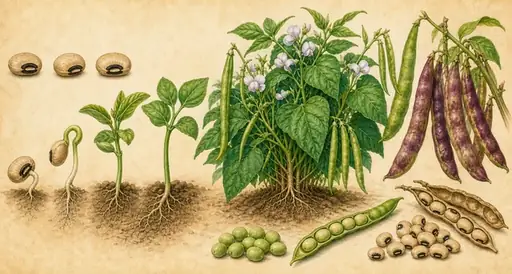
Direct sow after frost when soil is at least 60°F. Plant about 1 inch deep and 2–3 inches apart for typical bush cowpeas, adjusting to the packet for other types.
Germination targetWarm, evenly moist—not saturated—soil and emergence commonly within about 7–10 days. 03Protect shallow roots
Water after sowing, guide pole seedlings to supports, and cultivate only near the surface.
- Install mature plant space before vines begin to run.
- Thin or replant gaps without disturbing neighboring roots.
- Keep young rows weed-free with shallow hoeing or hand pulling.
- Do not work among wet plants because contact can spread disease.
Stage 4
Care from leaf growth through pod set
Steady moisture during flowering, dry foliage, and careful root protection keep cowpeas productive.
WWater
Water at soil level and keep moisture steady, especially during bloom and pod sizing. Drought can cause flower drop and stringy pods.
FFeed lightly
Follow a soil test. Excess nitrogen encourages leaves and delays flowering; healthy legumes often need less added nitrogen than other vegetables.
HHandle heat
Cowpeas thrive in summer heat, but flowering plants still need consistent moisture during extreme heat and drought.
MMulch
After soil warms, mulch to conserve water and suppress weeds without burying stems or cultivating across shallow roots.
Growth checkpoints
Know what to watch for.
Use development—not only the calendar—to time support, water, scouting, and harvest.
7–10 daysEmergence
Look for an even stand; cold, crusted, or saturated soil commonly causes gaps and decay.
Early growthTrifoliate leaves
Keep weeds small, avoid deep cultivation, and keep spreading stems within the row.
First flowersPod set
Maintain even moisture and avoid excess nitrogen or heat stress that can reduce pod formation.
Pods fillingHarvest rhythm
Pick fresh-shell pods when peas are plump, or allow dry-cowpea pods to mature fully.
Stage 5
Diagnose cowpea problems early
Open a symptom to compare what you see, likely causes, and the next practical check.
PestCowpea aphidsBlack colonies cluster on tender shoots and leaf undersidesWash off light colonies, conserve beneficial insects, control host weeds, and use a labeled insecticidal soap if needed while protecting pollinators.
PestCowpea curculioSmall pod punctures lead to damaged peas or larvae insideScout flowers and young pods, remove infested pods, destroy crop residue, rotate the planting, and follow local extension guidance where this weevil is persistent.
Soil pestRoot-knot nematodesPlants wilt or stunt while roots develop rounded gallsConfirm galls on roots, rotate with non-host crops, control weeds, use resistant varieties where available, and consider soil solarization before a future planting.
DiseaseCowpea mosaic virusMottled, puckered leaves with stunting and reduced pod setRemove infected plants rather than composting them, manage nearby weeds and aphid pressure, and choose resistant varieties. Do not save seed from symptomatic plants.
Stage 6
Harvest for the cowpea you intend to use
Snap, shell, and dry cowpeas are harvested at different stages. Pick when foliage is dry, hold the stem with one hand, and remove pods gently so productive plants keep flowering.
- Snap cowpeas: Pick firm, crisp pods at full length before seeds visibly bulge; harvest every few days.
- Shell cowpeas: Wait until seeds are plump but pods remain flexible and green.
- Dry cowpeas: Leave pods until yellow-brown and dry, then shell and dry the seed completely before storage.
Choose with purpose
Find the right cowpea for your garden
Match growth habit and harvest use to your space system, season length, and kitchen plans.
Heat-tolerant producerPhenomenalA vigorous productive cowpea for hot, dry conditions with large green pods.Shop Phenomenal → Early purplehullQuickpick PinkeyeAn early, compact determinate type with dark-purple pods and good disease resistance.Shop Quickpick Pinkeye → Classic blackeyeCalifornia Blackeye #5A vigorous high-yielding cowpea for fresh shelling or fully dried seed in hot climates.Shop California Blackeye #5 →Questions gardeners ask
Cowpea growing FAQ
Quick answers for sowing, succession planting, pod set, harvest, and storage.
Should cowpea seeds be started indoors?Cowpeas are usually direct sown because their roots dislike disturbance and the large seeds germinate quickly in warm soil. If a very short season requires a head start, use individual biodegradable pots and transplant gently after hardening.
How warm should the soil be before sowing cowpeas?Wait until the danger of frost has passed and the soil is at least about 60°F. Cold, wet soil delays germination and increases the chance that seed will rot.
Should cowpea seed be soaked before planting?Soaking is generally unnecessary. Cowpea seed absorbs water rapidly, and prolonged soaking or sowing into saturated soil can damage seed and encourage decay.
How do bush and semi-vining cowpeas differ?Bush cowpeas stay compact; semi-vining types spread more widely and may bear over a longer period, so follow the packet for spacing.
How often can I sow bush cowpeas for a continuous harvest?Make another short row about every 14–21 days while enough frost-free growing time remains. Stop when a new planting is unlikely to mature before cool weather or frost.
Why did my cowpea seeds fail to emerge?Common causes include cold or waterlogged soil, planting too deeply, crusted soil, damaged seed, or seed-feeding pests. Dig up one or two seeds to see whether they are swollen, rotted, or missing before reseeding.
Do cowpeas need nitrogen fertilizer?Cowpeas can form a partnership with soil bacteria that supplies much of their nitrogen. In reasonably fertile soil, excess nitrogen can create lush leaves while delaying flowers and pods. Use a soil test and avoid heavy nitrogen applications.
Why are cowpea flowers dropping without making pods?Heat, drought, abrupt temperature swings, or other stress can interrupt pod set. Keep roots evenly moist during flowering and pod development; production often resumes when conditions improve.
Do spreading cowpeas need support?Most cowpeas do not require tall trellising, but spreading types benefit from extra row room or low support that keeps pods off wet soil.
When should cowpeas be picked for fresh shelling?Harvest when peas are plump and pods are still flexible, before the seed begins to dry. Pick every few days and handle stems gently; leaving mature pods can slow new production.
Can fresh-shell cowpeas be left to dry?Some varieties can be used at more than one stage, but texture, flavor, seed size, and drying quality vary. Check the variety description before relying on a fresh-shell type for dry storage.
How should harvested cowpeas be stored?Cool fresh-shell cowpeas promptly and refrigerate them unwashed in a breathable or perforated container. Dry cowpeas must be completely dry before they are sealed and stored in a cool, dry place.
Ready to plant?
Choose cowpeas for your garden.
Compare plant habit, days to maturity, pod color, harvest use, disease resistance, and packet size.
Shop all cowpea seed →



Domande e discussione