
How to Keep Slugs Off Cabbage and Other Cole Crops
With the possibility of having up to 200 slugs on every square yard of your garden in cool humid climates, your cabbage plants and other brassicas may be in peril. Such a robust population can strip your garden of cole crops and other veggies. And each of these terrestrial gastropod mollusks can.
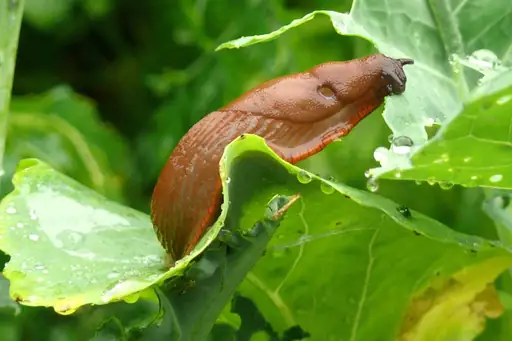
With the possibility of having up to 200 slugs on every square yard of your garden in cool humid climates, your cabbage plants and other brassicas may be in peril.
Such a robust population can strip your garden of cole crops and other veggies.
And each of these terrestrial gastropod mollusks can produce 400 eggs a year; and they are hermaphrodites meaning they all have both male and female sexual organs and can lay eggs.
However, you can fight back and prevent the slimy fiends from damaging your precious plants.
We will describe methods you can take to keep slugs from devouring your cole crops.
What You’ll Learn
- When You Have Slugs in Your Garden
- What’s at Risk?
- How to Manage an Infestation
- Trapping
- Erect a Barrier
- Use Black Plastic Mulch
- Avoid Organic Mulch
- Plant in Raised Beds
- Let Ducks Loose in Your Garden
- Buy Predatory Slugs
- Use Slug and Snail Bait
- Purge These Slimy Fiends from Your Garden
When You Have Slugs in Your Garden
The shiny trail of mucus is a giveaway that you have slugs or snails in your garden.
They hide out during the day by burrowing into crevices in the soil and hide under rocks, boards, or dense vegetation.
Night is when they do their damage.
What’s at Risk?
Slugs love to eat all cruciferous vegetables including (but not limited to):
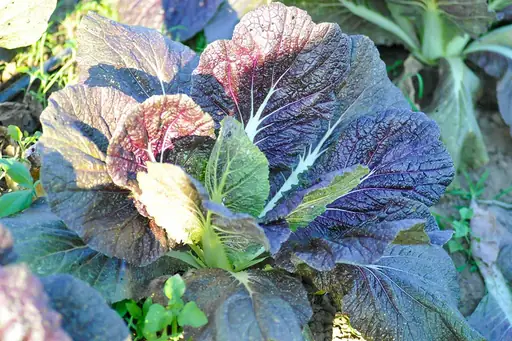
- Bok Choy
- Broccoli
- Brussels sprouts
- Cabbage
- Collard
- Cauliflower
- Kale
- Kohlrabi
- Mustard
- Radish
- Rutabaga
- Turnip
Tell-tell signs includes large holes being chewed into the leaves.
A serious infestation can make a plant look like lace, seriously damaging the crucifer’s ability to perform photosynthesis.
How to Manage an Infestation
Trapping
Classic methods such as putting cups of beer or milk in your garden are surprisingly effective. The best technique is to make a little hollow in the soil big enough for the container to fit in so the lip is at ground level when the vessel is inserted in it.
Fill with beer or milk and let it sit overnight. The creepy crawlies will be attracted to it, crawl in, and drown. Empty and replace in the morning.
However, you should be prepared to set out a lot of traps – one every square yard.
A board is another option. Simply place a board over rich organic with lots of compost. Slugs will craw under the board to escape the heat during the day. Towards after merely lift board, scoop them up. and either relocate or eradicate (with salt).
To make it even more effective, you also bait your board traps with vegetation (cut potatoes, grapefruit skins, or even cabbage leaves!).
It is important that you check these traps daily.
Erect a Barrier
Slugs can be surprisingly mobile, moving as much as a mile over a few days. Therefore, you want to ban them from your garden.
Having crushed eggshell stuck to your body is no way to go through life, son.A barrier can be a good way to do this. You can make a two-foot wide path of crushed oyster shells, crushed eggshells, cinders, wood ashes, sawdust, or sharp sand.
Diatomaceous earth is a particularly fearsome substance to terrestrial mollusks because it is lethal to their soft bodies.
Other alternatives include wire screen or copper strips.
It’s not fully understood why slugs don’t like to cross copper, but it may be that low levels of electricity can naturally pass through the strips.
One bit of advice, many of the copper strips sold in garden shops and the big box stores aren’t wide enough to be effective.
The strips need to be at least two inches wide to prevent these veggie-eating gastropods from arching themselves over the barrier.
Use Black Plastic Mulch
When you use black plastic mulch, the soil will heat up and dry out. Therefore, this will discourage slugs from hiding in it.
Avoid Organic Mulch
Slugs like to hide in organic mulch, so your best bet is to avoid it if you have an infestation. If you do insist on using mulch, at least thin it out, so the soil will get warm and dry (and be less inviting).
Remember these slimy mollusks can overwinter in organic mulch.
Plant in Raised Beds
Since raised beds of cabbage and other cole crops are more likely to dry out, they will reduce the likelihood of infestations in your cabbage plants.
Let Ducks Loose in Your Garden
Unlike chickens, which eat slugs and other pests, but damage your garden in the process, ducks are efficient predators of water and land mollusks and are much less likely to harm your cruciferous veggies.
Buy Predatory Slugs
Who said that cannibalism is always a bad thing?
Wait! Don’t harm this guy! Meet Testacella of the family Testacellidae, your friendly neighborhood predatory slug working the mean pathways of your garden and eating the bad guys.Conveniently, the slug species Testacella will eat other slug varieties and reduce your populations.
Use Slug and Snail Bait
Traditionally, metaldehyde has been a highly efficient bait/poison in controlling these pesky gastropods. However, this compound has its downside and affects non-target organisms.
Nontoxic Sluggo® Slug Killer
In contrast, iron phosphate is an organic alternative that is almost as effective as metaldehyde and is nontoxic to other organisms. Sluggo® is a brand that has organic OMRI certification.
Purge These Slimy Fiends from Your Garden
While slugs can be fearsome and voracious foes, there are a number of techniques you can use to protect your cole crops.
When these options are used in combination, they can be extremely effective.
Have you succeeded in saving your cabbage plants or other brassicas from slugs? Let us know how you fared in the comments.
And for more ideas, consult our guide, “The Best Natural Methods to Protect Your Garden from Slugs and Snails.”
And make sure to check out some of our other guides covering other brassica pests including:
- How to Eradicate Cabbage Worms on Cole Crops and Crucifers
- How to Identify and Control Common Cabbage Pests
- Facebook76
- X


Domande e discussione