

Questa pagina viene visualizzata nella sua lingua originale. La traduzione non è ancora disponibile.
La selezione Seedsun
Abelia chinensis
SKU: ABEL-CHIN-01G
A seldom-seen species with old-world charm, Abelia chinensis is a deciduous shrub native to China and one of the foundational parents of the widely grown Abelia x grandiflora. Far less common in American gardens than its hybrid offspring, the true species offers its own quiet distinctions: larger.
Richiedi un preventivo personalizzato
Prezzi, formati e disponibilità saranno confermati nel preventivo personalizzato. L'invio di una richiesta non costituisce un ordine a pagamento.
Informatevi sull'idoneità, le modalità di semina e le esigenze di coltivazione.
Conferma le opzioni di consegna e i documenti necessari nel tuo preventivo.
Informazioni su questa varietà
A seldom-seen species with old-world charm, Abelia chinensis is a deciduous shrub native to China and one of the foundational parents of the widely grown Abelia x grandiflora. Far less common in American gardens than its hybrid offspring, the true species offers its own quiet distinctions: larger foliage, a fuller habit, and a long summer season of bloom that makes it a thoughtful choice for collectors and pollinator gardeners alike.
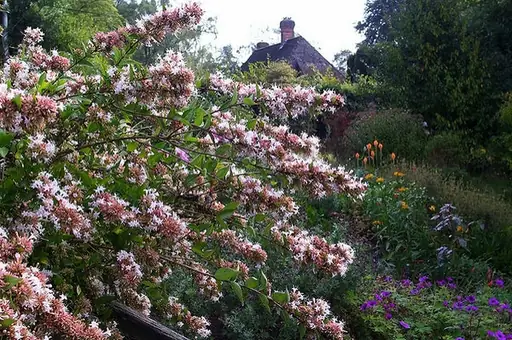
It grows upright to gently arching, reaching four to six feet in height and spread, with leaves notably larger than those of the typical hybrid Abelias. In summer it covers itself in a profusion of small white, lightly fragrant flowers that draw butterflies, bees, and other pollinators in real numbers. The tubular blooms appear in clusters along the stems and carry on well into early fall, each one cradled in a rosy calyx that lingers after the petals drop and gives the shrub a soft pink haze late in the season.
This is a surprisingly hardy plant, flowering reliably into USDA zone 5, though in the coldest winters it may die back toward the ground and return from the base in spring. In warmer zones it holds a fuller above-ground form and takes well to light pruning for shape or renewal. Give it full sun to part shade and well-drained soil; it prefers steady moisture but shows good drought tolerance once established.
In the garden its graceful habit and long bloom suit it to an informal hedge, a mixed border, or a naturalistic planting where pollinators are welcome. Set it where the late-summer flowers and lingering pink calyces can be enjoyed up close, and where its history as the parent of a garden mainstay can be quietly appreciated.
C'è ancora molto da scoprire



Domande e discussione