

Questa pagina viene visualizzata nella sua lingua originale. La traduzione non è ancora disponibile.
La selezione Seedsun
Calycanthus floridus
SKU: CALY-FLOR-BARE
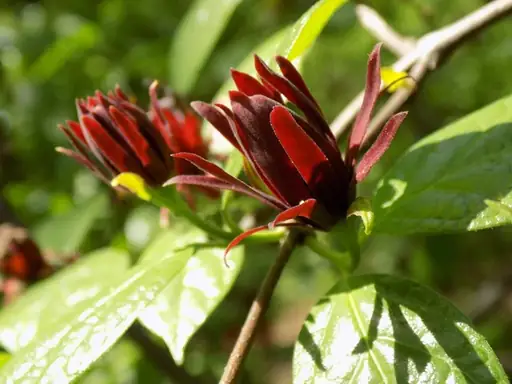
Some plants are loved for how they look. Calycanthus floridus is loved for how they smell, which is a different and older kind of attachment. The flowers are strange and handsome in their own right, an inch or two across, dark maroon going toward burgundy, built from many narrow strap-like segments.
Richiedi un preventivo personalizzato
Prezzi, formati e disponibilità saranno confermati nel preventivo personalizzato. L'invio di una richiesta non costituisce un ordine a pagamento.
Informatevi sull'idoneità, le modalità di semina e le esigenze di coltivazione.
Conferma le opzioni di consegna e i documenti necessari nel tuo preventivo.
Informazioni su questa varietà
Some plants are loved for how they look. Calycanthus floridus is loved for how they smell, which is a different and older kind of attachment. The flowers are strange and handsome in their own right, an inch or two across, dark maroon going toward burgundy, built from many narrow strap-like segments with no clear line between petal and sepal, somewhere between a small magnolia and something from the bottom of the sea. But the reason this shrub has been passed down through Southern gardens for three centuries is what happens when the flowers open on a warm day: a deep fruit-bowl perfume, strawberry and pineapple and ripe banana, that drifts well beyond the plant.
Here is the honest catch, and it is the whole reason provenance matters with this one. The fragrance is gloriously inconsistent. Grown from seed, the scent varies wildly plant to plant, some intoxicating, some barely there, which is why old garden wisdom says to smell before you buy and why the good forms have always been passed hand to hand rather than left to chance. The leaves and bark carry their own spice when bruised, so even between bloom and a fragrance you can rely on, there is something to crush between your fingers on the walk past.
The history runs deep. Calycanthus came into cultivation in 1726 and never left; Jefferson planted nineteen of them at Monticello in 1778, recording them under the country name "bubby flower," and the shrub has carried a small constellation of names ever since, Carolina allspice, sweet Betsy, sweet bubby, strawberry-bush. The flowers were once tucked into the top drawer of a dresser to scent the linens, which tells you most of what you need to know about how people have felt about them. This is an heirloom in the truest sense, a plant kept alive by being wanted.
They make a dense, rounded shrub of six to nine feet, suckering gently into a colony over time, and they are as easygoing as they are old-fashioned: untroubled by pests, indifferent to soil, happy from full sun into real shade. There is a tradeoff worth knowing. In full sun they flower and scent most heavily but spread more freely; in shade they grow slower and stay more contained. Either way the foliage turns clean gold in fall and the curious urn-shaped pods hang on into winter. Native to the woodlands of the Southeast, Calycanthus floridus asks for almost nothing and gives back a fragrance you will cross the yard for.
C'è ancora molto da scoprire



Domande e discussione