

Questa pagina viene visualizzata nella sua lingua originale. La traduzione non è ancora disponibile.
La selezione Seedsun
Cestrum nocturnum
SKU: CEST-NOCT-01G
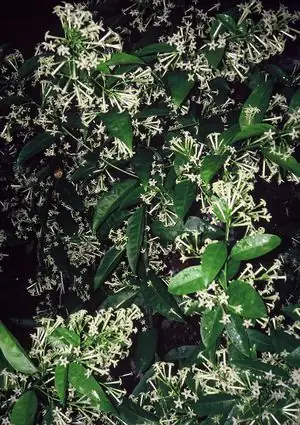
Few plants announce themselves the way Cestrum nocturnum does, and never by daylight. Through the afternoon the shrub keeps to a quiet, almost ordinary green, the slender branches arching and half-climbing, the small tubular flowers furled and unremarkable. Then dusk arrives, the cream-green.
Richiedi un preventivo personalizzato
Prezzi, formati e disponibilità saranno confermati nel preventivo personalizzato. L'invio di una richiesta non costituisce un ordine a pagamento.
Informatevi sull'idoneità, le modalità di semina e le esigenze di coltivazione.
Conferma le opzioni di consegna e i documenti necessari nel tuo preventivo.
Informazioni su questa varietà
Few plants announce themselves the way Cestrum nocturnum does, and never by daylight. Through the afternoon the shrub keeps to a quiet, almost ordinary green, the slender branches arching and half-climbing, the small tubular flowers furled and unremarkable. Then dusk arrives, the cream-green trumpets open, and the night-blooming jasmine releases a perfume so far-reaching that it carries across a whole garden on still, warm air.
A member of the nightshade family native to the tropical Americas, from Mexico and Central America through the Caribbean and into northern South America, this shrub has traveled with gardeners into every warm corner of the world, sometimes a little too successfully; in parts of the tropics the plant has naturalized and turned weedy. Fragrance accounts for the wandering. Across cultures the leaves have also found a place in folk practice: crushed for skin complaints in southern India, brewed against fevers in the Caribbean, the aromatic oil burned or rubbed to turn away mosquitoes in several African countries. The whole plant is toxic if eaten, the small white berries most of all.
In the garden, treat the night-blooming jasmine as a creature of the evening and plant accordingly. Site the shrub where people gather after dark, beside a patio, a doorway, or an open window, so the scent can do the work. In zone 8 the tops die to the ground; a trick is to mound about ten inches of coarse sand over the cut stubs after frost, then mulch with pine straw, lifting the covering as the weather warms so new shoots can rise. Given rich soil and steady water, the plant returns quickly and flowers through the heat of summer.
C'è ancora molto da scoprire



Domande e discussione