

Questa pagina viene visualizzata nella sua lingua originale. La traduzione non è ancora disponibile.
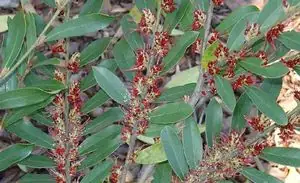
La selezione Seedsun
Distylium myricoides (Piroche form)
SKU: DIST-MYRI-PIRO-FORM-01G
Distylium myricoides belongs to the witch-hazel family, Hamamelidaceae, an evergreen cousin of the fragrant winter witch-hazels, though the kinship shows in the flowers rather than the leaves. The Piroche form is a distinct, low-slung selection of the species, chosen for a broad, spreading habit.
Richiedi un preventivo personalizzato
Prezzi, formati e disponibilità saranno confermati nel preventivo personalizzato. L'invio di una richiesta non costituisce un ordine a pagamento.
Informatevi sull'idoneità, le modalità di semina e le esigenze di coltivazione.
Conferma le opzioni di consegna e i documenti necessari nel tuo preventivo.
Informazioni su questa varietà
Distylium myricoides belongs to the witch-hazel family, Hamamelidaceae, an evergreen cousin of the fragrant winter witch-hazels, though the kinship shows in the flowers rather than the leaves. The Piroche form is a distinct, low-slung selection of the species, chosen for a broad, spreading habit and strong horizontal branching that make the plant read more as living groundwork than as an upright shrub.
Where the typical isu tree arches upward into a small tree, the Piroche form stays wide and close to the ground, layering out along strongly tiered branches to cover more width than height. The narrow, leathery leaves carry the same cool, glossy blue-green that makes the isu tree such a handsome foliage plant, holding color through the year and flushing bronze on new growth. The overall effect is a calm, textural sweep of evergreen foliage that knits together as the plants spread.
In late winter and early spring the branches carry clusters of tiny, petal-less flowers in puffs of bright red stamens, an early and welcome source of nectar when little else is in bloom. The show is subtle rather than loud, best appreciated up close, but the timing makes the Piroche form a quiet favorite of the season's first bees. Like the species, this selection traces to the mountain forests of China, where the genus grows in cool, humus-rich woodland.
In the garden, the Piroche form is at its best massed on a bank, run along a low wall, or planted in a broad drift where the horizontal branching can spread unchecked as a tall, textural groundcover. Tough and adaptable, the plant shrugs off heat, wind, and drought once established, and deer tend to leave the leathery foliage alone. Pair with camellias, mahonia, and ferns in a woodland border, or use in sweeps for low-maintenance, year-round cover.
C'è ancora molto da scoprire



Domande e discussione