

Questa pagina viene visualizzata nella sua lingua originale. La traduzione non è ancora disponibile.
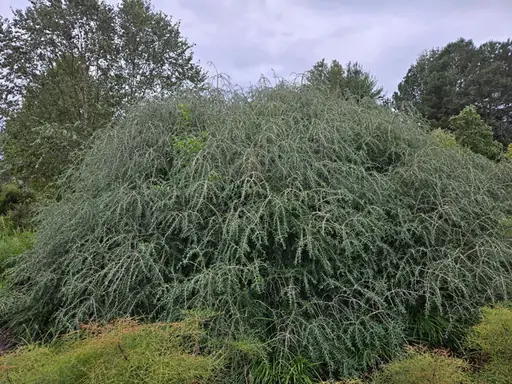
La selezione Seedsun
Forestiera angustifolia 'Weeping'
SKU: FORE-ANGU-WEEP-01G
Forestiera angustifolia 'Weeping' is a distinctive pendulous form of the Texas desert olive, an intricately branched native shrub whose cascading, weeping branches make it a living piece of sculpture. Fine and twiggy, clothed in small narrow leaves, the plant drapes and tumbles in a way the wild.
Richiedi un preventivo personalizzato
Prezzi, formati e disponibilità saranno confermati nel preventivo personalizzato. L'invio di una richiesta non costituisce un ordine a pagamento.
Informatevi sull'idoneità, le modalità di semina e le esigenze di coltivazione.
Conferma le opzioni di consegna e i documenti necessari nel tuo preventivo.
Informazioni su questa varietà
Forestiera angustifolia 'Weeping' is a distinctive pendulous form of the Texas desert olive, an intricately branched native shrub whose cascading, weeping branches make it a living piece of sculpture. Fine and twiggy, clothed in small narrow leaves, the plant drapes and tumbles in a way the wild shrub never does, and reveals a fine tracery of branches in winter once the leaves have fallen. Tough as the Texas brush country that bore it, this is a plant grown as much for form as for foliage, and a favorite subject for bonsai.
The story behind this selection is a original. In 1992, on the Texas gulf coast in Calhoun County, ' Bob McCartney and the legendary Texas plantsman Lynn Lowrey came upon a single weeping desert olive growing among the ordinary kind. Cuttings taken a few years later, in the company of the botanist Patrick McMillan, became the stock that propagated and introduced to gardens, and every plant offered here traces back to that one wild find.
Desert olive is a plant of dry, sunny, difficult places, at home in lean, rocky, alkaline soil, brushing off heat, drought, wind, and even salt. The weeping form has proved just as adaptable in the garden, thriving well beyond the Texas range on almost any well-drained soil in full sun. Tiny yellow-green flowers open very early in spring, among the first food for bees, and on female plants give way to small, olive-like, blue-black fruits that birds are quick to find.
Give Forestiera angustifolia 'Weeping' full sun and sharp drainage, and let the cascading branches spill over a wall, a slope, a large container, or the edge of a raised bed. Left to itself the plant spreads wide and low; pruned or trained, the plant makes a superb bonsai or a compact weeping specimen. For a tough, drought-proof native with genuine character and a real pedigree, few shrubs are as quietly remarkable.
C'è ancora molto da scoprire



Domande e discussione