

Questa pagina viene visualizzata nella sua lingua originale. La traduzione non è ancora disponibile.
La selezione Seedsun
Hypericum prolificum
SKU: HYPE-PROL-01G
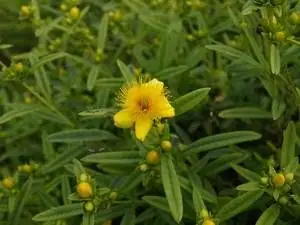
Hypericum prolificum lives up to the name, prolific, disappearing each summer under a heavy crop of bright yellow flowers, each three-quarters of an inch to an inch across and stuffed with a golden brush of stamens. The shrub is dense and rounded, with arching branches, narrow shiny leaves, and.
Richiedi un preventivo personalizzato
Prezzi, formati e disponibilità saranno confermati nel preventivo personalizzato. L'invio di una richiesta non costituisce un ordine a pagamento.
Informatevi sull'idoneità, le modalità di semina e le esigenze di coltivazione.
Conferma le opzioni di consegna e i documenti necessari nel tuo preventivo.
Informazioni su questa varietà
Hypericum prolificum lives up to the name, prolific, disappearing each summer under a heavy crop of bright yellow flowers, each three-quarters of an inch to an inch across and stuffed with a golden brush of stamens. The shrub is dense and rounded, with arching branches, narrow shiny leaves, and reddish, exfoliating bark that peels to show paler layers once the foliage thins.
The name reads as a promise of abundance, and the old common name St. John's Wort ties the shrub to a long line of yellow-flowered kin gathered at the Midsummer feast of Saint John; the genus name Hypericum, from the Greek hyper and eikon, above and image, remembers sprigs hung over doorways and holy pictures to guard the house. The native American species carried something of that reputation into practice: the Cherokee used shrubby St. John's Wort and relatives as astringent and wound herbs and in remedies for respiratory complaints, a folk tradition set out more fully in the notes below.
Few native shrubs are so obliging. Hypericum prolificum ranges across the eastern United States from New York and Ontario south and west, at home on rocky ground and dry wooded slopes, in old fields, on gravel bars, and in low, moist valleys, and hardy from the cold of USDA zone three through the heat of zone eight. That breadth of tolerance, drought, brief flooding, poor rocky or sandy or clay soil, even a little salt, makes the shrub one of the toughest woody plants a gardener can choose.
For all that reliability the shrub is oddly scarce in gardens, a gap has long worked to close. Dr. Michael Dirr put the case plainly in his Manual of Woody Landscape Plants: "I do not believe the Hypericums have been adequately explored and developed as landscape plants in the United States." Set shrubby St. John's Wort in a sunny, well-drained border, a low hedge, or a tough bank, and the summer-long gold, tidy rounded form, and peeling bark answer his complaint. Little bluestem, aromatic aster, and other sun-loving natives round out the planting.
C'è ancora molto da scoprire



Domande e discussione