

Questa pagina viene visualizzata nella sua lingua originale. La traduzione non è ancora disponibile.
La selezione Seedsun
Indigofera amblyantha
SKU: INDI-AMBL-01G
Ted Stephens of Nurseries Caroliniana calls this one of his top ten favorite plants, and the reason is bloom. Indigofera amblyantha, the pink indigo, is a fast, airy, deciduous shrub from the streambanks of central China, a nitrogen-fixing legume in the vast genus Indigofera, and one of the.
Richiedi un preventivo personalizzato
Prezzi, formati e disponibilità saranno confermati nel preventivo personalizzato. L'invio di una richiesta non costituisce un ordine a pagamento.
Informatevi sull'idoneità, le modalità di semina e le esigenze di coltivazione.
Conferma le opzioni di consegna e i documenti necessari nel tuo preventivo.
Informazioni su questa varietà
Ted Stephens of Nurseries Caroliniana calls this one of his top ten favorite plants, and the reason is bloom. Indigofera amblyantha, the pink indigo, is a fast, airy, deciduous shrub from the streambanks of central China, a nitrogen-fixing legume in the vast genus Indigofera, and one of the longest-flowering hardy shrubs a Southern garden can grow.
The genus carries real history. Indigofera means indigo-bearing, and the dye that colored the colonial world came chiefly from tropical kin such as Indigofera tinctoria. In the 1740s Eliza Lucas Pinckney coaxed indigo into a commercial crop around Charleston, where for a generation the blue dye stood second only to rice among South Carolina's exports, and the skill of making it drew heavily on the knowledge of enslaved West Africans. Indigofera amblyantha is not a dye plant, carrying only trace precursors and nothing commercial, but the lineage is part of what makes the genus worth knowing.
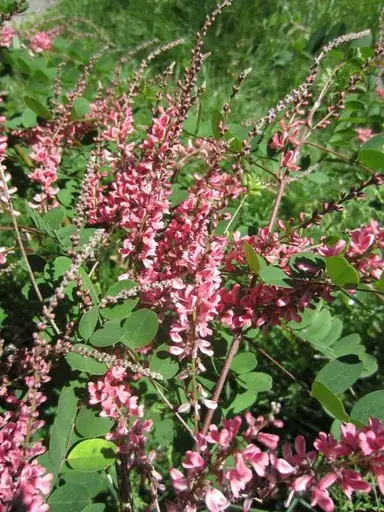
What amblyantha does instead is flower without pause. Soft pink, pea-shaped blooms open in upright racemes at nearly every leaf node from late spring into October, a six-month window that almost no other hardy shrub can match, the first spikes still opening fresh flowers as frost arrives, followed by slender dark purple seedpods. The plant grows six to eight feet in a season on airy, gray-green, pinnate foliage with a see-through quality that lets companions show behind it.
Hardy to about zone 6, pink indigo dies back in hard winters and resprouts from the base each spring, so a hard cut to twelve or eighteen inches in late winter only makes for denser, better growth. As a legume the shrub fixes its own nitrogen and thrives on lean soil in full sun to light shade. Use amblyantha in a cottage border, a pollinator planting, or anywhere a long, soft season of pink is wanted; bees work the flowers steadily through the summer.
C'è ancora molto da scoprire



Domande e discussione