

Questa pagina viene visualizzata nella sua lingua originale. La traduzione non è ancora disponibile.
La selezione Seedsun
Morella pumila 'Willow Leaf'
SKU: MYRI-PUMI-WILL-LEAF-01G
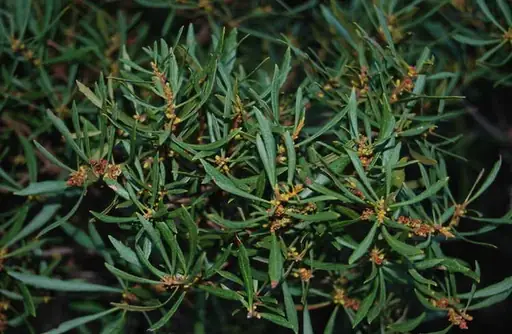
Morella pumila 'Willow Leaf' is a distinctive, fine-leaved form of the native dwarf waxmyrtle, selected for narrow, elongated, willow-like leaves that give the low shrub an unusually elegant, airy texture rarely seen in the species. Like the wild plant, this is a low, spreading, colony-forming.
Richiedi un preventivo personalizzato
Prezzi, formati e disponibilità saranno confermati nel preventivo personalizzato. L'invio di una richiesta non costituisce un ordine a pagamento.
Informatevi sull'idoneità, le modalità di semina e le esigenze di coltivazione.
Conferma le opzioni di consegna e i documenti necessari nel tuo preventivo.
Informazioni su questa varietà
Morella pumila 'Willow Leaf' is a distinctive, fine-leaved form of the native dwarf waxmyrtle, selected for narrow, elongated, willow-like leaves that give the low shrub an unusually elegant, airy texture rarely seen in the species. Like the wild plant, this is a low, spreading, colony-forming evergreen of the fire-adapted pinelands of the southeastern United States, once listed as Myrica pusilla and now placed in the genus Morella.
The selection is a introduction, made from a plant found in Wheeler County, Georgia, and the fine willow-leaf foliage sets it apart from the ordinary dwarf waxmyrtle at a glance. As in the whole clan, the leaves are aromatic when crushed, carrying the clean bayberry scent, and female plants bear small, dark, waxy berries that ripen along the stems, the same wax that scents a bayberry candle and valuable winter food for birds.
The low, running habit makes 'Willow Leaf' a fine native groundcover, dense enough to cover ground and hold sandy banks against erosion, and useful in naturalistic plantings, coastal gardens, and restoration work. A member of the bayberry family, Myricaceae, the plant fixes nitrogen from the air, improving lean, acid, sandy soil and thriving where more demanding shrubs would starve.
Give 'Willow Leaf' full sun to light shade and sandy, acid, well-drained soil, and the plant asks almost nothing: drought, poor soil, and salt are all taken in stride, and deer pass the aromatic foliage by. Let the fine-textured mat spread as a groundcover, a low informal edge, or a wildlife planting two to three feet high, and enjoy an uncommon native with a texture rarely seen. Photos courtesy of the JC Raulston Arboretum.
C'è ancora molto da scoprire



Domande e discussione