

Questa pagina viene visualizzata nella sua lingua originale. La traduzione non è ancora disponibile.
La selezione Seedsun
Nyssa ogeche
SKU: NYSS-OGEC-01G
Nyssa ogeche, the Ogeechee tupelo, is a medium-sized deciduous tree of the southeastern Coastal Plain, at home from southern South Carolina through the Ogeechee valley of Georgia into northern Florida and Alabama. The genus name honors Nyssa, a water nymph of Greek myth, and the tree lives up to.
Richiedi un preventivo personalizzato
Prezzi, formati e disponibilità saranno confermati nel preventivo personalizzato. L'invio di una richiesta non costituisce un ordine a pagamento.
Informatevi sull'idoneità, le modalità di semina e le esigenze di coltivazione.
Conferma le opzioni di consegna e i documenti necessari nel tuo preventivo.
Informazioni su questa varietà
Nyssa ogeche, the Ogeechee tupelo, is a medium-sized deciduous tree of the southeastern Coastal Plain, at home from southern South Carolina through the Ogeechee valley of Georgia into northern Florida and Alabama. The genus name honors Nyssa, a water nymph of Greek myth, and the tree lives up to the name, thriving along creeks, river swamps, and seasonally flooded bottoms where the soil stays acidic and wet.
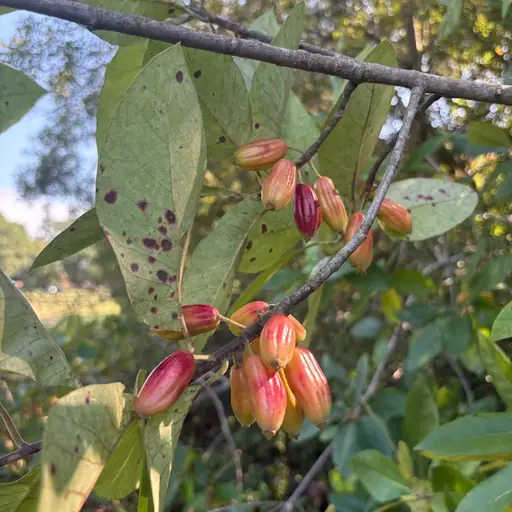
Best known of all is the fruit: elongated, bright red drupes borne on female trees that ripen in late summer, so sharply sour that generations of Southern cooks have turned them into Ogeechee lime jelly, marmalade, and a tart limeade. The spring flowers are small and green, easy to overlook, yet they are the source of one of the South's most prized honeys. Bees working white tupelo, as Nyssa ogeche is also called, produce the celebrated tupelo honey, and the tree carries the fitting nicknames bee tupelo and sour tupelo.
In leaf, the Ogeechee tupelo is bold and clean, with large, glossy green leaves that build a full, lush canopy through summer before softening to yellow and orange in fall. Female trees turn genuinely ornamental in fruit, the red drupes hanging clearly against the foliage at a season when many natives have gone quiet.
Though tied to swamps in the wild, the Ogeechee tupelo is more adaptable than most wetland trees and settles happily into well-drained garden soil as long as moisture is reliable, tolerating both brief flooding and short dry spells once established. With edible fruit, deep regional roots, and real value to pollinators and wildlife, the tree suits larger gardens, pond and stream edges, and any planting that celebrates Southeastern natives and foodways.
C'è ancora molto da scoprire



Domande e discussione