

Questa pagina viene visualizzata nella sua lingua originale. La traduzione non è ancora disponibile.
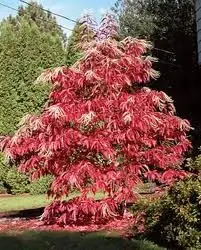
La selezione Seedsun
Oxydendrum arboreum
SKU: OXYD-ARBO-01G
Oxydendrum arboreum, the sourwood, is one of the loveliest and most distinctive trees of the Eastern American woods, and among the very last to flower each year. The name tells the story twice over: Oxydendrum joins the Greek oxys, sour or sharp, and dendron, tree, while the common name echoes the.
Richiedi un preventivo personalizzato
Prezzi, formati e disponibilità saranno confermati nel preventivo personalizzato. L'invio di una richiesta non costituisce un ordine a pagamento.
Informatevi sull'idoneità, le modalità di semina e le esigenze di coltivazione.
Conferma le opzioni di consegna e i documenti necessari nel tuo preventivo.
Informazioni su questa varietà
Oxydendrum arboreum, the sourwood, is one of the loveliest and most distinctive trees of the Eastern American woods, and among the very last to flower each year. The name tells the story twice over: Oxydendrum joins the Greek oxys, sour or sharp, and dendron, tree, while the common name echoes the same tang, for the leaves, twigs, and bark all taste sourly of oxalic acid when chewed. A member of the heath family alongside azaleas, rhododendrons, and blueberries, sourwood stands alone as the sole species in the genus, native to well-drained, acid woodland soils from southern Pennsylvania to the Florida panhandle and west toward Louisiana, most abundant in the lower Appalachians.
In July and August, when nearly every other native tree has long finished, sourwood hangs the branch tips with drooping, one-sided sprays of small, urn-shaped white flowers, fragrant and shaped like the bells of lily-of-the-valley. The bloom is a magnet for honeybees, and the pale, slow-crystallizing sourwood honey pressed from the flowers ranks among the most prized in America, a signature taste of the southern Appalachians and reason enough on its own to plant the tree.
Long before the honey trade, sourwood served Appalachian and Cherokee households as a folk medicine. Leaf teas were taken for diarrhea and brewed into tonics for indigestion, nervousness, and asthma, while travelers chewed the sour leaves to slake thirst on a long walk. In autumn the lance-shaped leaves turn early and burn crimson to wine-purple, often weeks ahead of the surrounding woods, and the spent flower clusters dry to persistent tan capsules that trace the same drooping curves against the fall color.
Slow-growing and refined, sourwood makes a superb specimen for a lawn, a woodland edge, or a native planting, pyramidal in youth and picturesquely irregular with age. Give full sun for the heaviest bloom and hottest fall color, acid and well-drained soil that never bakes dry, and room away from lawn grass and competing roots, with a mulch to keep the shallow roots cool. Pair the tree with dogwoods, native azaleas, blueberries, and other acid-loving companions, and remember the one firm rule: sharp drainage and an open root run, since sourwood resents both wet feet and crowding.
C'è ancora molto da scoprire



Domande e discussione