

Questa pagina viene visualizzata nella sua lingua originale. La traduzione non è ancora disponibile.
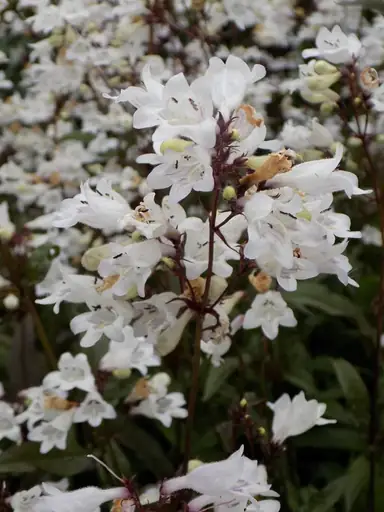
La selezione Seedsun
Penstemon digitalis 'Husker Red'
SKU: PENS-DIGI-HUSK-RED-01Q
Penstemon digitalis is one of the most adaptable of the native beardtongues, a clump-forming perennial of moist meadows, prairies, and open woods across the eastern and central United States. 'Husker Red', selected at the University of Nebraska and named Perennial Plant of the Year in 1996, keeps.
Richiedi un preventivo personalizzato
Prezzi, formati e disponibilità saranno confermati nel preventivo personalizzato. L'invio di una richiesta non costituisce un ordine a pagamento.
Informatevi sull'idoneità, le modalità di semina e le esigenze di coltivazione.
Conferma le opzioni di consegna e i documenti necessari nel tuo preventivo.
Informazioni su questa varietà
Penstemon digitalis is one of the most adaptable of the native beardtongues, a clump-forming perennial of moist meadows, prairies, and open woods across the eastern and central United States. 'Husker Red', selected at the University of Nebraska and named Perennial Plant of the Year in 1996, keeps all the toughness of the wild species but wears it in deep wine-red: a basal rosette of glossy maroon foliage that holds color from spring through fall.
In early to midsummer, slender stems rise two to three feet above the burgundy rosette, carrying open panicles of tubular white flowers, often blushed the faintest pink, each with the small bearded staminode that gives the beardtongues their name. Against the dark leaves the pale bells read especially clean, and bees and the occasional hummingbird work the flowers steadily.
The genus name Penstemon means five stamens, a nod to that fifth, sterile, bearded stamen, and digitalis salutes the foxglove-like flower, the source of the common name foxglove beardtongue. In the garden 'Husker Red' earns a place for foliage as much as bloom, a wine-dark anchor that sets off silver, chartreuse, and hot color through the season.
Give full sun for the deepest leaf color and well-drained soil, and the plant asks little more. The dry seed capsules stand tan through winter and scatter seedlings at the base, so leave a few heads for the look of the cold months or shear them off to keep a colony in bounds. Pair 'Husker Red' with little bluestem, coreopsis, salvias, and other sun-lovers, and enjoy a native that feeds pollinators and shrugs off deer.
C'è ancora molto da scoprire



Domande e discussione