

Questa pagina viene visualizzata nella sua lingua originale. La traduzione non è ancora disponibile.
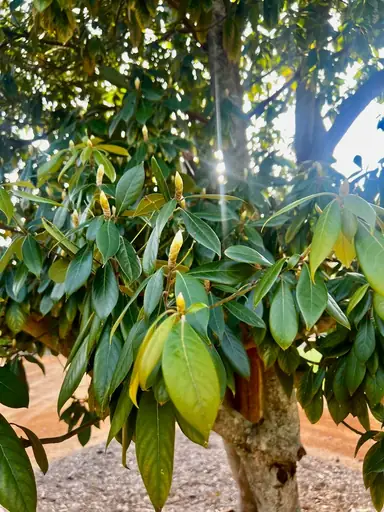
La selezione Seedsun
Phoebe chekiangensis
SKU: PHOE-CHEK-01G
Phoebe chekiangensis is one of a group of Chinese evergreens that could give the American South a whole new kind of shade tree. Upright and clean-limbed, the tree carries dense, leathery, dark green leaves much like those of the related redbay, glossy and handsome the year round, and grows at a.
Richiedi un preventivo personalizzato
Prezzi, formati e disponibilità saranno confermati nel preventivo personalizzato. L'invio di una richiesta non costituisce un ordine a pagamento.
Informatevi sull'idoneità, le modalità di semina e le esigenze di coltivazione.
Conferma le opzioni di consegna e i documenti necessari nel tuo preventivo.
Informazioni su questa varietà
Phoebe chekiangensis is one of a group of Chinese evergreens that could give the American South a whole new kind of shade tree. Upright and clean-limbed, the tree carries dense, leathery, dark green leaves much like those of the related redbay, glossy and handsome the year round, and grows at a steady pace into a small to medium tree of real presence.
The plant belongs to Lauraceae, the laurel family, close kin to Persea, the avocado and the native redbays, and to the storied nanmu trees of China. Nanmu is among the most prized timbers in the world, fine-grained, aromatic, and durable, so valued in imperial China that whole logs went into the pillars of the Forbidden City; Phoebe chekiangensis is one of the genuine nanmu species, though the legendary golden-silk grade belongs to a few relatives. The epithet chekiangensis marks the tree's home in Zhejiang province, on the old spelling, in southeastern China.
In the wild the species is genuinely rare, listed as vulnerable and protected in China as a second-class species, the wild stands thinned by cutting and slow to regenerate, so growing a nursery tree is a small act of conservation as much as a garden choice. has watched the tree closely: one grew into a beautiful young specimen in a city park here in Aiken, South Carolina, before an ice storm brought the young tree down, a fair reminder that a broadleaf evergreen loaded with ice asks for a sheltered spot at the cold edge of the range. A second specimen grows intertwined with a magnolia at Hopeland Gardens, a verdant love story of some 40 odd years.
Give Phoebe chekiangensis sun to light shade and good, well-drained but moisture-retentive soil, ideally with some shelter from hard, drying winter wind, and expect an evergreen of USDA zones 8 and 9. The flowers are small and quiet and the little dark fruits sit on reddish cups, but the reason to grow the tree is the foliage and the form, a lustrous evergreen anchor for a Southern garden, at home among camellias and ferns. For the collector of rare woody plants, this is a chance to grow a piece of Chinese forest history.
C'è ancora molto da scoprire



Domande e discussione